Join WhatsApp Channel

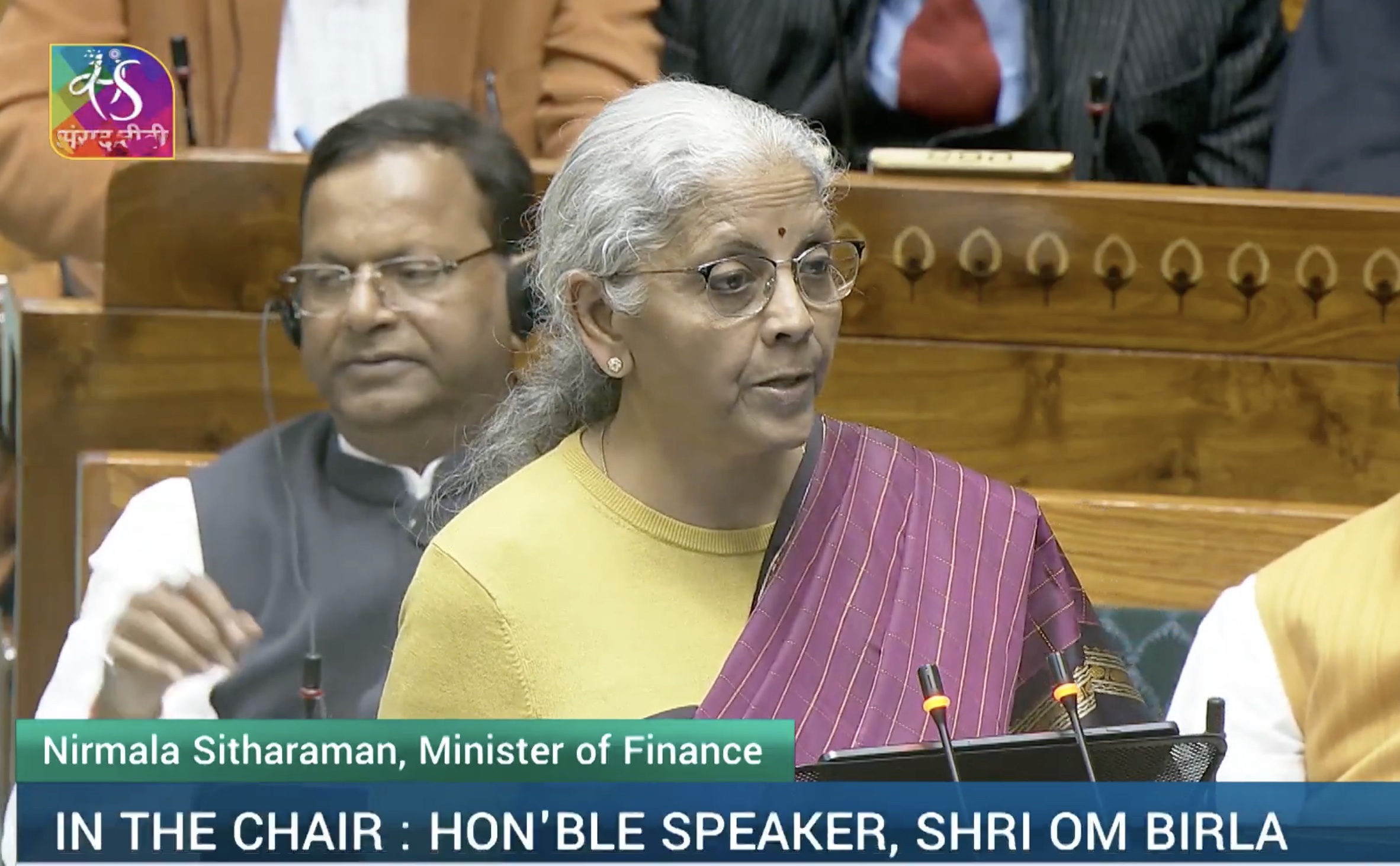
Finance Minister Nirmala Sitharaman’s ninth consecutive Union Budget is less a populist overture than a technocratic manifesto. With a fiscal deficit target of 4.3 percent of GDP and a record ₹12.2 lakh crore in capital expenditure, the government has doubled down on its conviction that infrastructure and industry are the engines of growth.
Yet, for the middle class and rural poor, the Budget feels like a cold exercise in restraint, offering little relief from inflation, stagnant wages, and shrinking household savings.
Fiscal Prudence: Stability Over Stimulus
- Macro-stability as a signal: The government’s insistence on fiscal consolidation is designed to reassure global ratings agencies and investors. India is positioned as a disciplined outlier in a volatile global economy.
- No populist giveaways: Despite five state elections looming, the Budget avoids handouts, subsidies, or tax cuts. This restraint underscores the government’s belief that fiscal credibility outweighs short-term electoral gains.
- The cost of discipline: For households, fiscal prudence translates into stagnation. No adjustments to tax slabs, no increase in standard deductions, and no relief from indirect taxes mean consumption remains squeezed.
Consumption: The Missing Engine
- Middle-class stasis: Salaried professionals face rising compliance but no disposable income boost. Simplified tax forms are procedural, not substantive.
- Household savings crisis: With savings rates declining, the absence of consumption stimulus risks undermining domestic demand.
- Political risk: In an election year, ignoring consumption may alienate voters who feel the government has prioritized investors over citizens.
Capex and Infrastructure: Building Foundations
- ₹12.2 lakh crore capex push: The government’s bet is that public investment will “crowd in” private capital, creating jobs and boosting manufacturing.
- Sectoral allocations: ₹40,000 crore for semiconductors, ₹10,000 crore for SMEs, and cluster-based investments in textiles and chemicals highlight the industrial focus.
- Slow trickle-down: Infrastructure growth is undeniable, but job creation remains sluggish. Roads and data centers do not immediately translate into household income.
Offshore Wealth and Crypto: A Gentle Touch
- Foreign Asset Disclosure Scheme: A six-month amnesty allows individuals to regularize up to ₹5 crore in overseas assets for a nominal fee. Critics see this as a moral hazard, rewarding non-compliance.
- Crypto suspicion: While crypto remains illegal as a payment system in India, the scheme indirectly acknowledges its role in offshore wealth transfers. The government’s approach is punitive in rhetoric but lenient in practice.
- Two-tiered system: Domestic taxpayers face digital enforcement, while globalized elites receive a soft landing.
Sectoral Growth: Winners and Losers
| Sector | Budget Strategy | Likely Outcome |
| Manufacturing | Capex-led clusters (textiles, chemicals) | Infrastructure growth; slow job creation |
| IT Services | Safe harbor thresholds raised; tax holidays | FDI inflows; consolidation of big tech |
| Hospitality & Tourism | Incentives for logistics and connectivity | Boost in tourism infrastructure; uneven benefits |
| Financials | Higher Securities Transaction Tax (STT) | Cooling of retail speculation; institutional stability |
| Middle Class | Simplified filing, no tax cuts | Stagnant purchasing power |
The Budget clearly favors industry and global capital, while ordinary citizens are expected to endure austerity until trickle-down effects materialize.
The 16th Finance Commission: States in the Balance
- Redistribution of resources: The implementation of the 16th Finance Commission will determine how central revenues are shared with states. With five states heading to polls, this becomes politically charged.
- Fiscal autonomy vs. dependence: States reliant on central transfers may find themselves constrained, especially if allocations prioritize infrastructure over welfare.
- Voter mindset: If states cannot expand welfare programs due to fiscal discipline imposed from New Delhi, voters may perceive the Budget as indifferent to local needs. This could sharpen regional discontent and weaken the ruling party’s electoral calculus.
Hospitality and Tourism: A Quiet Beneficiary
- Indirect gains: Infrastructure spending on roads, airports, and logistics indirectly benefits tourism and hospitality.
- No direct push: Unlike manufacturing or IT, tourism lacks a dedicated stimulus. The sector’s growth will depend on spillover effects rather than targeted policy.
The Social Contract: Resilience Without Relief
The Budget normalizes a new social contract:
- The state provides infrastructure, digital stack, and fiscal stability.
- The individual is responsible for resilience, savings, and consumption.
- Welfare programs like MGNREGA see no expansion, and direct employment guarantees are absent.
This contract reflects the government’s ideological conviction: prosperity flows from industry to citizens, not the other way around.
Conclusion: A Bridge to Nowhere?
India’s Budget 2026 is a high-stakes bet on industry, infrastructure, and fiscal discipline. It reassures investors and global capital, but risks alienating ordinary citizens who see no relief in an election year. By offering leniency to offshore wealth, maintaining suspicion toward crypto without clear regulation, and neglecting consumption, the government has built a ship sturdy enough for global waters—but left its passengers to find their own fuel.
The Modi-Sitharaman doctrine is clear: macro-stability first, citizens later. Whether voters accept this bargain will depend on how quickly the promised trickle-down reaches their wallets—and whether the 16th Finance Commission empowers states to soften the austerity imposed from above.
Disclaimer: The opinions and views expressed in this article/column are those of the author(s) and do not necessarily reflect the views or positions of South Asian Herald.
Related posts:
 Universities Gear Up for $160 Billion Fintech Future with Crypto Programs
 Bangladesh’s $67 B Budget Focuses on Inflation Control and Renewable Energy, Faces IMF and Transparency Hurdles
 India’s Blockbuster GDP Masks a Tightening Fiscal Squeeze as Tax Revenues Lag Ambitious Targets
 The Credibility Gap: Structural Dissonance in India’s Economic Survey 2025-26