Join WhatsApp Channel

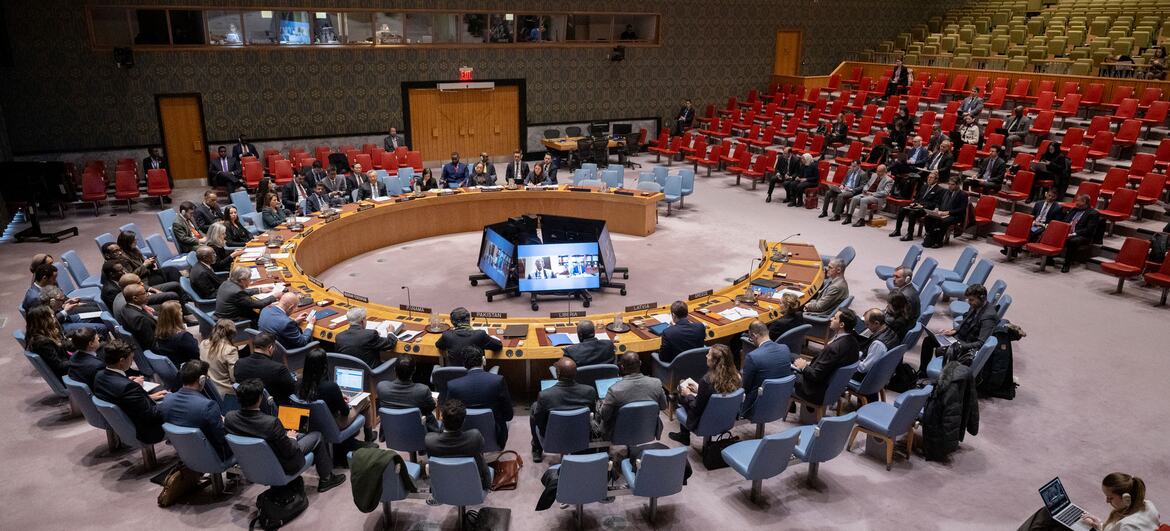
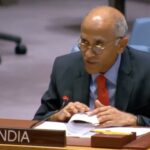
Permanent Representative of India to the United Nations, Ambassador Harish Parvathaneni, has stated that India’s actions during Operation Sindoor were “measured, non-escalatory, and responsible,” and were focused on “dismantling the terrorist infrastructure and disabling terrorists.”
Addressing the UN Security Council Open Debate on “Reaffirming International Rule of Law: Pathways to Reinvigorating Peace, Justice, and Multilateralism” on January 26, 2026, the Ambassador noted that “Pakistan-sponsored terrorists” killed 26 innocent civilians in a brutal attack in Pahalgam in April 2025. He recalled that the Security Council itself had called for holding the “perpetrators, organizers, financiers and sponsors” of the attack accountable and bringing them to justice.
“That is exactly what we did,” he said, adding that until May 9, Pakistan continued to threaten further attacks on India. He stated that on May 10, “The Pakistani military called our military directly and pleaded for a cessation to the fighting. The destruction caused to multiple Pakistani airbases by the Indian operation, including images of destroyed runways and burnt-out hangars, are in the public domain.”
Responding to earlier remarks by the Representative of Pakistan, Ambassador Harish said India’s South Asian neighbor, an elected member of the Security Council, has “a single point agenda – to harm my country and my people.”
“He has advanced a false and self-serving account of Operation Sindoor in May last year. The facts on this matter are clear,” he said. “We have heard talk from the Representative of Pakistan about the new normal. Let me reiterate again that terrorism can never be normalized as Pakistan wishes to do.”
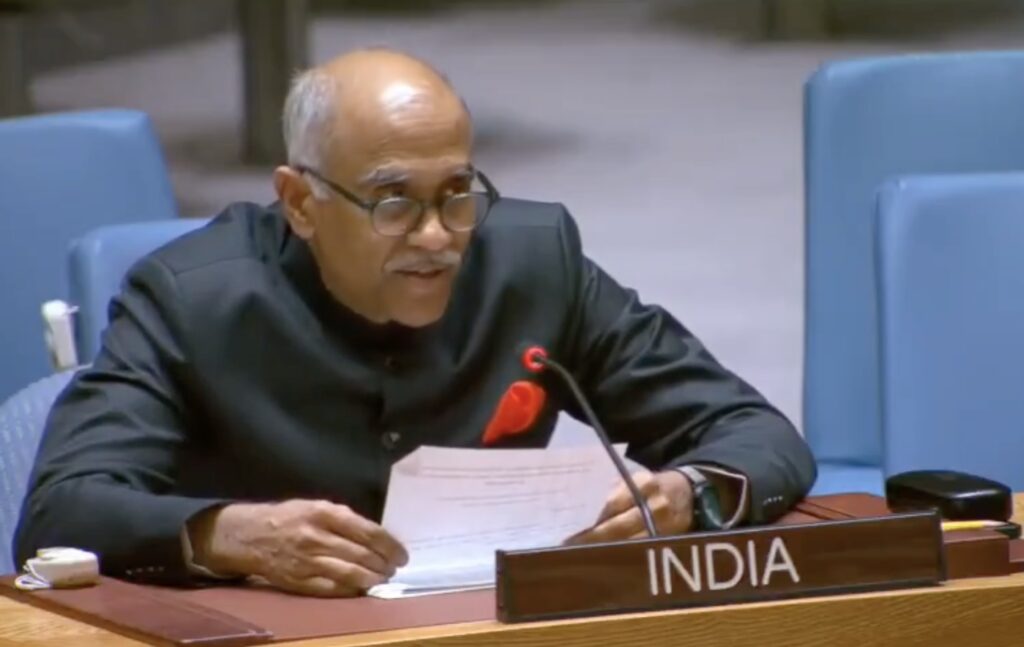
The Ambassador maintained that it is not normal to tolerate Pakistan’s “continued use of terrorism” as an “instrument of state policy.” He said the Security Council chamber cannot become a forum for Pakistan to legitimize terrorism, adding, “We will do whatever required to protect and ensure the safety and security of our citizens.”
He further asserted that Pakistan has no “locus standi” to comment on matters internal to India.
“The Union Territory of Jammu and Kashmir has been, is, and will always remain an integral and inalienable part of India,” he said.
Ambassador Harish also referred to the Indus Waters Treaty, noting that India entered into the agreement 65 years ago in “good faith, in a spirit of goodwill and friendship.” Over the past six and a half decades, he said, Pakistan has “violated the spirit” of the Treaty by waging three wars and carrying out thousands of terror attacks against India.
“Thousands of Indian lives have been lost in Pakistan-sponsored terror attacks,” he said. “India was compelled to finally announce that the Treaty will be held in abeyance until Pakistan, a global epicenter of terror, credibly and irrevocably ends its support for cross-border and all other forms of terrorism.”
He added that Pakistan would be well advised to “introspect” on the rule of law, beginning with how its armed forces engineered a constitutional coup through the 27th amendment and granted lifetime immunity to its Chief of Defense Forces.
Congratulating Somalia on assuming the Presidency of the Security Council for the month and for convening the Open Debate, Ambassador Harish said the theme of the discussion carried immense significance in light of current geopolitical developments. He emphasized that the rule of law lies at the core of the Security Council’s mandate to maintain international peace and security and is essential for addressing conflicts and fostering trust among Member States.
He cautioned that multilateralism, with the United Nations at its center, is “under strain.”
“The challenges facing this organization go far beyond the budgetary realm. Paralysis and lack of effectiveness in tackling conflicts remain a significant shortcoming. People around the world do not perceive the United Nations as an organization that delivers on international peace and security,” he said. “Conversations and discussions have moved on to parallel plurilateral frameworks, some even involving private sector actors, to bring about outcomes on peace and security outside the United Nations framework.”
He noted that the debate offered a timely opportunity to reflect on these challenges, identify their causes, and explore ways to “reinvigorate peace, justice and multilateralism.”
During his remarks, Ambassador Harish highlighted that India upholds the rule of law as a “cornerstone of its national governance,” enshrined in the Constitution and reinforced through judicial independence and initiatives that expand access to justice.
“These deep roots of rule of law in India at the national level inform and guide our commitment towards Rule of Law at the international level,” he said.
He outlined several key points, stressing that the rule of law is ineffective without “enforceability” and calling for a shift from abstract frameworks to practical solutions that deliver tangible benefits to citizens. He said that as global change accelerates, legal and institutional frameworks governing the international rule of law must evolve through regular review and updating to remain relevant and effective.
The Ambassador also underscored the need for reforms in global governance structures to preserve the credibility of multilateralism. He said the current United Nations architecture, particularly the composition of the Security Council, reflects an outdated geopolitical reality and called for comprehensive reform, including expansion in both permanent and non-permanent categories.
Emphasizing institutional coordination, he said strengthening synergies among the principal organs of the United Nations would advance the rule of law by aligning mandates, reducing duplication, and increasing overall impact. He identified process-oriented reforms, predictable resources, capacity building, and context-specific technical assistance as critical components.
Ambassador Harish also warned against the weaponization of international law to undermine state sovereignty or interfere in internal affairs. He said legal principles developed during the colonial era to support self-determination should not be misused to challenge the unity and territorial integrity of sovereign states, cautioning that rigid approaches to multilateralism could push countries toward alternative forms of engagement.
He also stressed that the application of international rule of law must be consistent, objective, and predictable, and free from double standards.
Addressing the debate, UN Secretary General António Guterres noted, “The rule of law is a cornerstone of global peace and security. The key to friendly relations among the countries and regions of the world. And the beating heart of the Charter of the United Nations,” underscoring for 80 years, it has helped humanity avert a third world war and reduce the human cost of numerous smaller conflicts.
“Around the world, the rule of law is being replaced by the law of the jungle,” he emphasized.
“For smaller and less-powerful countries, and those suffering from historical inequities and the damaging legacies of colonial rule, international law is a lifeline promising equal treatment, sovereignty, dignity and justice,” the Secretary General noted adding for powerful countries, “It is a guardrail defining what is acceptable, and what is not, in times of disagreement, division and outright conflict.”
Related posts:
 At UN Security Council, India Affirms Jammu & Kashmir, Ladakh as Integral Parts of India, Criticizes Pakistan’s Conduct
 India’s UN Envoy Calls for Security Council Reforms, Rejects Pakistan’s Claims on Jammu and Kashmir
 India Urges United Nations to Impose “Serious Cost” on States Sponsoring Cross-Border Terrorism
 ECOSOC President Lok Bahadur Thapa Calls for Stronger Multilateral Action at Council’s 80th Anniversary