Join WhatsApp Channel

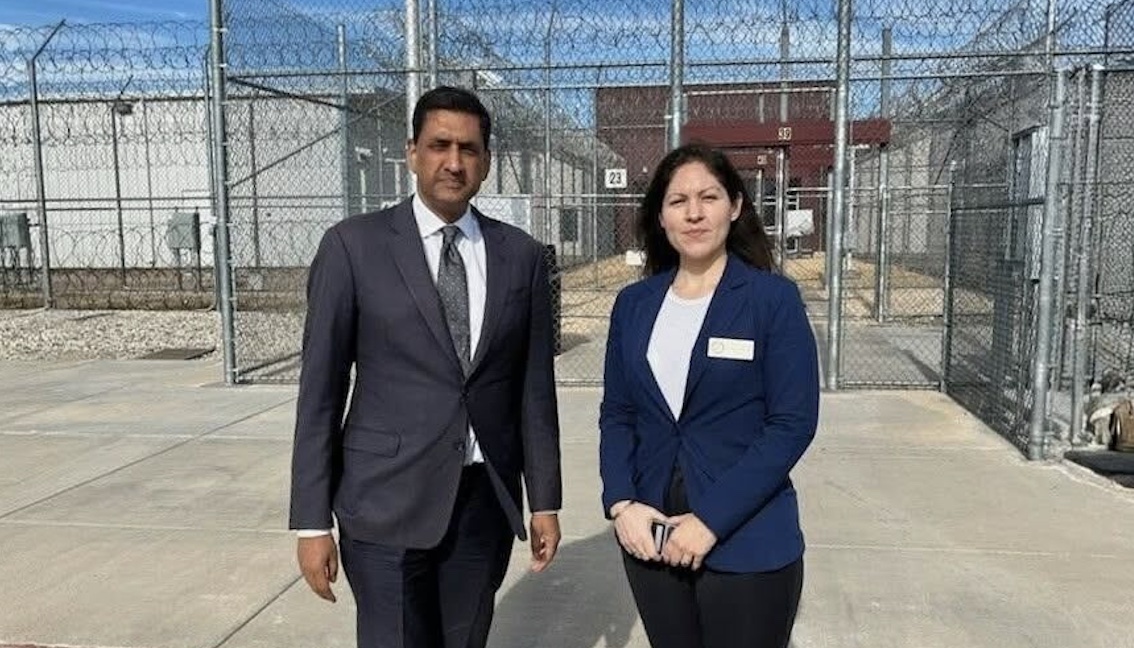
Indian American Congressman Ro Khanna (D-CA) recently visited the ICE California City Detention Center saying the experience left him with a profound sense of “urgency” after speaking with nearly 50 detained individuals from multiple countries, including South Asian nations.
Rep. Khanna shared on January 6, that he and his staff spoke directly with 47 detainees from Afghanistan, Armenia, Bangladesh, Colombia, El Salvador, Honduras, India, Mexico, Nepal, Venezuela, and other countries. Many detainees told him they were never informed why they had been detained.
“I might be the first Member of Congress to enter alongside a staff member who took detailed notes to tour the ICE California City Detention Center,” Khanna said in a statement, adding, “This is the largest detention facility in the state of California. I left with a profound sense of urgency, concern, and moral responsibility. What we witnessed cannot be ignored, excused, or normalized.”
According to Rep. Khanna, the visit was inspired by a constituent from Sunnyvale who was beaten, unlawfully detained, and held at the same facility before being deported.
“As Yvonne and I arrived, we saw families pulling into the parking lot, preparing to visit loved ones. When we spoke with them, they described inadequate food, visible mold, and water that tastes like metal,” he said.
He noted that families shared these details cautiously, often stopping themselves mid-sentence, because detainees have no privacy during phone visits and families fear retaliation for speaking out.
“Fear,” not “transparency,” defines this environment, Rep. Khanna added.
The facility is operated by CoreCivic, and Rep. Khanna said he and his staff were escorted by six staff members, including the warden, through what he described as a stark, cold detention center located in the California desert near Nevada.
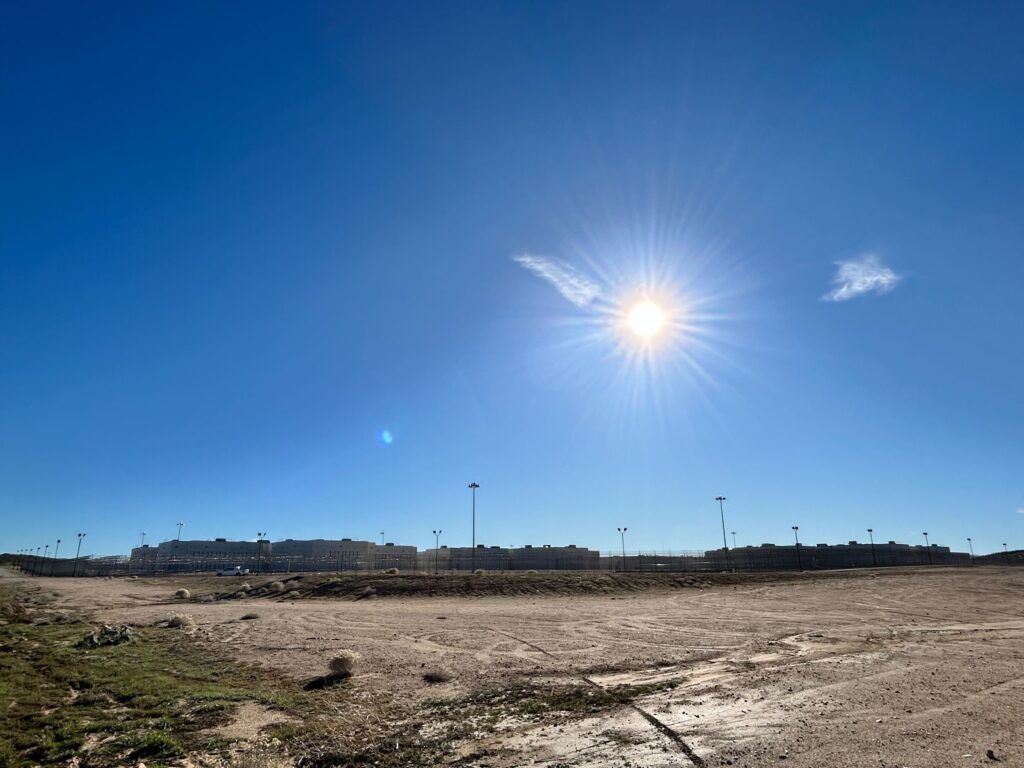
“On the day of our visit, temperatures were in the 40s on a sunny clear day,” he said. “When we asked when laundry is performed, we received no defined schedule, leaving it unclear how many times individuals receive clean clothing. Furthermore, there was no policy for providing jackets in freezing temperatures, only a statement that detainees are given blankets.”
Rep. Khanna said he was informed that the facility currently holds 1,428 detainees, including 215 women. Although the center’s contract began in September 2025, the Office of Detention Oversight has not conducted a single inspection. No Performance-Based National Detention Standards audit has taken place, and compliance with PREA and ADA requirements remains unverified. Oversight, he said, is not “merely delayed”; it is “functionally absent.”
He also said visitation remains strictly non-contact, forcing families to communicate through glass. When he asked why, the warden cited “introduction of contraband,” but could not say how many detainees were being held for criminal offenses versus civil immigration matters.
Rep. Khanna described detainees as being treated like “high-security criminals” without explanation or due process. Many staff members, he said, had only three to four months of experience and came from private security backgrounds rather than correctional or humanitarian training. Transfers to the remote facility were explained as being driven by “bed space,” not “necessity or risk.”
“Medical care was the most alarming failure of our visit,” he said, adding that while ADA coordinators exist, they were not on-site during the tour.
“We observed locked boxes labeled ‘sick call’ and ‘grievance,’ but we were not allowed to view whether these requests were ever answered. Staff admitted that a ‘sick call’ request might sit in the box for one to two weeks before a medical response is initiated.”
Detainees, however, told him a different story. According to Rep. Khanna, individuals said they may wait up to 20 days for medical help and are sometimes placed alone in a room to wait without care.
For common illnesses such as the flu, medication is rarely provided, he said. At best, detainees may receive ibuprofen, but more often they are told to purchase basic medicine from the commissary at what he described as exaggerated and unaffordable prices. With reportedly only one doctor for hundreds of detainees, he said the neglect is structural.
“We spoke to a man urinating blood who has still not received care, and a detainee transferred from Adelanto after having molars removed who was left in agony without any pain medication,” Rep. Khanna said.
While the warden highlighted one hour of daily outdoor recreation, gyms, and tablets for attorney calls, Rep. Khanna said he observed empty rooms and unused equipment.
“We saw education booths in rows of four, each with a tablet and monitor, but not a single detained individual was using them,” he said. “We were never shown the law library or computers containing LexisNexis. There is no GED programming, no substance abuse support, and no religious services unless outside volunteers make the trip to the desert.”
Pro bono attorney lists are posted on the walls, but with only one immigration judge assigned to the facility, cases face six-month delays. Rep. Khanna said some detainees become so desperate that they request deportation, yet remain detained for months due to court backlogs.
He recalled detainees describing being treated like animals, locked in cells for seven hours a day, and fed undercooked beans that sometimes contain rocks. Older detainees, he said, face heightened risk because they rarely receive fresh fruits or vegetables.
Rep. Khanna said he met a lawful permanent resident who has lived in the U.S. for 45 years and is now detained over an issue from nearly three decades ago. He also met Afghan detainees who assisted the U.S. military and now have no country to be deported to, as well as a student whose graduation plans are on hold. He described meeting a skilled journeyman who complied with every required ICE check-in but was unexpectedly detained and separated from his infant child.
“We heard from a business owner from Orlando, Florida who worked on U.S. military bases, detained at work despite legal authorization through political asylum,” he said. “We even found a young man detained alongside his 58-year-old mother; they were separated upon arrival and have been unable to locate one another.”
He added that detainees working in so-called volunteer jobs are paid between $1.75 and $2.50 an hour. Outdoor areas bring mud into interior walkways, the water was repeatedly described as non-potable, and kitchen staff could not produce records to verify food compliance.
America can enforce its laws without abandoning its “humanity,” Rep. Khanna said, describing what he witnessed at the facility as “systemic neglect.” A detention-industrial complex that operates without “transparency or accountability,” he said, does not put “American values first”; it puts “profit first.”
“Human rights violations hidden in remote deserts must never be tolerated,” he said. “Congress has a duty to act, to investigate, and to reform. The lives and dignity of over a thousand human beings depend on it.”
Following the visit, Rep. Khanna thanked his staff, Yvonne Inciarte and Sam Elghanayan, for coordinating the tour at the start of 2026 to bring attention to conditions he said demand immediate federal oversight.
Related posts:
 When Does Prolonged Detention Engage Article 21?
 Suhas Subramanyam Introduces WATCH ICE Act to Increase Transparency in Immigration Enforcement
 Rep. Raja Krishnamoorthi Condemns ICE Violence in Hoffman Estates, Accuses Trump Administration of “Secrecy and Brutality”
 Federal Court Ruling Clears Way for Rep. Raja Krishnamoorthi’s Oversight Visit to Broadview ICE Facility