Join WhatsApp Channel

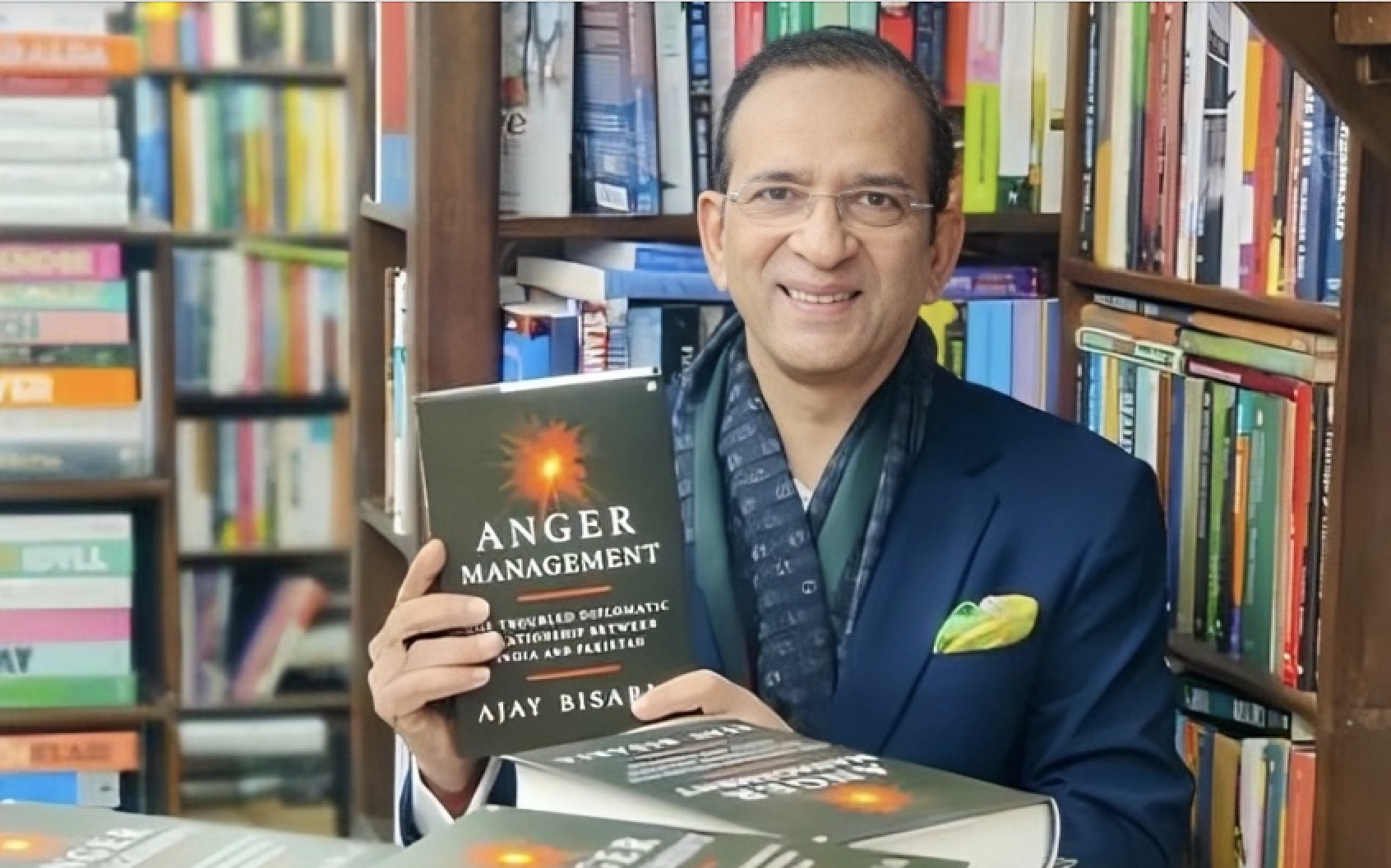
A seasoned diplomat with decades of experience across South Asia, Southeast Asia, and the Indo-Pacific, Ambassador Ajay Bisaria has been at the forefront of some of India’s most consequential diplomatic engagements. His insights reflect both strategic realism and a deep understanding of India’s long-term interests in a turbulent global order.
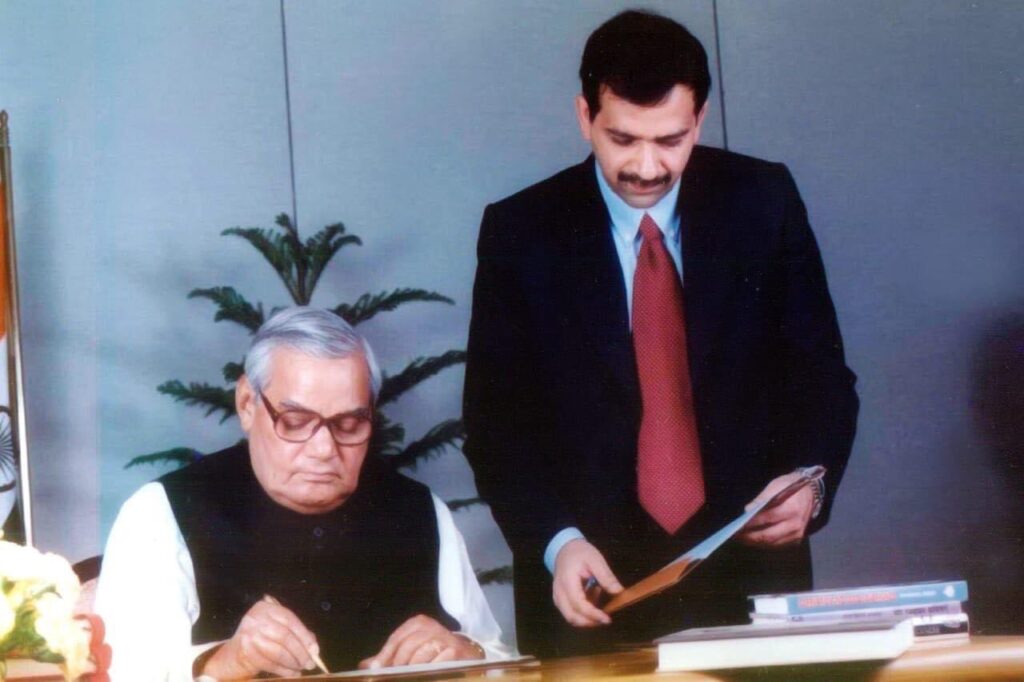
He was the High Commissioner of India to Canada till June 2022. He earlier served as High Commissioner of India to Pakistan (2017-2020) and as Ambassador to Poland and Lithuania (2015-2017). He has extensively dealt with India’s Eurasia policy, including with Russia, Ukraine and Central Asia. He has represented India at the World Bank in Washington DC, and in Embassies in Berlin and Moscow. He has served in various capacities in India in the Ministry of External Affairs, Department of Commerce and the Prime Minister’s Office, where he was a key aide to Prime Minister AB Vajpayee from 1999 to 2004. He has a Bachelor’s Degree in Economics from St Stephens College, Delhi University (1980-83), an MBA from IIM Calcutta (1983-85) and a Master’s Degree in Public Policy from Princeton University (2008-09).
In this exclusive interview with South Asian Herald, Ambassador Bisaria offers a wide-ranging assessment of India’s evolving foreign policy landscape and talks about Indian diaspora, India-Canada relations, India-US relations, and India’s relations with its neighbors particularly Pakistan.
India–US Trade: Incremental Gains, Strategic Patience
India–US trade negotiations, Ambassador Bisaria notes, are progressing steadily, but without dramatic breakthroughs. “There is slow but tangible progress,” he observes, pointing to multiple rounds of negotiations and sustained engagement at the highest political levels.
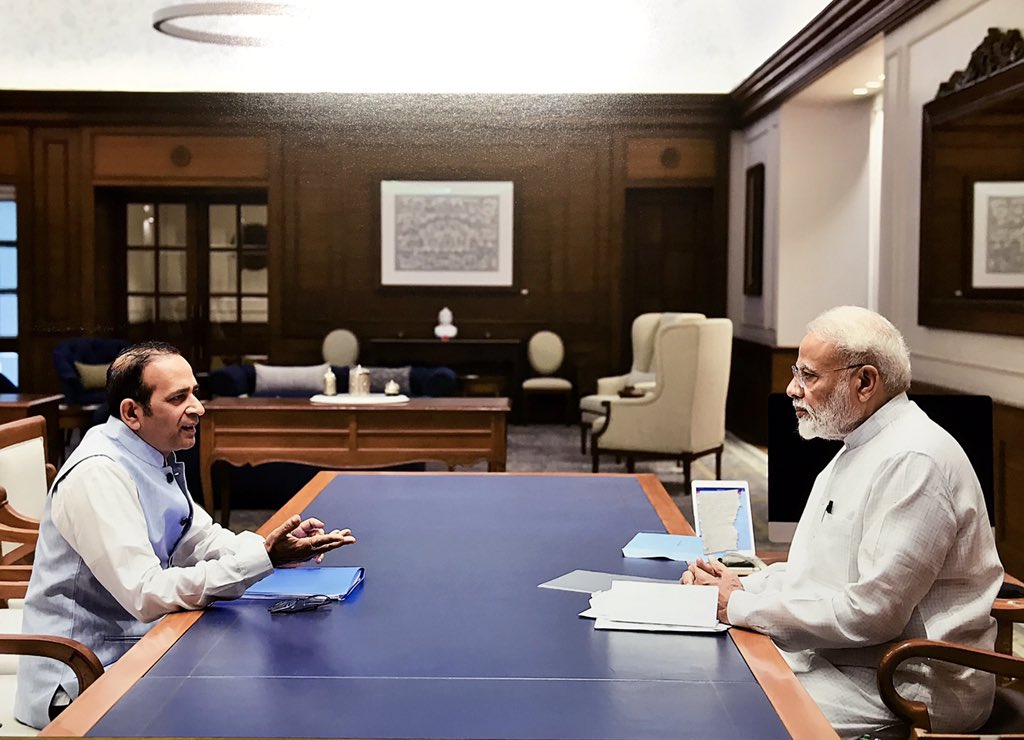
“Recent discussions in New Delhi and calls between Prime Minister Narendra Modi and President Donald Trump have helped maintain momentum,” he notes, particularly on tariff rationalization, services, and digital trade. According to Bisaria, India has now “tabled its most ambitious market-access proposals yet,” strengthening New Delhi’s hand.
Looking ahead, he says, “There is growing hope for an interim framework or initial deal in the first quarter of 2026,” which could reduce punitive tariffs from nearly 50 percent to around 15 percent. While agriculture remains sensitive, Bisaria stresses that “India’s export resilience despite steep US tariffs has actually strengthened its negotiating position.”
The Indian Diaspora in the US: Influence with Constraints
The Indian diaspora in the United States, Bisaria argues, has been “unquestionably a force for good.” He points out that Indian-Americans are “highly successful professionally, increasingly visible in elected office, and central to shaping positive perceptions of India.”
At the same time, he acknowledges ongoing criticism that the diaspora could have done more on contentious policy issues. “There is a legitimate debate about whether Indian-Americans spoke up vigorously enough on matters like H-1B fees or US trade tariffs,” he says, referencing recent public critiques.
However, Bisaria offers an important caveat: “Indian-Americans are not proxies for the Indian government. They must balance loyalty to the United States with support for India.” He adds that “very public advocacy is not risk-free, especially given the nature of the current White House.” Even so, he concludes, “A diaspora of over five million people has been a net positive for India–US relations, even if its policy advocacy has room to grow.”
H-1B Visas and the Shifting Global Talent Map
On immigration and mobility, Ambassador Bisaria points out “The introduction of a $100,000 fee for new H-1B petitions is significantly affecting Indian workers and their employers,” he says. Combined with “palpable anti-immigrant sentiment and expanded vetting,” the policy has injected deep uncertainty into traditional mobility pathways.
He notes that major Indian IT firms are already responding. “Companies like TCS and Infosys are reconsidering their US staffing strategies,” Bisaria explains, with more roles likely to move offshore or be reduced altogether.
For workers, alternatives are becoming increasingly attractive. “Canada has launched fast-track immigration streams specifically targeting skilled H-1B holders,” he says, adding that “thousands of Indian professionals could relocate north in the coming years.” India, meanwhile, may benefit: “India is emerging as a global talent hub, and the US risks losing skilled manpower to its own economic disadvantage.”
The US National Security Strategy and India’s Indo-Pacific Role
Turning to geopolitics, Bisaria describes the 2025 US National Security Strategy as a recalibration rather than a retreat. “The document signals a US pullback in its own hemisphere, what some are calling a ‘Trump corollary’ to the Monroe Doctrine,” he explains.
At the same time, he says, “The US continues to see itself as an external balancer, willing to step in if it perceives an emerging hegemon.” For India, this keeps the Indo-Pacific firmly in focus. “The strategy explicitly frames the Indo-Pacific as a critical geopolitical and economic theatre,” he notes, with strong emphasis on freedom of navigation, supply-chain security, and deterrence.
Bisaria highlights a key shift: “Economic security is now tied directly to national security,” with technology cooperation and supply networks – including with India – prioritized over ideological narratives. However, he cautions, “There is a clear insistence on greater burden-sharing from partners, including India.”
India–Canada Relations: Reset with Reservations
India–Canada ties, Bisaria says, are finally emerging from a deep freeze. “After a prolonged diplomatic crisis, 2025 marked a cautious reset,” he explains, pointing to the return of High Commissioners and renewed ministerial engagement.

“Both sides have agreed on a joint work plan covering trade, technology, energy, and people-to-people ties,” he says, adding that discussions on resuming trade talks have resumed momentum. Yet he is clear-eyed about lingering challenges. “Longstanding irritants persist, particularly around security concerns and domestic political sensitivities,” Bisaria notes, describing the relationship as one being “managed carefully through sustained diplomacy.”
India’s Neighbourhood: Persistent Instability, Strategic Resolve
India’s immediate neighborhood, according to Bisaria, remains “complex and turbulent.” He points to Pakistan as a continuing challenge, noting that “India faced its most serious confrontation with Pakistan in May 2025 after a major terrorist attack in Kashmir.”
Beyond Pakistan, the region is unsettled. “South Asia has seen violent regime change, mass protests, and leadership churn,” he says, citing Afghanistan, Myanmar, Sri Lanka, Nepal, and Bangladesh. China’s growing footprint further complicates matters. “China’s expanding strategic and economic influence adds another layer of complexity across the neighborhood.”
Despite this, Bisaria maintains that India’s approach is balanced. “India’s ‘Neighborhood First’ policy combines security vigilance with development cooperation and diplomatic engagement,” he says, even as “regional turbulence is likely to persist.”
India’s Global AI Moment
Looking ahead, Bisaria expresses strong optimism about India’s upcoming Global AI Summit. “This will be a next-generation global AI dialogue focused on outcomes, not just rhetoric,” he says.
Unlike earlier summits centred on governance and safety, “India’s summit is designed to deliver practical recommendations across healthcare, agriculture, education, and development,” he explains. Framed around seven thematic ‘chakras,’ the event positions India as “a bridge between developed and developing economies.”
He adds that India’s growing AI stature reinforces expectations. “India is now the world’s third-most competitive AI power,” Bisaria says, arguing that the summit can “catalyse partnerships, funding flows, and real-world AI applications for the Global South.”
Related posts:
 In Conversation with Rajesh Mehta: High Commissioner Dinesh Patnaik
 In Conversation with Rajesh Mehta: Ambassador Lakshmi Puri
 Pakistan’s Ambassador to the U.S. Calls for “Meaningful” Dialogue with India; Highlights Economic Diplomacy and Investment Opportunities
 In Conversation with Rajesh Mehta: Lord Karan Bilimoria