Join WhatsApp Channel

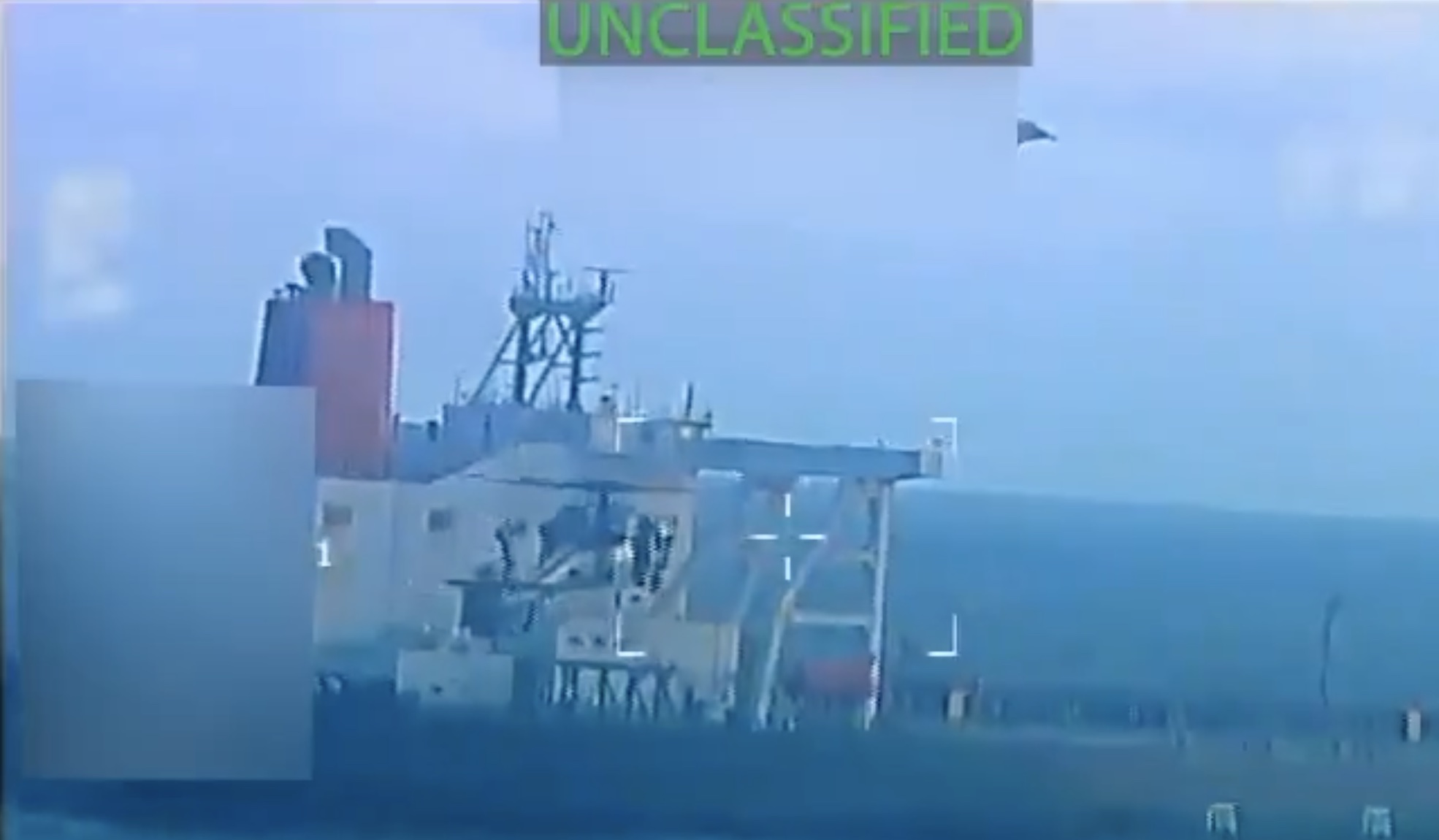
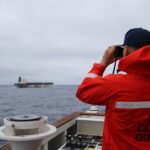
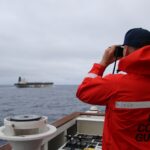
Tensions and tempers are rising in the Caribbean. After hitting some 20-plus boats of Venezuela supposedly carrying narcotics to America, resulting in the death of some 87 persons, the Trump administration used military force to seize a large oil tanker coming out of that South American nation and heading perhaps to Cuba.
The American President himself announced the capture of the tanker, the swift strike carried out by the Coast Guard with active participation of the United States Navy, with the aircraft carrier USS Gerald R. Ford in the operations. “…for multiple years, the oil tanker has been sanctioned by the United States due to its involvement in an illicit oil shipping network supporting foreign terrorist organizations,” Attorney General Pam Bondi said in a post.
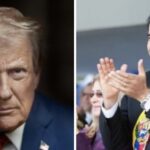
“We’ve just seized a tanker on the coast of Venezuela, a large tanker, very large, largest one ever seized, actually,” Trump told reporters at the White House on Wednesday, indicating the United States would “keep” the oil. Some two thousand miles away, the President of Venezuela, Nicolas Maduro, did not directly address the issue but told his supporters in Caracas that his country is “prepared to break the teeth of the North American empire if necessary.”
But the high-profile incident that the international community has not witnessed for a long time has set tongues wagging, not on the newly proclaimed Monroe Doctrine Two as per a newly released Strategic Document, but on the legality of the seizure and the motives of Washington, ranging from regime change to economic greed of just grabbing the rich oil reserves of a South American country.
Various published sources speak of Venezuela holding the largest proven oil reserves of about 300 billion barrels, or some 20 percent of the world, even more than Saudi Arabia or Iran. What is also pointed out is that the output is a fraction of its potential due to difficulties of extraction because of the nature of the crude. Further, being a “pretty heavy crude,” Venezuelan oil is hard to refine and therefore has a bunch of reluctant customers. Still, the point is made that American actions on the Venezuelan coastline will keep other vessels away and hence make a huge dent in the economy. Or, as naval historian Vincent O’Hara put it, “If you have no maritime traffic or access to it, then you have no economy.”
If published media reports are anything to go by, there are many questions to be answered – and all of this not just by the Trump administration. The ship in question, Skipper, is said to have left Venezuela with some two million barrels of heavy crude on December 2, about 50 percent of the cargo belonging to a Cuban state-run importer. The Skipper was previously known as M/T Adisha and was sanctioned by the United States in 2022, as it was seen as belonging to a party of a shadowy network smuggling oil on behalf of Iran and Hezbollah. Questions of registration and the flag of the carrier aside, the tanker had also been quite dodgy on its exact location, not quite matching satellite images in the last several days.
The Trump administration has been putting the squeeze on the Maduro regime on the pretext of narco-terrorism and facilitating the movement of illegals to the United States. Since September, Washington has been assembling the largest-ever naval buildup in the Caribbean and had started some of the most debilitating strikes on boats ostensibly carrying narcotics to America. The operations in the Eastern Pacific had killed some 87 persons, and the biggest furore was over the so-called “double tap,” when two persons clinging to debris were killed in a return attack. The original statement that the two were radioing for assistance proved wrong, as a top Navy officer in charge of the operations said that there was no communications equipment left to call for a backup.
The debate in America is not confined to lawmakers only, with Republicans and Democrats sticking with party-line readouts on the strikes, especially on the “double tap.” A latest Reuters/Ipsos poll showed that 48 percent saying that the United States should not be conducting the strikes without a court approval. And from an academic or legal perspective, there is apprehension about placing those peddling narcotics into America – seen as narco-terrorists — on the same footing as terrorists associated with al Qaeda or ISIS, or for that matter non-state actors trying to attack the United States by smuggling chemical and biological weapons. The bottom line: taking out weapons-of-mass-destruction facilities in countries offering production platforms cannot and should not be compared with drug cartels.
For quite some time now, President Trump has been talking of an “imminent” invasion of Venezuela, and there is the legitimate worry that Washington is closer to that scenario now with the seizure of the oil tanker. Washington will be less inclined to worry about how capitals of the world would react to an invasion of Venezuela or how global oil markets respond; but the same cannot be said of an administration paying no attention to the limitations of an Executive under the War Powers Act and the role of Congress.
With the horrific experiences in Vietnam, Iraq, and Afghanistan, Washington cannot be in denial of the consequences of a conflict in South America that starts in Venezuela. There are many nations in the neighbourhood and beyond just waiting to fish in troubled waters.
Disclaimer: The opinions and views expressed in this article/column are those of the author(s) and do not necessarily reflect the views or positions of South Asian Herald.