Join WhatsApp Channel

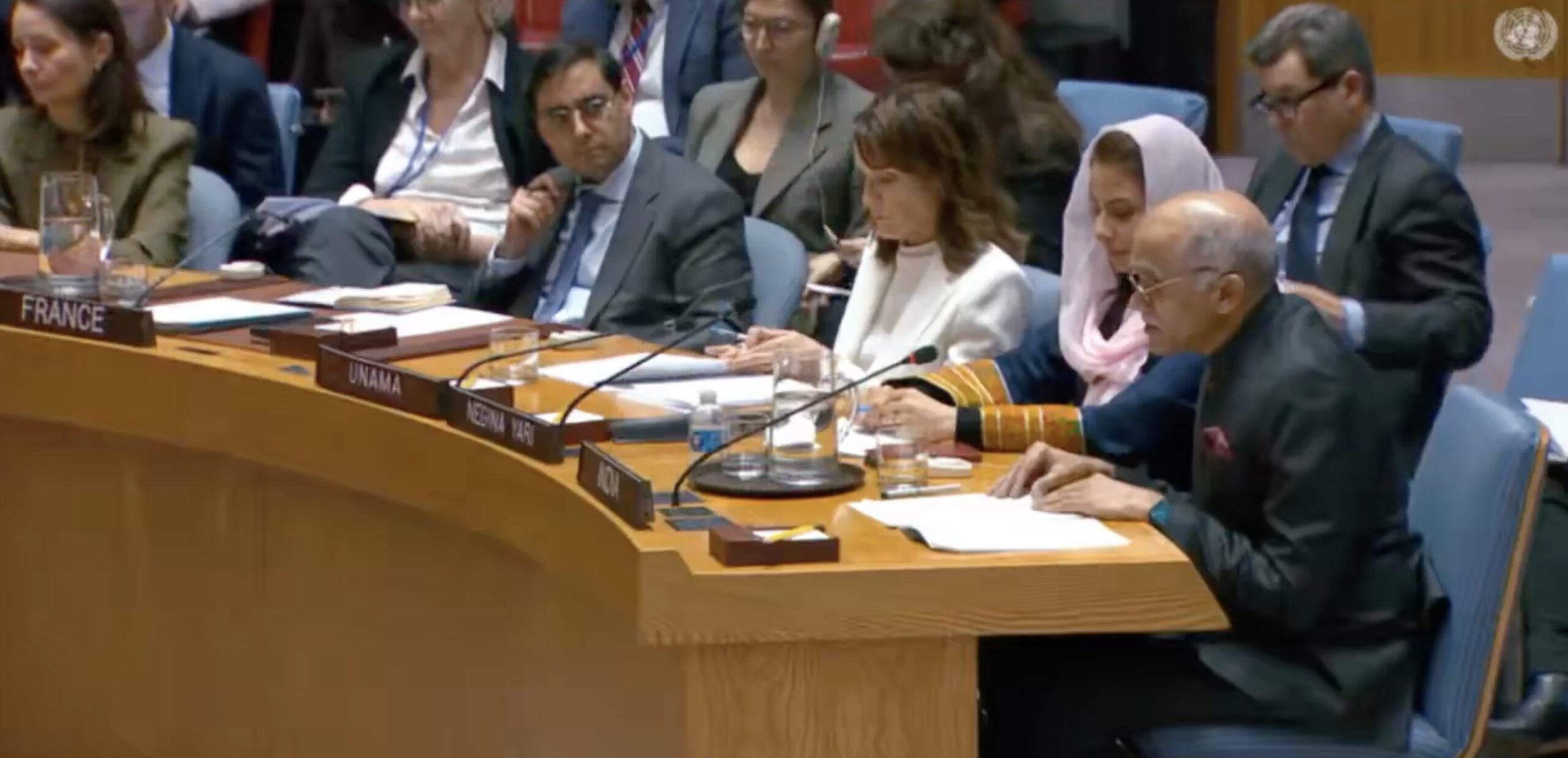
Permanent Representative of India to the United Nations, Ambassador Parvathaneni Harish, stressed that healthcare is a particularly “important need” for the people of Afghanistan during the United Nations Security Council Open Debate on the “Situation in Afghanistan” on December 10, 2025.
Speaking before the Council, he underscored India’s growing healthcare partnership with its “contiguous neighbor.” Healthcare cooperation, he said, will be further strengthened during the upcoming visit of Afghanistan’s Minister of Public Health to India.
Ambassador Harish noted that India has undertaken several critical health infrastructure initiatives, including establishing a Thalassemia Centre, a Modern Diagnostic Centre, and replacing the heating system at the Indira Gandhi Institute of Child Health in Kabul.
He added that India will also construct a 30-bed hospital in Kabul’s Bagrami district, as well as an Oncology Centre, a Trauma Centre, and five maternity health clinics. About 75 prosthetic limbs have been successfully fitted to Afghan nationals, and India continues to provide medical assistance and high-quality treatment. During Acting Foreign Minister Amir Khan Motaqi’s visit, India also gifted twenty ambulances.
During his speech, Ambassador Harish congratulated Slovenia on assuming the Security Council presidency and thanked UN officials for their briefing. He expressed his gratitude to Georgette Gagnon, OiC and Head of Mission, DSRSG-Political for Afghanistan for her briefing and shared that India has taken note of the comments made by USG Fletcher, and the Civil Society briefer Yari.
“As Afghanistan’s contiguous neighbor, India deeply values its civilizational relationship and centuries old bonds of friendship and this history continues to guide our actions in forging deeper ties with the people of Afghanistan,” he added.
He maintained that this history will continue to guide India’s approach, reiterating that India has long supported peace and stability in Afghanistan.
“Coordinated regional and international cooperation on key issues concerning Afghanistan is paramount as is strongly engaging relevant parties for promoting peace, stability and development in the country,” he told the Council, noting India’s participation in all rounds of the Doha Working Group meetings and other regional fora.
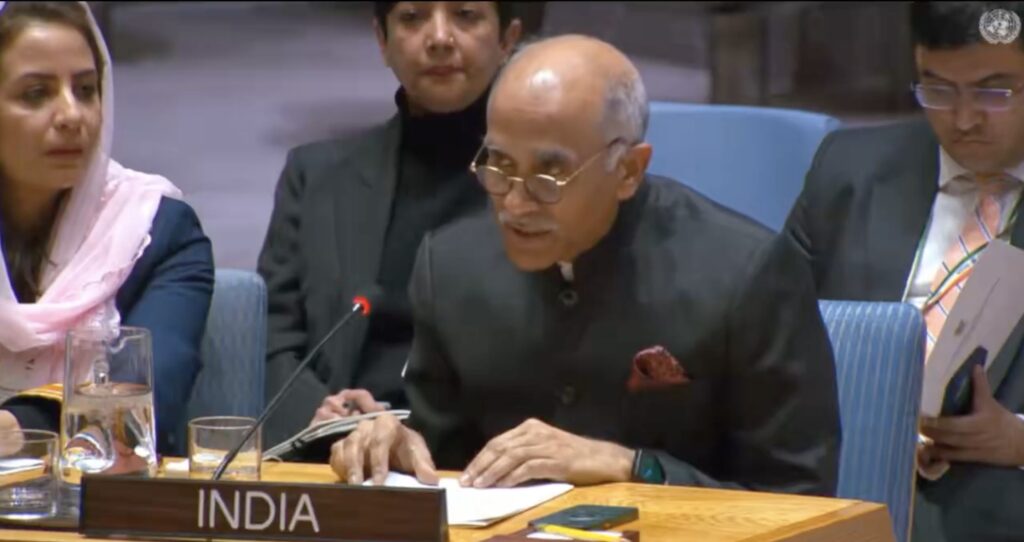
He emphasized that humanitarian assistance and capacity-building for the Afghan people remain India’s priorities. India has more than 500 development partnership projects across all Afghan provinces, and during Foreign Minister Motaqi’s recent visit, both sides agreed to deepen cooperation in “healthcare, public infrastructure and capacity-building.”
Ambassador Harish added that India will continue working with UN agencies in areas such as health, food security, education, and sports, and highlighted progress made during the visit of Afghanistan’s Minister of Industry and Commerce, who discussed connectivity, trade facilitation, and market access.
The Ambassador recalled that India was among the first responders following Afghanistan’s recent earthquake and continues to help reconstruct homes in the affected areas. India’s humanitarian support includes “food grains, social support items, school stationery, disaster relief materials and pesticides,” as well as aid to meet urgent needs of forcibly repatriated refugees.
Referring to the UN Secretary General’s report, he noted the severe humanitarian pressures caused by the involuntary return of more than 2 million Afghans this year, which contributed to a population increase of six percent in 2025. He said this demographic surge has heightened vulnerabilities, increasing the need for shelter, food security, and long-term reintegration solutions. He also highlighted the report’s findings on the economic and humanitarian impact of recent border clashes, which displaced hundreds of families, disrupted trade, and caused major losses for farmers during the fruit harvest season.
Ambassador Harish reminded the Council of the Awaza Political Declaration addressing the challenges faced by Land Locked Developing Countries, urging all states “not to weaponize trade and transit vulnerabilities.” He echoed the United Nations Assistance Mission in Afghanistan’s concerns regarding recent airstrikes and condemned the killing of civilians, including women, children, and athletes in Afghanistan.
“We add our voice to calls for paying full respect to the United Nations Charter and international law with particular attention to protection of innocent civilians,” said Ambassador Harish. He also condemned what he described as “trade and transit terrorism” created by the closure of access routes for a landlocked nation, calling the actions violations of WTO norms.
He reaffirmed India’s support for Afghanistan’s territorial integrity, sovereignty, and independence and urged the global community to ensure that UN-designated terrorist groups, including ISIL, Al Qaida, Lashkar e Tayyiba, Jaish e Mohammed, and the Resistance Front, are prevented from engaging in cross-border terrorism.
Ambassador Harish said India favors a “pragmatic engagement” with the Taliban and called for a coherent policy that incentivizes “positive actions.” Overreliance on “punitive measures,” he argued, risks entrenching a “business as usual” approach that has persisted for more than four years.
“We call on the United Nations and the international community to adopt nuanced policy instruments that help bringing sustainable benefits for the people of Afghanistan,” he stated, reiterating India’s commitment to supporting Afghanistan’s development.
He highlighted India’s recent decision to restore the status of its Technical Mission in Kabul to that of an Embassy as a sign of its long-term commitment. India, he said, will continue engaging with all stakeholders to support Afghanistan’s development, humanitarian needs, and capacity-building in accordance with the priorities of Afghan society.
Related posts:
 India Calls for Peace, Stability, and Greater Humanitarian Support for Afghanistan at UN Security Council
 At UNSC, India Highlights Centuries-Old “Civilizational Relationship” with Afghanistan
 Meenakshi Lekhi Calls Science and Technology the Bridge for a Stronger US-India Partnership at FIIDS Roundtable
 India reaffirms its commitment to support the people of Afghanistan