Join WhatsApp Channel

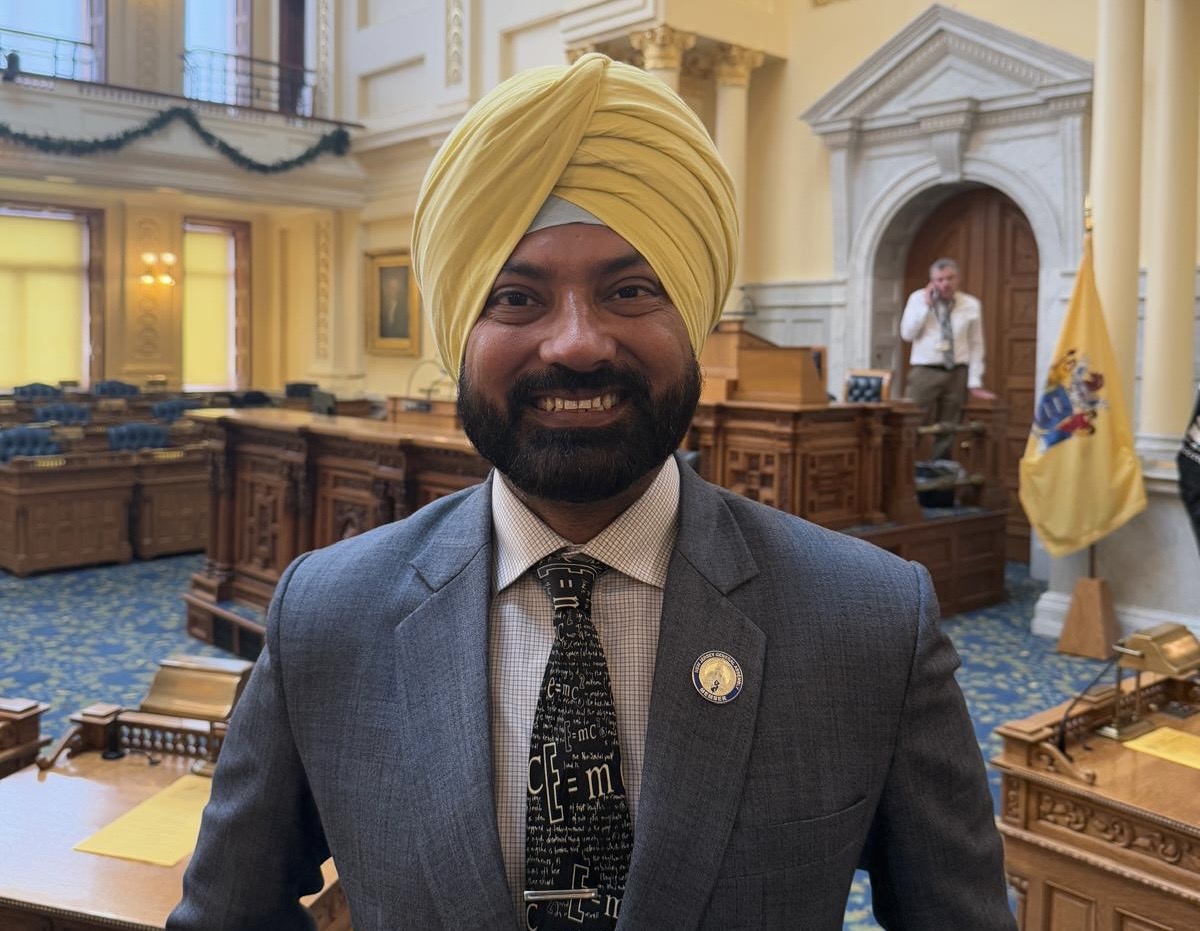
New Jersey Assemblyman Balvir Singh, a public-school educator representing Legislative District 7 and the first Sikh legislator in the state’s history, has asserted that qualities such as “discipline and hard work” have defined his path in public life.
In an exclusive interview with South Asian Herald, on December 8, 2025, Singh said he has always lived by the mantra: “Whatever you’re going do tomorrow, do it today. What are you going to do today, do it now.”
A lifelong educator, Singh previously served on the Burlington School Board and later as a County Commissioner before assuming office in the New Jersey Assembly in January this year. He won the reelection this November, describing the outcome as a reaffirmation of his “hard work” on behalf of his constituents. He noted that voters across racial and ethnic lines supported him strongly in the recent election.
As an Assemblyman, Singh emphasized his responsibility to legislate and advocate for residents facing affordability challenges, housing shortages, food insecurity, and rising energy costs. He often tells constituents he is their “advocate” and “free attorney,” working to secure the resources and services they need.
One of the key bills he is advancing focuses on incentivizing developers to increase housing in Burlington County. Singh noted that the county has several old industrial sites contaminated by chemicals and leakage. “So, we’re working on a special bill that would incentivize developers who commit to cleaning up contaminated sites in order to build housing there,” he said.
“My goal always is to do the very best that I can for the people. Represent them well, represent them honestly. So, people kind of start building trust back in the government,” he added. Singh said he continues to teach Math and English full time in Burlington Township Schools, noting that legislating in Trenton is a part-time role.
Reflecting on his earlier decision to run for County Commissioner, Singh said, “I ran for a County Commissioner position because I felt a certain way about how Trump described America in 2016. I wanted to challenge that narrative. So, I ran and ended up winning.”
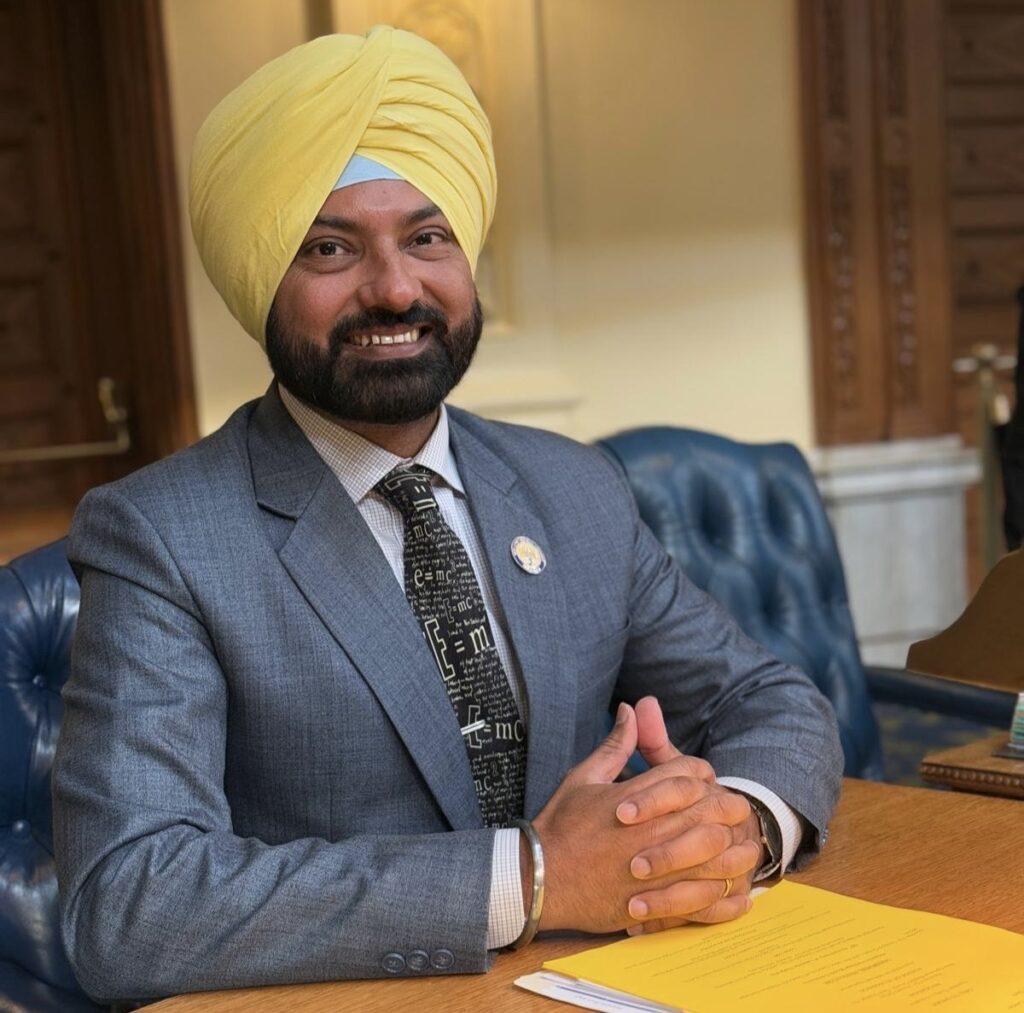
When he took over as a Commissioner in 2017, Singh pointed out Democrats were in the minority. In subsequent elections, he recalled, the party gained seats and secured a majority for the first time since 1976. As such, in 2019, Democrats had taken control of the county government.
Singh shared that he was elected Commissioner for a third time in 2023 and was content in the role until a legislative seat opened. He asked himself, “Why not me?”
“If I have a seat in the legislature, I can have more influence over legislation. I can write bills instead of influencing others on how to legislate and write bills. So, the question became, why not me? And that’s how I put my hat in the ring,” he said.
The Assemblyman said that being in public office has helped him understand issues that may not be visible to an ordinary resident. “Being elected, you get to hear a lot more,” he noted.
From the school board to the county commission and now the Assembly, Singh described his political journey as an organic progression. “For me, it was naturally the next step. From outside, it looks like a huge jump. But for me, I had the opportunity to serve these towns for seven years in the county. I argued that I have done a good job, and now I want to represent the same towns in Trenton,” he noted.
Singh said his district has approximately 230,000 residents, who are largely working-class families, concerned with affordability, and flooding issues. He said his conversations with voters’ often center on practical questions such as, “What are we going to do for housing? What are we going to do for property tax relief?”
He also highlighted a major bill he worked on with Democratic colleagues that provides seniors over age of 65 with a 50 percent reduction in property taxes as long as they remain current on payments.
“So that was a huge achievement,” Singh said. “Some got up to $6500 back. That’s huge for people on a retirement income.”
Singh noted that the Indian community in Burlington County is relatively small, consisting largely of Gujarati and Punjabi families. However, he added that the community has supported him since his first School Board race in 2013. To stay connected and provide effective constituent services, Singh said he makes it a priority to visit religious and community centers across the district.
About his journey to the United States, Singh recalled he came to this country in 1999, although moving abroad was not part of his family’s plans. His father initially migrated in the early 1990s for work and expected to return to their village in Hans Kalan, Punjab, but ultimately decided to relocate the family, he said.
According to Singh, his father worked in gas stations for years before becoming a long-haul truck driver. Today, Singh lives in Burlington with his father, his wife who is a dental hygienist, and their children.
Singh also attributed much of his success to the values instilled during his early life in the village, including the belief that “if you do work hard, you will get where you need to go,” and that “education is the greatest deliverer of all things, because it lets you do incredible things.”
He recalled growing up “relatively poor,” where his family farmed their land and lived a simple life. As a student, Singh described himself as “a bit studious” and once aspired to become a Punjabi teacher.
During a visit to Punjab last month, he cycled through his village reconnecting with old friends. One of the most memorable encounters, he said, was learning that the village barber he had known for decades follows him on Instagram and had even congratulated him on his election victory on the social media platform.
Related posts:
 New Jersey State Assembly Swears in Balvir Singh, First Indian American of Sikh Faith
 NJ’s Burlington Township Proclaims “Hanuman Utsav Week,” Honoring SGS Karya Siddhi Hanuman Mandir Consecration
 Loudoun Democrats Discuss Legislative Bills and 2025 Election Strategy at Annual Event in Leesburg
 Zohran Mamdani Announces Leadership Appointments Including Nisha Agarwal as Commissioner of MOPD