Join WhatsApp Channel

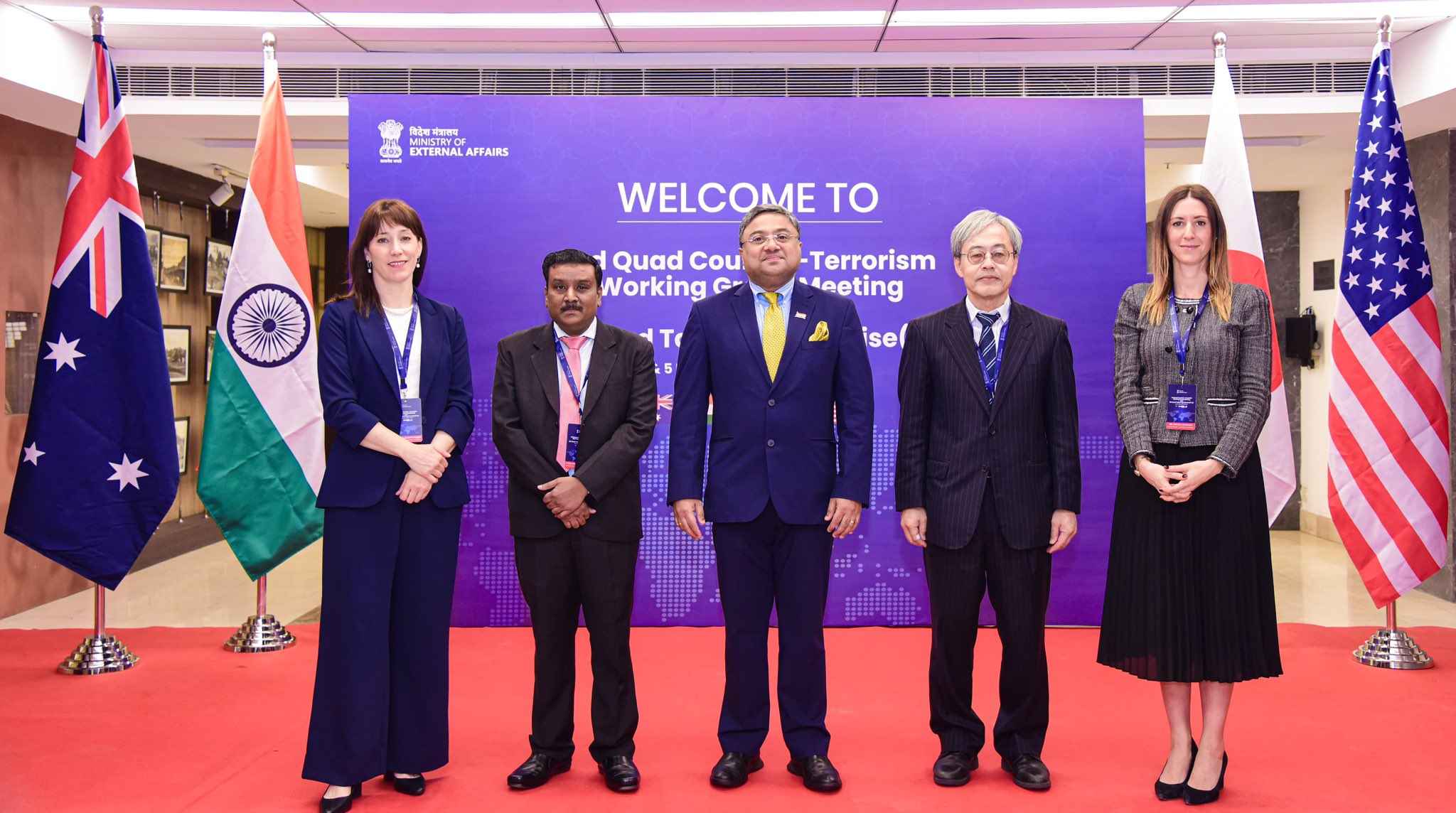
Quad partners, including the governments of the United States, India, Japan, and Australia, have reaffirmed their commitment to strengthening counterterrorism cooperation and agreed to convene the next Quad Counter Terrorism Working Group (CTWG) meeting in 2026.
The announcement followed the 3rd Quad CTWG meeting held in New Delhi on December 4 and 5, 2025, as part of India’s rotation hosting the next Quad Summit. The CTWG was originally established during the Quad Foreign Ministers’ Meeting in New Delhi in March 2023, according to a joint statement released on December 6.
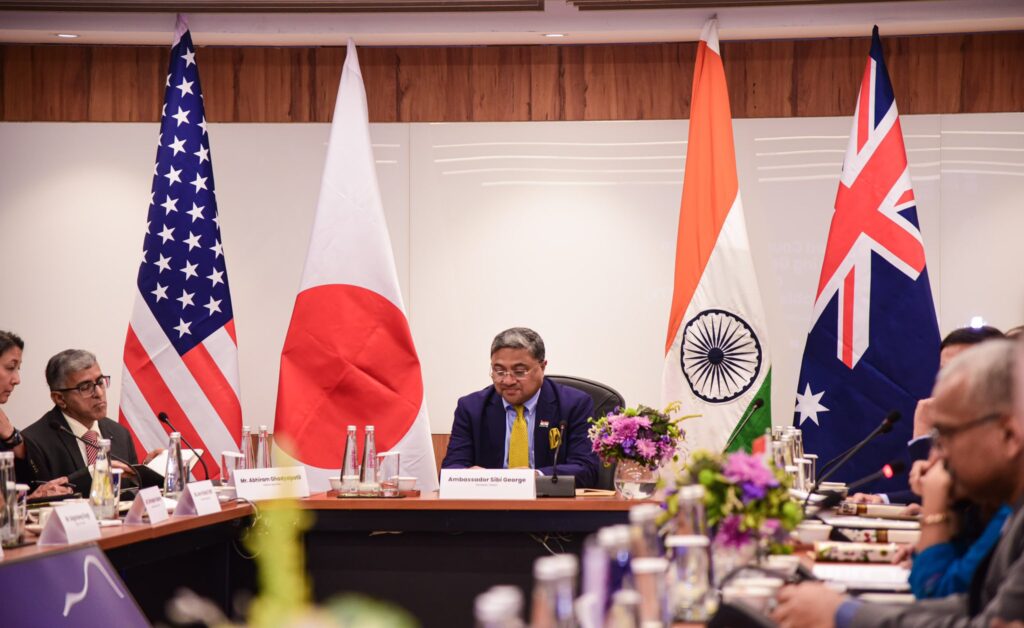
In his keynote address, Ambassador Sibi George, Secretary (West) in India’s Ministry of External Affairs, highlighted the need for “forging a common resolve within the Quad to combat the scourge of terrorism,” urging member countries to ensure that the CTWG becomes a more “resilient, robust, and action-oriented Working Group.” He also thanked Quad partners for their solidarity following the April 22 Pahalgam terror attack.
Senior counterterrorism officials led the delegations, including Vinod Bahade of India’s Ministry of External Affairs; Gemma Huggins of Australia’s Department of Foreign Affairs and Trade; Minami Hiroyuki of Japan’s Ministry of Foreign Affairs; and Monica Jacobsen of the U.S. Department of State.
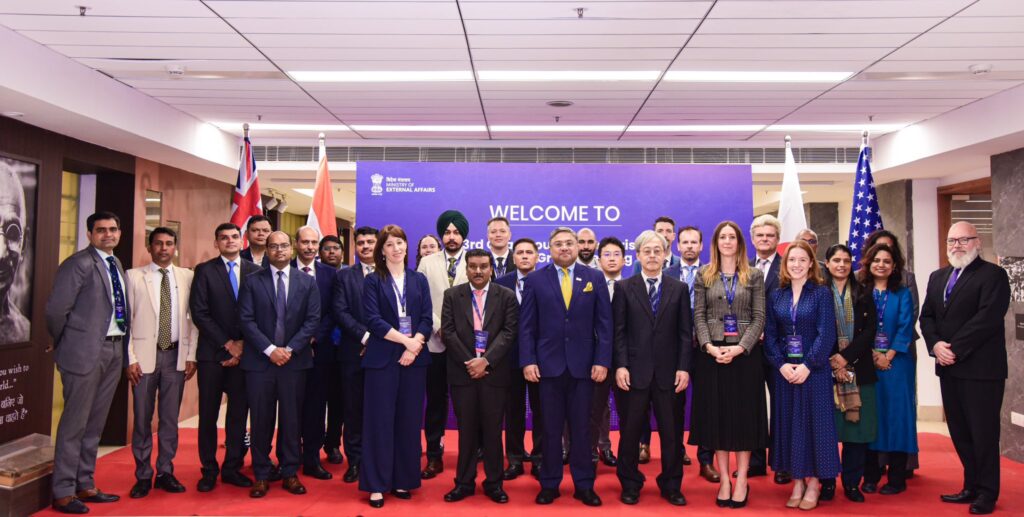
According to the joint statement, “Quad partners unequivocally condemned terrorism in all its forms and manifestations, including cross-border terrorism,” and offered condolences for the November 10 terror attack near the Red Fort in Delhi. The statement noted that Quad members urged all UN Member States to help bring “perpetrators, organizers, and financiers” of the crime to justice.
The meeting included exchanges on the evolving terrorism landscape, particularly in the Indo-Pacific region. Participants discussed a range of counterterrorism cooperation measures and reaffirmed the importance of keeping the Indo-Pacific open and free from terrorism-related threats.
A Tabletop Exercise on “Counter Terrorism Operations in the Urban Environment” was also conducted, allowing experts to share best practices and explore joint operational preparedness for complex scenarios. The Quad partners reiterated their commitment to information sharing on terrorists, organizations, and proxies.

In September 2025, India hosted two related CTWG workshops on countering the misuse of unmanned aerial vehicles and preventing the exploitation of emerging technologies for terror financing. These were organized by the National Security Guard and National Investigation Agency in coordination with India’s Ministry of External Affairs.
India-USA Joint Working Group on Counter Terrorism (JWG-CT)
Separately, the US State Department released another joint statement on the 21st Meeting of the India–USA Joint Working Group on Counter Terrorism (JWG-CT) and the 7th Designations Dialogue.
The statement issued on December 6 noted that the JWG-CT and Designations Dialogue, held on December 3, in New Delhi, were led by Vinod Bahade for India and Monica Jacobsen for the United States. Delegations discussed enhanced law enforcement and judicial cooperation, including information sharing and support on mutual legal assistance requests.
“The meetings underscored the importance of bilateral cooperation in countering terrorism, reflecting the spirit and breadth of the India-USA Comprehensive Global Strategic Partnership. Both sides unequivocally condemned terrorism in all its forms and manifestations, including cross border terrorism,” the statement said.
Participants raised concerns about the increasing use of unmanned aerial vehicles, drones, and artificial intelligence for terrorist activities. Both sides condemned the April 22 attack in Pahalgam and the November 10 attack near the Red Fort, emphasizing the need for accountability.
The two delegations reviewed traditional and emerging threats, including terrorist recruitment, technological misuse, and terrorism financing. They also discussed opportunities for collaboration through training, cybersecurity cooperation, exchanges of best practices, and information sharing across bilateral and multilateral platforms.
The delegations agreed that combating terrorism requires “concerted action” carried out in a sustained and comprehensive manner. Both countries reaffirmed their commitment to strengthening multilateral cooperation, including through the UN, Quad mechanisms, and the Financial Action Task Force.
They also called for additional UN 1267 listings of ISIS and al-Qa’ida affiliates, as well as Lashkar-e-Tayyiba, Jaish-e-Mohammad, and associated groups, to ensure global enforcement of asset freezes, travel bans, and arms embargoes. India thanked the U.S. Department of State for designating The Resistance Front, a proxy of Lashkar-e-Tayyiba, as both a Foreign Terrorist Organization and a Specially Designated Global Terrorist.
Both sides agreed to hold the next JWG-CT and Designations Dialogue meeting in the United States at a mutually convenient date.
Related posts:
 Secretary Marco Rubio Welcomes Quad Foreign Ministers in DC for High-Level Diplomatic Talks
 Foreign Minister Jaishankar Highlights Quad Progress, US-India Ties, and Political Unity
 Japan’s Consul-General in Perth Reaffirms Quad Vision: Friendship, Prosperity, and a Free Indo-Pacific
Time to Quad Up: Why the U.S. Needs India and Australia to Win the Tech Race
Japan’s Consul-General in Perth Reaffirms Quad Vision: Friendship, Prosperity, and a Free Indo-Pacific
Time to Quad Up: Why the U.S. Needs India and Australia to Win the Tech Race