Join WhatsApp Channel


Across the U.S., South Asians are breaking barriers in medicine, tech, finance, academia, and entrepreneurship. We are one of the most educated and highest-earning immigrant groups in the country. Yet behind the impressive résumés and enviable achievements lies a quieter truth we rarely discuss publicly. We are succeeding on paper but shrinking in rooms where power is built.
From Fortune 500 boardrooms to startup standups, South Asian professionals often hesitate to speak up, self-advocate, or claim credit. And the cost of that hesitation is enormous: lost opportunities, missed promotions, and innovative ideas that never see daylight.
This isn’t a confidence issue. It’s a cultural one. Many of us grew up hearing familiar refrains at home:
Don’t draw attention to yourself.
Work hard and stay humble.
Your work will speak for itself.
What will people think?
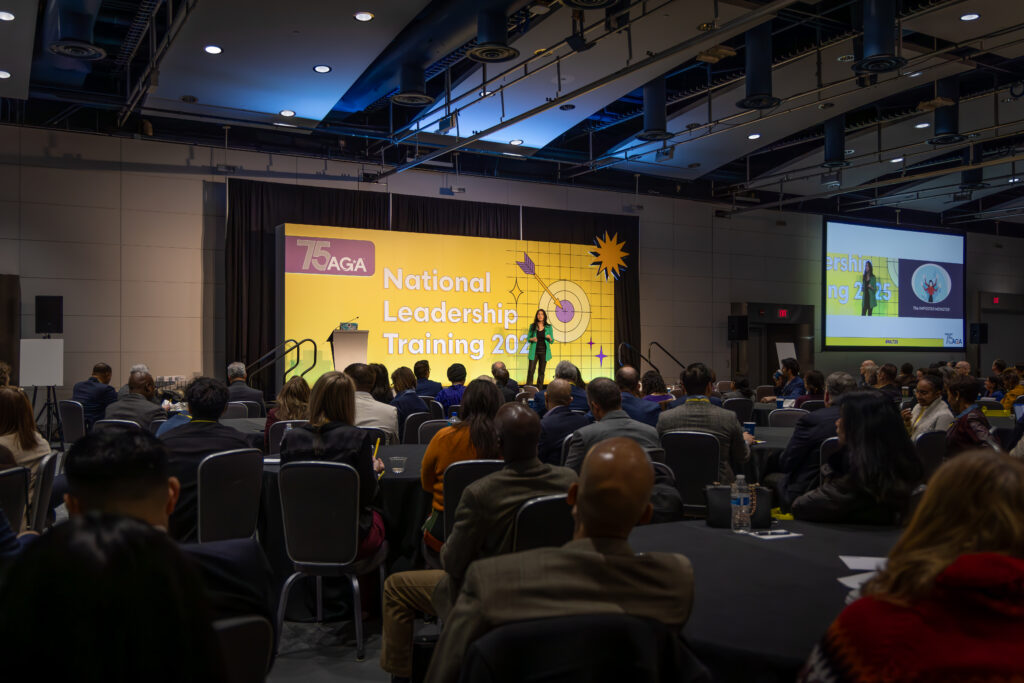
Those messages were meant to protect us. But they also trained an entire generation of high-performing South Asians to keep their heads down, work harder than everyone else, and hope someone would notice. In the American workplace, that strategy often backfires.
Great work does not speak for itself. People do.
And if we don’t speak for our work, someone else will, or worse, no one will. Managers often mistake silence for disengagement. Promotions go to employees who articulate impact. And innovation dies when the people closest to the problem stay quiet about the solution. In corporate America, invisibility isn’t humility. It’s career sabotage.
For South Asian’s the inner critic is a familiar voice with cultural roots. Every South Asian professional knows this voice.
The one that whispers:
“Don’t make a fuss.”
“You’re lucky to be here.”
“Keep your head down.”
“Don’t disappoint anyone.”
“Don’t be too much.”
It’s the same voice that makes us downplay achievements, brush off compliments, or stay silent in meetings even when we have the right answer. For many in our community, especially women, the inner critic isn’t an occasional visitor, it’s constant background noise. And when that inner critic runs the show, organizations lose out on the insight, creativity, and courage that South Asians bring.

The real tension for South Asians working in corporate America is that we were raised in collective cultures (or by parent(s) from collective cultures), but we work in an individualistic system.
At home:
You are part of “we.”
Be respectful.
Be agreeable.
Don’t stand out.
At work:
Be assertive.
Challenge ideas.
Show your value.
Stand out – Showcase the “I”
For many of us, this creates an identity split. We’re asked to be visible in environments where visibility was never encouraged. And that mismatch leaves talent on the table-talent companies desperately need. The untold cost to companies is that ideas never surface. When South Asian professionals hesitate to speak up, organizations lose:
Innovation:
Undervalued voices mean overlooked ideas, ideas that could improve products, processes, and revenue.
Retention:
Employees who feel unseen or unheard eventually leave.
Trust:
Teams can’t collaborate deeply when people don’t feel safe disagreeing or offering solutions.

Research shows that diverse teams outperform homogeneous ones ONLY when every voice participates. Silence kills that advantage. This is no longer a cultural story; it’s a business story.
As you are reading, you might be thinking, ‘yes, this is true, so what do I do?’
The solution is standing up for yourself, to yourself! One of the most radical shifts South Asians can make isn’t external. It’s internal. We must challenge the narratives we inherited and that begins with noticing our self-talk.
If you wouldn’t speak to a coworker, the way you speak to yourself…
If you celebrate others but minimize your own wins…
If your first instinct is self-blame instead of self-support…
Your inner critic needs a new job description!
Clearer, kinder, more accurate self-talk isn’t ego, it’s alignment and it’s the foundation of leadership. Speaking up doesn’t mean abandoning humility, respect, or cultural values. We don’t need to choose between honoring where we come from and advocating for where we’re going.
We can do both. We can be a part of and apart from our collective upbringing. Self-advocacy is not arrogance, visibility is not disrespect, and clarity is not confrontation. Self-advocacy is fairness, truth, and the bridge between talent and opportunity. The future of South Asian leadership starts with us.
As AI reshapes the workplace and decision-making becomes faster and more complex, human judgment, emotional intelligence, and courageous communication will matter more than ever. South Asians bring depth, discipline, resilience, and global perspective. But none of that moves organizations if it stays unspoken. The leaders of the future will be those who know how to use their voice as strategically as their skill. It is time for us, as the South Asian Diaspora, to stop underestimating our impact.

Our ideas deserve daylight.
Our stories deserve space.
Our voices deserve rooms that hear them.
The next generation is watching. Let’s give them a model of leadership rooted in both our heritage and our potential.
If you’re interested in speaking with me or learning more about how I support organizations and teams, you can reach me at neelu@neelukaur.com or visit www.neelukaur.com.
I welcome invitations to speak at conferences, corporate events, and community gatherings.
Disclaimer: The opinions and views expressed in this article/column are those of the author(s) and do not necessarily reflect the views or positions of South Asian Herald.
Related posts:
 The Silent Epidemic: Why South Asians Face a Higher Risk of Heart Disease
 Redefining Tradition: How Second-Generation South Asians Are Navigating Identity, Love, and Stigma
 2025 Cinema Recap Part 1: Of Critic-Proof and Other Eccentric Cinema
 Indiaspora Health Series Examines Diabetes Risks and Prevention in South Asian Communities