Join WhatsApp Channel

As Gaza lies in ruins and legal walls close in, Israel’s longest-serving prime minister seeks escape from accountability
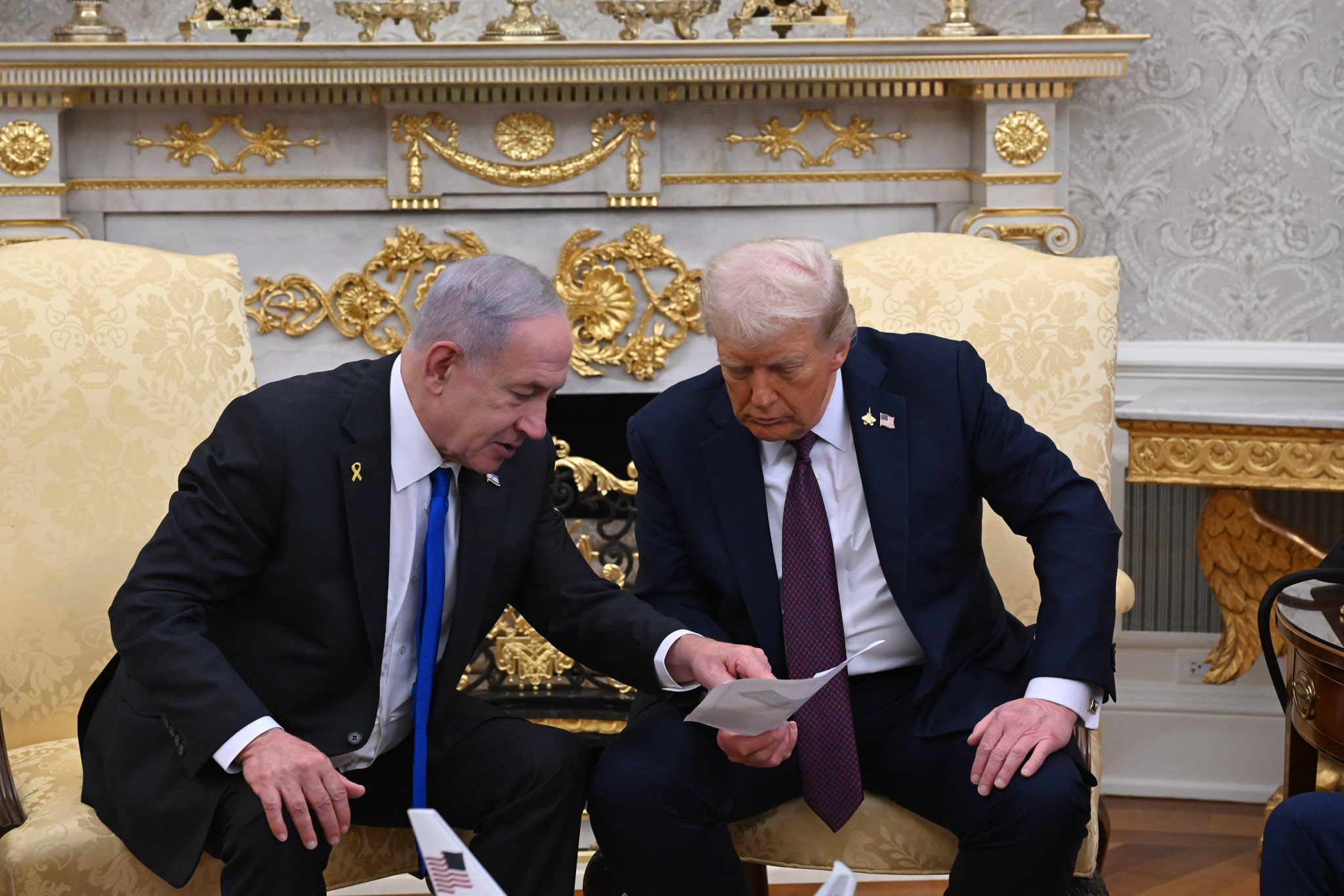
Benjamin Netanyahu’s request for a presidential pardon, submitted quietly on a Thursday and publicized days later, represents far more than a legal maneuver in a corruption trial. It is the clearest signal yet that Israel’s longest-serving prime minister recognizes what many have long suspected: his political endgame is approaching, and he is running out of moves.
The timing is hardly coincidental. Netanyahu faces criminal charges for bribery, fraud, and breach of trust—charges he once vowed would “collapse” in court. His testimony, which began in December 2024, has been subject to repeated delays. Meanwhile, the Gaza war he has prosecuted with singular determination for over a year has left the coastal enclave in ruins, killed tens of thousands, and increasingly isolated Israel on the world stage.
The pardon request, framed as being in the “public interest” despite containing no admission of guilt, raises a fundamental question: has Netanyahu’s strategy of political survival through endless conflict finally reached its limits?
The Gaza Calculus
When Hamas launched its brutal attack on October 7, 2023, killing approximately 1,200 Israelis and taking hundreds hostage, Netanyahu faced both a security crisis and a political opportunity. The attack occurred on his watch, after years of his dismissing warnings about Hamas’s capabilities. A swift, limited response might have exposed his security failures. Instead, he chose total war.
What followed was a military campaign of extraordinary scope and devastation. Israel’s stated objective—eliminating Hamas as a military and governing force—required the destruction of vast swathes of Gaza’s infrastructure.
According to UN agencies, the bombardment and ground operations have killed more than 40,000 Palestinians, though exact figures remain contested and likely undercount the actual toll. Independent assessments suggest the true number may exceed 60,000 when accounting for those buried under rubble or dead from indirect causes.
The statistics of destruction are staggering. Approximately 60-70% of Gaza’s housing stock has been damaged or destroyed. Hospitals, schools, and water infrastructure lie in ruins. Nearly two million people have been displaced, many multiple times. UN officials have described the humanitarian situation as catastrophic, with Gaza reduced to what one aid worker called “a landscape of rubble punctuated by tents.”
Netanyahu has defended these operations as necessary to achieve Israel’s security objectives. Yet more than a year into the campaign, Hamas’s leadership structure, while degraded, has not been eliminated. Hostages remain in captivity. And the strategic question looms: even if Hamas is destroyed as an organization, what comes next in a territory where an entire generation has now witnessed their homes demolished and families killed?
The International Reckoning
The conduct of the Gaza campaign has triggered unprecedented international legal scrutiny. South Africa brought a case before the International Court of Justice alleging that Israel’s actions constitute genocide—a charge Israel vehemently denies. While the ICJ has not ruled on the merits, it has ordered provisional measures calling on Israel to prevent genocidal acts and ensure humanitarian access.
The International Criminal Court’s chief prosecutor has sought arrest warrants for Netanyahu and his defense minister, alongside Hamas leaders, for alleged war crimes. These include charges related to the use of starvation as a weapon of war and deliberate targeting of civilians.
Even Israel’s closest ally has expressed concerns. The then Biden administration repeatedly pressed Netanyahu to minimize civilian casualties, increase humanitarian aid, and develop a credible post-war plan for Gaza. These entreaties were largely ignored. The relationship between Biden and Netanyahu deteriorated to the point where American officials privately described the Israeli leader as untrustworthy.
The arrival of Donald Trump back in the White House initially seemed to offer Netanyahu a reprieve. Trump has been effusive in his support, even writing directly to Israel’s president requesting a pardon for his “formidable” ally. Yet Trump has also signaled impatience with endless conflict, demanding that Israel “finish the job” and wind down operations. His transactional approach to foreign policy offers Netanyahu no guarantees of indefinite support.
Trump’s 20 point plan in restoration of peace in Gaza is under implementation as its a workable solution end the war and it has brought Israel and Hamas to the negotiating table , the latter that possesses no bargaining chip and yet acts defiant. For surrender means elimination totally, annihilation with no support from Iran.
The Domestic Trap
Domestically, Netanyahu’s position appears strong but is fundamentally precarious. His far-right coalition partners—particularly National Security Minister Itamar Ben-Gvir and Finance Minister Bezalel Smotrich—have kept him in power. But they have also constrained his freedom of action, opposing any compromise on Gaza or the hostage negotiations that might have ended the war months ago.
This creates a paradox: Netanyahu needs the war to maintain his coalition and avoid facing his corruption trial from a position of weakness. Yet the war itself has eroded his standing with the Israeli public. Families of hostages have become his most vocal critics, staging protests and accusing him of sacrificing their loved ones for political survival.
The pardon request can be read as an acknowledgment of this trap. After years of insisting he would be vindicated in court, Netanyahu is now effectively conceding that he cannot win through the legal process. His letter to President Herzog speaks of “healing rifts” and “national unity”—language that sits uneasily coming from a politician who has spent decades exploiting division, casting Arab citizens and the left as enemies within.
Opposition leader Yair Lapid captured the contradiction: “Only someone guilty asks for a pardon.” The statement is political rhetoric, but it reflects a broader truth. Netanyahu’s request, made without admission of guilt or commitment to leave politics, appears less like an act of statesmanship than a bid for immunity.
The Unsustainable Equilibrium
Netanyahu has survived for so long by being politically nimble, exploiting divisions, and manufacturing crises that consolidate his base. But the current situation presents variables he cannot fully control.
The Gaza war cannot continue indefinitely. Israeli reservists are exhausted after repeated call-ups. The economic costs are mounting. International patience is finite. Even if military operations wind down, Israel will face questions about Gaza’s future that Netanyahu has studiously avoided answering.
The corruption trial will proceed regardless of Trump’s letter. President Herzog, while sympathetic to arguments about national interest, faces his own constraints. Legal scholars note that pardons in Israel are typically granted after conviction, not during trial—to do otherwise risks undermining the judicial system entirely. And Herzog, whose role is meant to be above politics, must consider his own legacy.
Most fundamentally, the Israeli public is weary. Surveys suggest that while Netanyahu retains support among his base, his overall approval ratings have declined. The emergency unity government that formed after October 7—which included centrist leaders like Benny Gantz—has dissolved, with those leaders citing Netanyahu’s lack of a coherent strategy.
The End of the Road?
The pardon request suggests Netanyahu understands that his room for maneuver is narrowing. He cannot end the Gaza war without losing his coalition. He cannot continue it indefinitely without losing public support. He cannot win his trial outright. And he cannot rely on Trump’s support forever.
What he has done instead is attempt to reset the board—to reframe his legal troubles as an obstacle to national unity that should be removed in the broader interest. It is a characteristically audacious move from a politician who has made a career of escaping seemingly impossible situations.
Yet there is something desperate in the maneuver. Netanyahu has built his political identity on strength, on the claim that only he can protect Israel. The pardon request undermines that narrative. It suggests not strength but vulnerability; not vindication but compromise.
The ultimate irony is that Netanyahu’s strategy of using conflict to maintain power may have finally trapped him. The Gaza war has made him increasingly radioactive internationally while failing to deliver decisive victory. His coalition keeps him in office but constrains his options. And now, seeking escape from his legal troubles, he must appeal to institutions and norms he has spent years undermining.
Whether President Herzog grants the pardon remains uncertain. What seems increasingly clear is that Netanyahu’s era is entering its final chapter. The question is no longer whether it will end, but how—and what the cost of his extended exit will be for Israel, for Gaza, and for the prospects of any durable peace in a region that has seen far too much war.
Disclaimer: The opinions and views expressed in this article/column are those of the author(s) and do not necessarily reflect the views or positions of South Asian Herald.
Related posts:
 Indian American Democratic Lawmakers Voice Criticism Over President Biden’s Pardon of His Son
 Indian-American lawmakers boycott Israel PM Netanyahu’s speech to US Congress; protesters gather in Washington DC
 Opinion: Waiting for Peace to Return
 U.N. Backs Trump’s Gaza Plan, Marking an Unusual Convergence After Years of Mutual Distrust