Join WhatsApp Channel

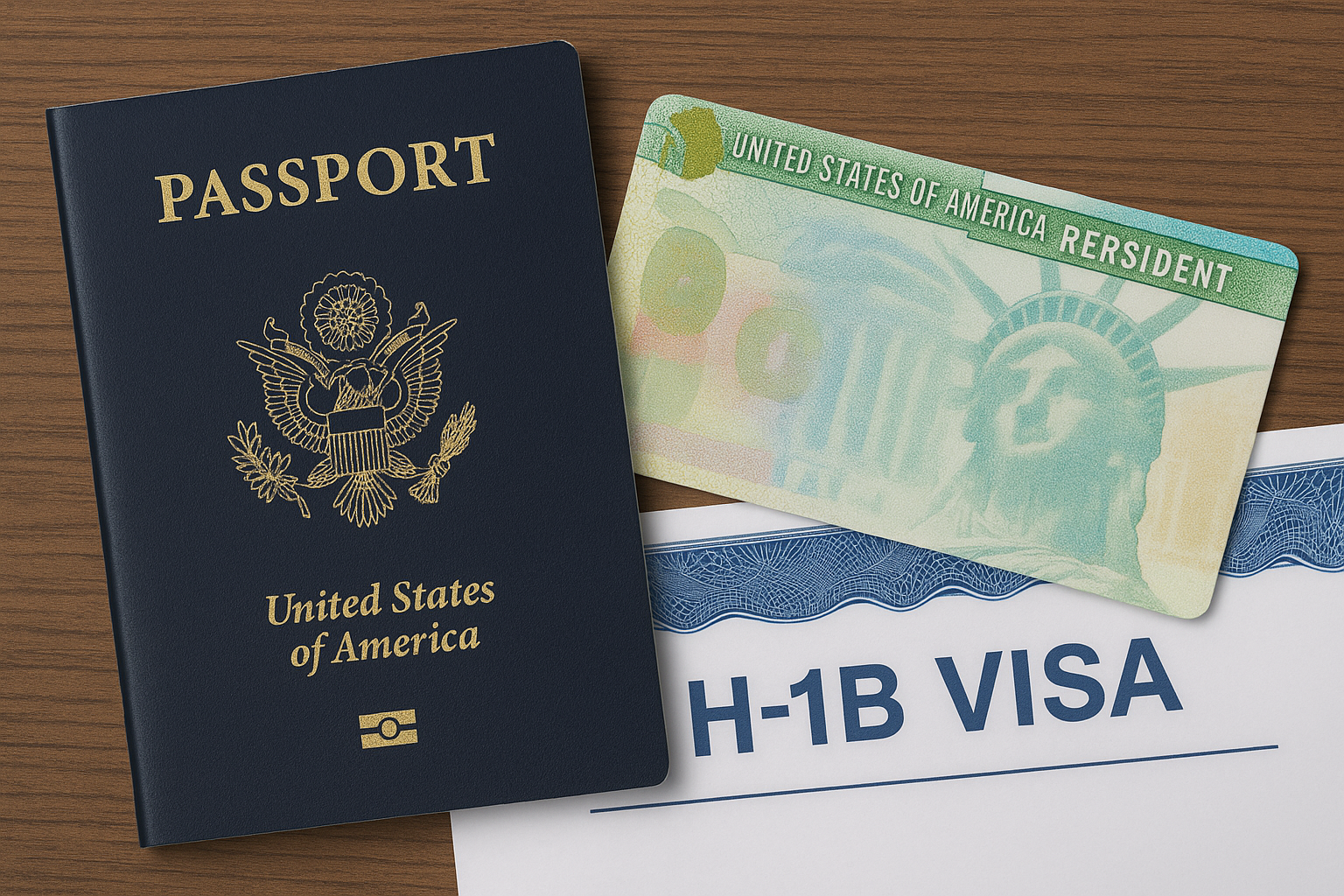
Rahul Sharma had finally started to breathe easier. After eight years on an H-1B visa, the 34-year-old software engineer from Bangalore had received his green card interview date for January. His wife had just started a small business. Their 7-year-old daughter was thriving at school in San Jose. The American dream, deferred for nearly a decade, seemed within reach.
Then came the shooting near the National Mall.
When an Afghan national killed Army Specialist Sarah Beckstrom and critically wounded Air Force Staff Sgt. Andrew Wolfe in what authorities called a targeted ambush, President Trump moved with startling speed. Within 48 hours, the administration announced reviews of green cards from 19 high-risk countries and signaled broader restrictions on what Trump termed “all Third World countries.”
India isn’t on the list of 19 nations. But for Sharma and 1.2 million Indians like him caught in the employment-based immigration backlog, the message landed with chilling clarity: In Trump’s America, even legal immigration — even after years of playing by the rules — offers no guarantee of permanence.
“My wife asked me last night: ‘Are we next?'” Sharma said in a phone interview, speaking on condition that his real name not be used for fear of jeopardizing his case. “We followed every rule. We paid our taxes. We built our lives here. And now we’re wondering if it could all disappear because of something someone else did halfway across the country.”
A Community Under Siege
The Indian diaspora in America — 5.1 million strong and the highest-earning ethnic group in the nation — has become an unlikely focal point in Trump’s immigration overhaul. While the administration’s immediate response targeted Afghan nationals and 18 other countries deemed high-risk for national security, immigration attorneys and policy experts warn that the precedent of retroactively reviewing already-granted legal status could expand far beyond initial boundaries.
The timing compounds existing anxieties. In September, the Trump administration imposed a $100,000 application fee on new H-1B visas — a 2,000% increase from previous costs that sent shockwaves through the Indian professional community. Indian nationals receive approximately 71% of all H-1B visas annually, making them disproportionately affected by the policy shift.
India’s Ministry of External Affairs warned that the H-1B fee hike was “likely to have humanitarian consequences” by disrupting families, in one of New Delhi’s most pointed public criticisms of Trump administration policy.
Now, with U.S. Citizenship and Immigration Services Director Joseph Edlow ordering “a full-scale, rigorous reexamination of every green card for every alien from every country of concern,” the Indian community faces a perfect storm of uncertainty.
“We’re seeing panic at levels I’ve never witnessed in 15 years of immigration practice,” said Prashanthi Reddy, an immigration attorney in Houston whose client base is predominantly Indian H-1B holders. “People are asking: Should I buy a house? Should I have another child? Should I even stay in this country?”
The Economic Stakes
The potential exodus represents an extraordinary economic risk for both nations. The Indian diaspora contributes an estimated $300 billion annually in federal taxes — roughly 6% of all income tax collected by the U.S. government. Eleven Fortune 500 companies are led by Indian-origin CEOs, overseeing enterprises with a combined market capitalization exceeding $6.5 trillion.
The roster reads like a who’s who of American corporate power: Sundar Pichai at Alphabet (whose 2022 compensation exceeded $200 million), Satya Nadella at Microsoft (who earned $79.1 million in 2024), Shantanu Narayen at Adobe, Arvind Krishna at IBM, Sanjay Mehrotra at Micron Technology, and Raj Subramaniam at FedEx, among others.
Seventy-two of America’s 648 unicorn startups are led by Indian-origin founders, employing over 55,000 people and driving innovation in artificial intelligence, cloud computing, and enterprise software — the very sectors where America competes most intensely with China.
“The irony is profound,” said Dr. Mukesh Aghi, president of the US-India Strategic Partnership Forum. “At the exact moment we’re trying to outcompete China in AI and quantum computing, we’re creating policies that push away the very talent that gives us our competitive edge.”
The Green Card Nightmare
For Indians, the path to permanent residency has long been a Kafkaesque ordeal. Due to per-country quota caps limiting any nation to just 7% of annual employment-based green cards, Indian nationals in the EB-2 and EB-3 categories face waits of 10 to 15 years. Some applicants who filed in 2012 aren’t expected to receive green cards until the 2060s or 2070s.
The backlog has created a generation living in perpetual limbo. H-1B holders cannot easily change jobs or start businesses. Their children “age out” at 21, losing their dependent status and often being forced to leave the only country they’ve ever known. Spouses on H-4 visas face restrictions on work authorization that the Trump administration has sought to eliminate entirely.
“I’ve been in the U.S. for 18 years,” said Anjali Mehta, an IT project manager in Chicago who asked that her real name not be used. “My son was born here. He’s in high school. My daughter is applying to colleges. And I still don’t have a green card. Now they’re talking about reviewing everyone’s cases? What does that even mean for us?”
The administration’s announcement of retroactive reviews represents legally uncharted territory. Courts historically grant presidents broad authority over who enters the country but far less power to strip legal status once granted.
“To remove a green card holder, you must prove they personally pose a national security threat,” said Muzaffar Chishti of the Migration Policy Institute. “Country of origin alone won’t suffice under current law.”
Yet the administration appears willing to test those boundaries. The Department of Homeland Security confirmed it is reviewing all asylum approvals issued under the Biden administration — an unprecedented step that immigration experts say could take years and tie up the system for legitimate applicants.
The Congressional Response
As the Trump administration escalates its crackdown, a small but growing group of Indian American lawmakers has emerged as the diaspora’s most visible defenders in Washington.
Congressman Raja Krishnamoorthi, who represents Illinois’ 8th District and recently announced a Senate bid, is the first Indian American or person of South Asian descent to serve as a Ranking Member or Chair of any full committee in Congress. Born in New Delhi and raised in Peoria after his family briefly lived in public housing, Krishnamoorthi embodies the immigrant success story that the current policies threaten to foreclose.
“With 29 letters in my name, I am that stereotypical person who maybe Donald Trump doesn’t want to see in the U.S. Senate but who belongs there,” Krishnamoorthi said in a recent interview, addressing rising anti-South Asian sentiment.
He’s joined in Congress by Representatives Ro Khanna (California), Ami Bera (California), Pramila Jayapal (Washington), Shri Thanedar (Michigan), and the newly elected Suhas Subramanyam (Virginia) — a group informally known as the “Samosa Caucus.” Together, they represent the largest Indian American presence in congressional history.
The caucus has introduced bipartisan legislation to fast-track weapons sales to India and strengthen the U.S.-India defense partnership, demonstrating that even as immigration tensions rise, strategic cooperation continues.
Yet on immigration, the caucus faces an uphill battle. With Republicans controlling both chambers of Congress and Trump enjoying broad support for his hardline stance, legislative fixes for the green card backlog remain elusive.
“We’re advocating every single day,” said a senior aide to one Indian American congressman, speaking on condition of anonymity to discuss internal strategy. “But the reality is, on immigration, we’re swimming against a very strong current right now.”
India’s Delicate Diplomacy
For the Indian government, Trump’s immigration crackdown presents a diplomatic tightrope. Prime Minister Narendra Modi has cultivated a personal relationship with Trump, receiving a prominent seat at the presidential inauguration and meeting with Secretary of State Marco Rubio on his first day in office. The strategic partnership — particularly regarding China — remains robust.
Yet immigration has become an unmistakable irritant.
Foreign Ministry spokesperson Randhir Jaiswal stated after the H-1B fee announcement that the policy could create “considerable uncertainty for businesses, professionals, and students across the world.” More recently, Jaiswal emphasized that “mobility of skilled professionals is an important component” of the U.S.-India partnership, noting that “both sides leverage their strengths and competitive value.”
Behind closed doors, Indian officials have expressed stronger frustration. Multiple sources familiar with diplomatic discussions said Indian trade representatives have warned their American counterparts that the immigration policies could trigger reciprocal measures, including restrictions on American companies operating in India.
Nasscom, India’s $283 billion IT industry trade group, has been more direct. The organization warned that Trump’s policies “can potentially have ripple effects on America’s innovation ecosystem and the wider job economy.”
Some Indian officials privately suggest that a “reverse brain drain” could ultimately benefit India if skilled workers return home to fuel the country’s booming technology sector. Yet economists remain skeptical that India’s economy, despite rapid growth, can absorb hundreds of thousands of highly paid professionals accustomed to American salaries and living standards.
“It’s a nice theory,” said Madhavi Arora, chief economist at Emkay Global Financial Services in Mumbai. “But the reality is more complicated. These professionals have built their lives in America. Their children are American. You can’t just flip a switch.”
The Exodus Begins
Nonetheless, immigration experts report an accelerating talent exodus as Indian professionals recalculate their futures. Canada’s Global Talent Stream offers two-week work permits for high-demand roles. Australia’s skilled migration program provides clearer pathways to permanent residency. Germany’s EU Blue Card has become increasingly attractive for STEM professionals.
Even as Trump defended the H-1B program in a recent Fox News interview — telling Laura Ingraham “you don’t have certain talents” when she insisted America has plenty of skilled workers — his administration’s actions tell a different story.
“Mixed messages are the hallmark of this administration’s approach,” said David Bier, director of immigration studies at the libertarian Cato Institute. “The president says one thing about needing foreign workers and talent, but every lever of bureaucracy moves the other way.”
Anna Gorisch, a Texas-based immigration attorney who voted for Trump in 2024 believing he would bring order to the immigration system, now feels betrayed. “I took a chance and went with the coalition, which crumbled within months,” she told Newsweek. “Since then, I have been absolutely baffled by the shift in focus from correcting illegal immigration to attacking legal immigrants.”
For the approximately 200,000 Indian students currently studying at American universities, the uncertainty looms especially large. Many are reconsidering post-graduation plans, exploring options in Ireland’s emerging technology hub, considering returns to India’s growing economy, or applying to programs in countries with clearer immigration pathways.
“Everything now feels like it’s come to a halt,” said Gunjan Malviya, who works for an IT company outside Delhi and abandoned her U.S. visa application after the September fee hike. “I don’t know what my next steps are.”
A Community in Limbo
Back in San Jose, Rahul Sharma checks his email obsessively for updates on his green card interview. His company has been supportive, but uncertainty pervades every decision.
“We were thinking about buying a bigger house,” he said. “Now we’re not sure if we should sign a lease for another year. My daughter asks why we can’t visit my parents in India — I can’t explain to a 7-year-old that if I leave, I might not be able to come back.”
The shooting that triggered this cascade of uncertainty has become more than an isolated tragedy. For the families of Specialist Beckstrom and Staff Sgt. Wolfe, the grief remains deeply personal. But in the political machinery of Washington, the attack has been weaponized into a broader argument about immigration as an existential security threat.
That framing, immigration advocates argue, casts unwarranted suspicion on entire communities who have contributed immeasurably to American prosperity.
“These are people who followed every rule, passed every background check, paid every fee, waited years for their turn,” said Krish O’Mara Vignarajah, CEO of Global Refuge. “Now they’re being told that none of that matters, that they’re all potentially suspect because of their country of origin.”
As the Trump administration forges ahead with its immigration overhaul, the impact on the Indian community will serve as a bellwether for America’s relationship with skilled immigration. Whether these policies ultimately strengthen national security or undermine the nation’s competitive edge in the global talent race remains an open question.
For now, more than a million Indians living legally in America are left to navigate an increasingly uncertain landscape, their futures hostage to political winds that shift with each breaking news cycle.
“I used to tell people back home that America was worth the wait,” Sharma said. “Now I’m not sure I believe that anymore.”
Disclaimer: The opinions and views expressed in this article/column are those of the author(s) and do not necessarily reflect the views or positions of South Asian Herald.
Related posts:
 Immigration Experts Discuss Challenges Under Trump’s Second Term
 President Trump’s Proclamation Imposes $100K H-1B Fee, Sparks Indian American Outrage
 U.S. Rep. Chip Roy Introduces PAUSE Act Seeking Temporary Halt to Most Immigration
 Illinois’ 8th District Race: First-Generation Indian American Candidate on Jobs, Healthcare, American Dream, and Immigration