Join WhatsApp Channel

South Asia is emerging as the global epicenter of climate-driven extreme heat, with India facing some of the most acute and fast-intensifying risks, the United Nations warned on Wednesday in a new regional assessment.
The Asia-Pacific Disaster Report 2025: Rising Heat, Rising Risk, released by the UN Economic and Social Commission for Asia and the Pacific (ESCAP), shows that extreme heat is now the region’s fastest-growing climate hazard — and nowhere are the impacts rising faster than in South Asia’s densely populated, rapidly urbanizing corridors.
India and neighbors enter a new era of chronic heat
In 2024 — the hottest year ever recorded — India, Bangladesh and Pakistan experienced some of the most severe and prolonged heatwaves globally. India alone recorded about 700 heat-related deaths, with temperatures exceeding 50°C in several cities and a national average temperature that was the highest since records began in 1901. Bangladesh’s heatwave affected around 33 million people, forcing mass school closures, while Pakistan endured deadly June temperatures above 52°C.
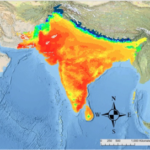
ESCAP’s projections point to a future where these extremes become the norm. Under the high-emissions scenario, South and South-West Asia is expected to be hit by the steepest increase in severe and extreme heat days. By 2100, much of northern and central India, Pakistan’s plains, and Bangladesh’s deltaic belt could face chronic heat exposure, with heat index readings of 35°C to 41°C becoming seasonal — in some places, near-year-round.
India’s cities face a dangerous amplification
South Asia’s megacities are projected to endure some of the heaviest temperature burdens globally. Delhi, Karachi, Dhaka, Kathmandu, Lahore and Colombo — already among the world’s hottest urban centers — are expected to warm by an additional 2°C to 7°C due to the urban heat island effect.
For India, the combination of rapid urbanization, high humidity, limited green spaces and expanding informal settlements deepens vulnerability. The most affected will be children, the elderly and the country’s vast outdoor workforce — construction workers, delivery personnel, street vendors and agricultural laborers — who have limited protection against rising temperatures.
Economic losses mount as heat disrupts India’s labor and food systems
ESCAP warns that extreme heat is already eroding India’s economic productivity. Working-hour losses from heat stress across Asia-Pacific are projected to more than double from 1995 to 2030, with India — where outdoor labor is a key driver of economic activity — among the worst affected.
Agriculture is emerging as a critical flashpoint. ESCAP’s Agricultural Heat Stress Score flags India, Pakistan, Nepal, Bangladesh and Afghanistan as consistently high-risk countries. Heat is now diminishing crop yields, stressing livestock, disrupting planting cycles and deepening rural poverty traps. For India, where nearly half the population depends on agriculture, rising temperatures threaten food stability and farmer incomes in states ranging from Punjab and Haryana to Maharashtra, Bihar and Andhra Pradesh.
Energy systems are also under strain. Surge demand for cooling is rising sharply while high ambient temperatures reduce power generation efficiency. Large sections of India’s energy infrastructure — from thermal power plants to transmission lines — are increasingly exposed to temperatures above 40°C and 45°C, raising the likelihood of blackouts during peak heat spells.
Glacial melt threatens India’s Himalayan lifelines
The report highlights that glacier-fed river basins — crucial to India’s water and agriculture — are facing alarming warming trends. High Mountain Asia hosts 2,211 glacial lakes, putting 9.3 million people at risk of glacial lake outburst floods (GLOFs). India’s Himalayan states, from Uttarakhand to Sikkim, are expected to face rising GLOF danger as glaciers retreat rapidly under warming scenarios.
“Heat knows no borders,” ESCAP warns
“Heat knows no borders; therefore, policy responses must anticipate impacts, reduce exposure and safeguard those most at risk,” said UN Under-Secretary-General and ESCAP Executive Secretary Armida Salsiah Alisjahbana. She said South Asia — given its enormous population density and deep socioeconomic vulnerabilities — must treat extreme heat as a defining development challenge.
A call for India-centered, regional solutions
ESCAP says the region’s heat response remains largely reactive and fragmented. Only 54% of meteorological services globally issue extreme heat warnings, and coverage in South Asia remains uneven. Expanding heat-health early warning systems in 57 countries could save 100,000 lives annually, the report adds.
To support South Asia, ESCAP announced three regional initiatives:
- Heat-responsive social protection, including income support for urban poor and outdoor workers.
- Green cooling corridors across borders — especially relevant for India, Pakistan and Nepal — to reduce heat stress, slow desertification and protect dryland ecosystems.
- Space-based heat monitoring, using satellite data to track heat hotspots, forecast spikes and map urban heat islands for cities such as Delhi, Mumbai, Kolkata, Dhaka, Lahore and Karachi.
India at the frontline of a hotter century
The report argues that South Asia’s heat crisis is no longer a distant climate scenario but a present-day structural threat that demands long-term planning, not short-term emergency responses. For India in particular — with its vast population, climate-sensitive economy, and rapid urbanization — extreme heat is poised to become one of the most consequential challenges of the coming decades.
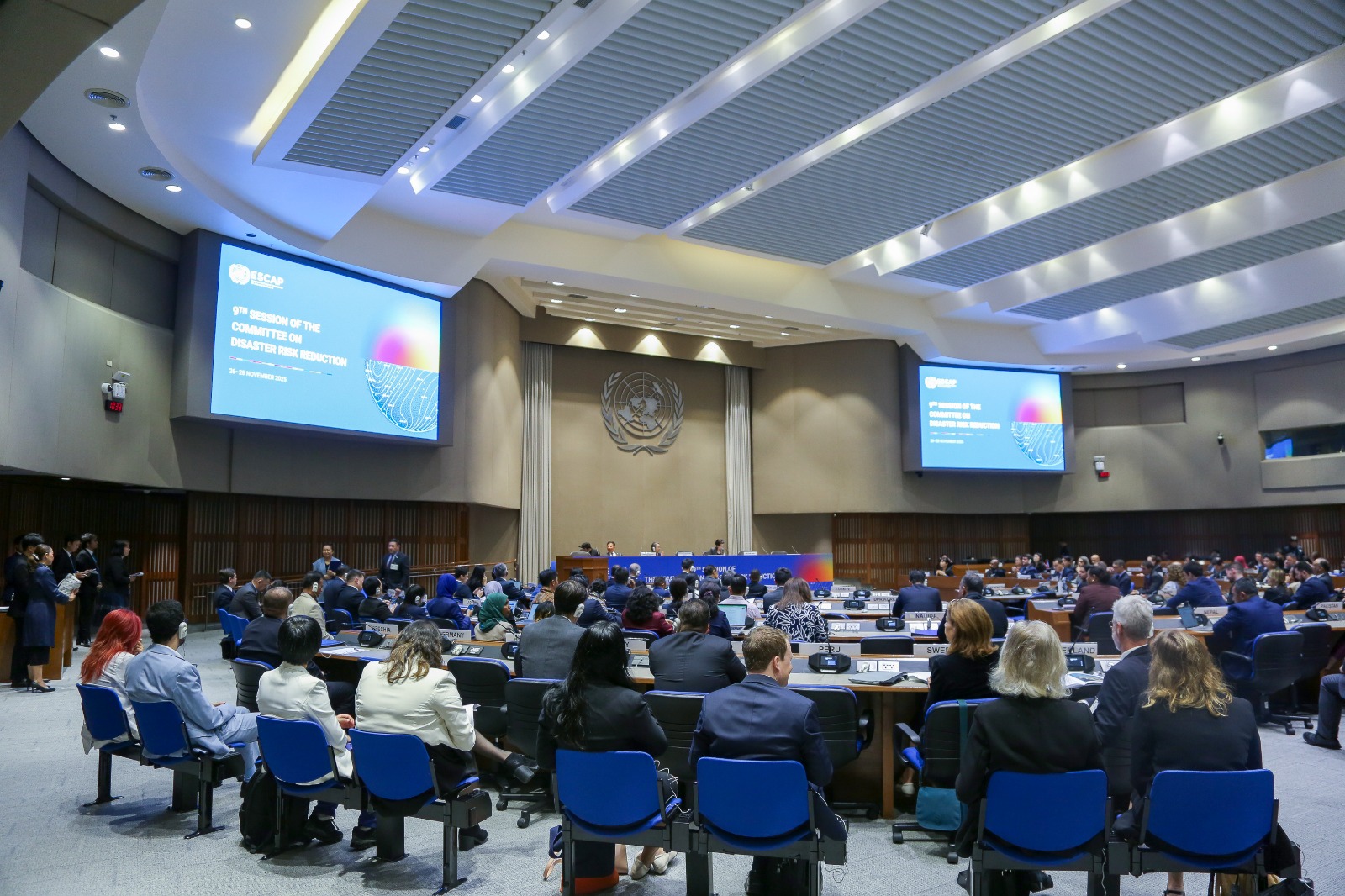
As ESCAP’s member states meet in Bangkok through 28 November, the region’s policymakers face an urgent question: can South Asia — and India at its heart — transform its development model fast enough to withstand an era where extreme heat becomes a defining feature of everyday life?