Join WhatsApp Channel

GATC Health, a fast-growing U.S. biotechnology company, is drawing global attention for developing advanced artificial intelligence systems designed to accelerate drug discovery and reshape preventive healthcare. Company leaders say their innovations have the potential to “reshape medicine and save millions of lives worldwide.”
At the core of GATC’s work are two flagship technologies: an AI-powered drug discovery engine described as “capable of mapping human biology digitally,” and Derisq, a predictive analytics platform that can “anticipate disease risks and treatment outcomes with unprecedented accuracy,” according to the organization. Together, the systems aim to transform how countries approach “public health, addiction treatment, and chronic disease management.”
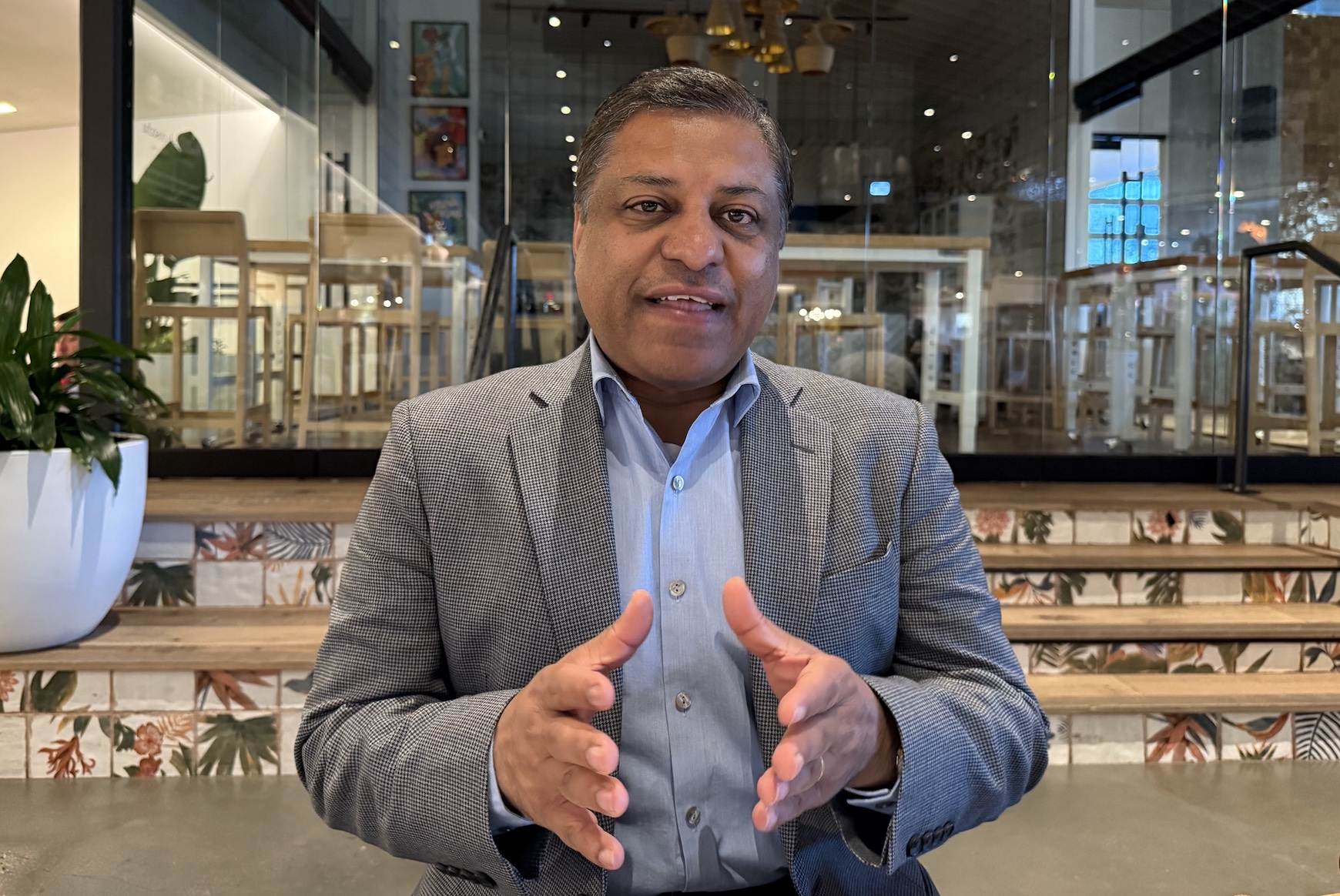
This is the vision that led Dr. Rahul Gupta, former U.S. Drug Czar and public health commissioner, to join GATC Health as its new President.
Dr. Gupta is nationally recognized for his leadership at the intersection of “public health, technology, and national security,” with expertise spanning drug policy, criminal justice, and international diplomacy. From 2021 to 2025, he served as the first medical doctor to head the White House Office of National Drug Control Policy under the Biden Administration. In that role, he oversaw the federal government’s “$44 billion drug budget across 19 agencies,” and is widely credited with driving historic reductions in U.S. overdose deaths.
“Traditional drug discovery takes 10 to 15 years,” Dr. Gupta told South Asian Herald in an exclusive interview. “With AI, we can analyze how a drug will work in the human body before it’s ever given to a patient. That means faster discoveries, safer medicines, and a global leap forward in how we respond to disease.”
One of GATC’s highest priorities is accelerating treatments for opioid use disorder and stimulant use disorders involving methamphetamine and cocaine. These are areas where therapeutic options have seen little progress in decades. Dr. Gupta said the company’s technology can simulate biological responses in minutes rather than months, enabling faster development of new therapeutic compounds.
The work comes at a “pivotal moment,” emphasized Dr. Gupta. After reaching a peak of 111,000 overdose deaths in a single year, he noted the United States has seen a decline to 73,000, largely due to expanded treatment, harm reduction, and public health initiatives.
But analysts warn that stimulant-related deaths are rising globally, including in South Asia, making new interventions urgently necessary.
Dr. Gupta believes AI can help close this treatment gap. “Addiction is a complex brain disease,” he said. “We finally have the tools to understand it at the molecular level and design therapies with the precision patients deserve.”
Beyond addiction medicine, Dr. Gupta emphasized that the Derisq platform could transform drug discovery. By analyzing genetic, metabolic, and neurological data, the Derisq AI platform can predict the safety, efficacy and off target performance of a novel drug compound with approximately 90 per cent precision for success as opposed to the current methods where only 1 out of 10 drugs discovered ever make it to human beings.
This is a game changer for individuals at risk for chronic conditions like diabetes and dementia as well as rare diseases like amyotrophic lateral sclerosis or Lou Gehrig’s disease, he said underscoring biotech and pharmaceutical companies as well as health systems could use these insights to focus discoveries, interventions, control costs, and improve outcomes.
Public health specialists note that the implications for South Asia are significant, given rising rates of diabetes, cardiovascular disease, and mental health conditions. GATC Health says it is open to partnerships with governments, hospitals, and research institutions in the region to support earlier detection and more affordable treatments.
“This is not just about U.S. healthcare,” Dr. Gupta said. “AI-driven drug discovery can and should be a global public good. Our goal is to partner with nations to bring these innovations to the people who need them most.”
If the company’s technologies reach their full potential, they could compress decades of scientific progress into a few years, marking one of the most consequential health science advances of this century, Dr. Gupta added.
Dr. Gupta is credited with saving hundreds of thousands of American lives through his leadership on the “overdose crisis.” He also played a central role in elevating national security and public safety priorities, working with foreign heads of state, security officials, and military leaders.
During his White House tenure, according to him, he engaged directly with presidents and cabinet members of Mexico, Colombia, Ecuador, and other countries to combat transnational criminal cartels, disrupt trafficking networks, and strengthen joint public health and enforcement strategies.
A lifelong educator, Dr. Gupta has held faculty roles at Georgetown University School of Medicine and Harvard University’s T.H. Chan School of Public Health. He earned his medical degree from the University of Delhi, a Master of Public Health from the University of Alabama at Birmingham, and a Global MBA in innovation and technology management from the London School of Business and Finance.
Related posts:
 Answer ALS Unveils AI-Powered Initiative to Unlock New ALS Treatments
 Strengthening the Partnership with India is Key to Tackling the Global Synthetic Drug Crisis
 Congressman Suhas Subramanyam Pledges to Champion Rare Disease Community at 2025 Indo-US Bridging RARE Summit
 ‘There are Plenty of Problems Begging to be Solved in Rare Diseases’