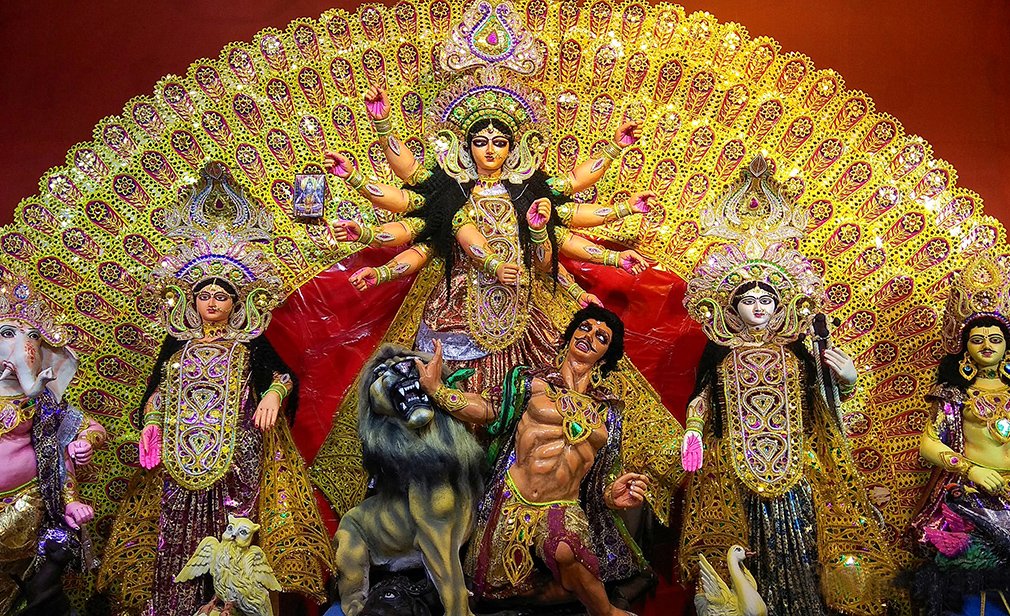
Durga Puja. PHOTO: incredibleindia.gov.in/
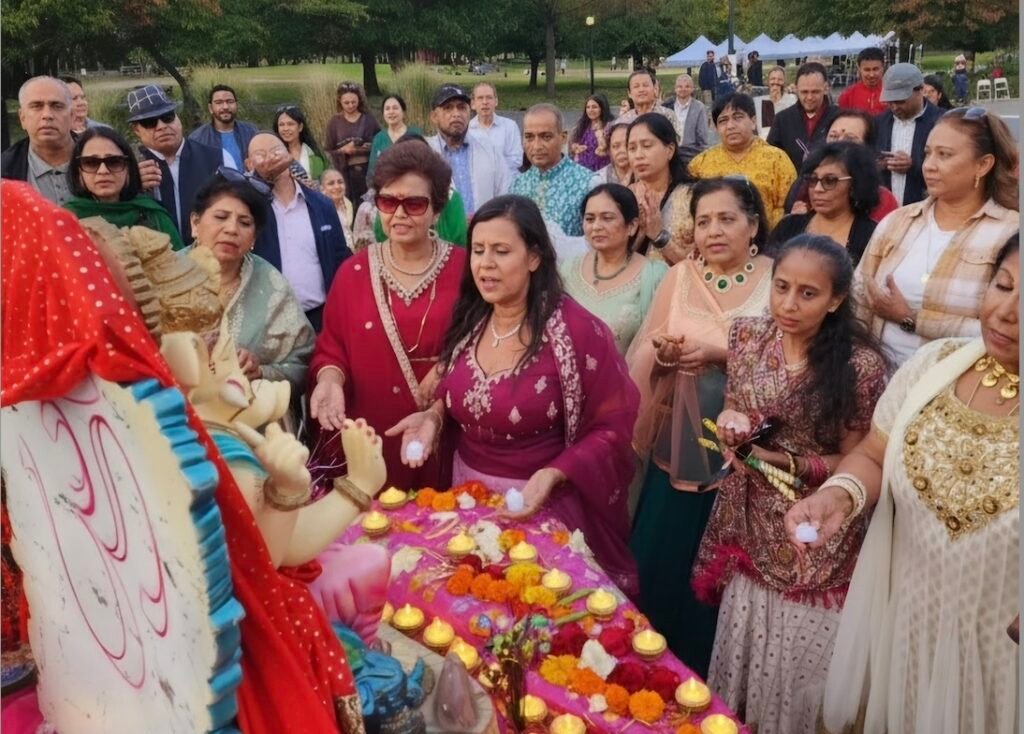
For someone living thousands of miles from India, a festival can begin with a phone call home. A mother describing how the house has been cleaned. A father asking whether the children will join the Diwali puja. A grandmother explaining which flowers to buy. A WhatsApp photograph of a Ganesh idol or a video from a Durga Puja showing familiar lights, music and faces.
Distance changes many things. It does not necessarily change the pull of a festival.
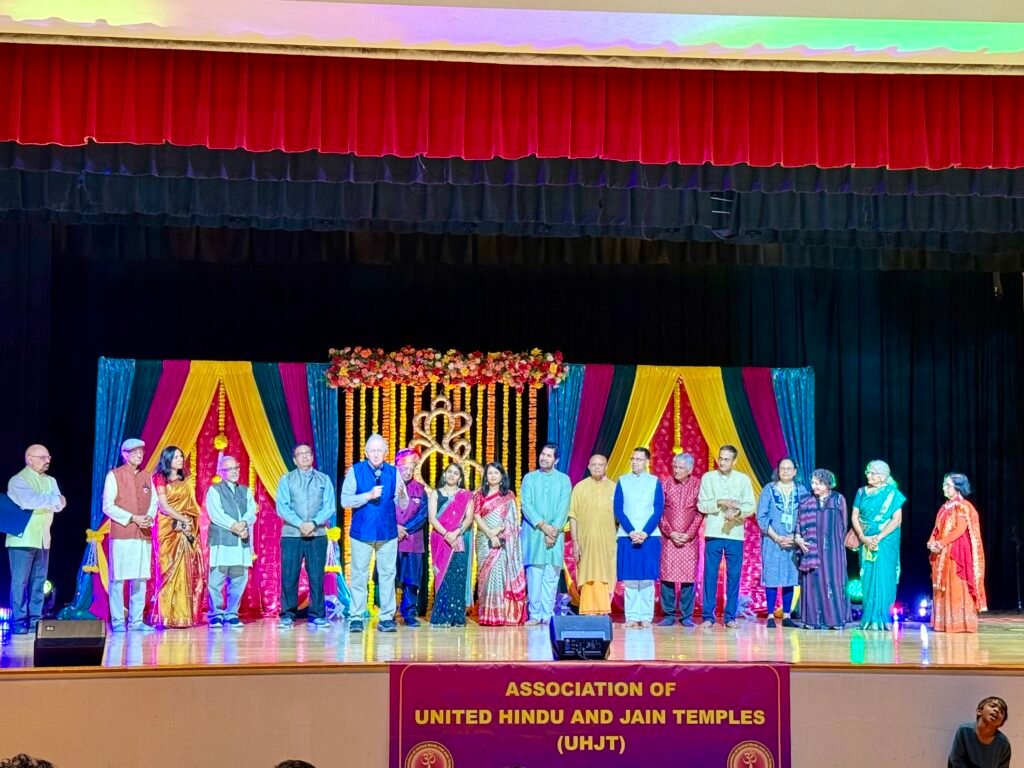
For the Indian and wider South Asian diaspora, festivals are more than religious observances. They are portable pieces of home, recreated in living rooms, temples, community centers and school halls. They connect children growing up abroad with grandparents, preserve rituals across generations and keep alive memories of places they may know only through stories.
Advertisement
That is why India’s growing effort to make festivals cleaner and greener has a significance beyond waste management. It raises a larger question: what kind of traditions will today’s generation pass to the next?
India’s Swachhata Hi Seva 2026, launched on September 17, places shared responsibility for cleanliness at the center of public participation. Its Swachh Parv, Harit Parv initiative promotes source segregation, Reduce-Reuse-Recycle practices, the circular economy and waste-to-wealth.
The message is simple: preserving tradition does not require preserving every material habit that has accumulated around it.
When devotion finds a second life
At Mahakaleshwar Temple in Ujjain, 75,000 to 100,000 people visit every day, generating around 5 to 6 tons of floral waste. Special vehicles collect the flowers and take them to a processing plant, where they are converted into compost, briquettes and biofuels.
The process has also created livelihoods. Women from the Shiv Arpan Self-Help Group turned discarded flowers into more than 30 million incense sticks in 2024, along with other eco-friendly products.
For a diaspora family accustomed to carrying traditions across continents, there is something fitting about the idea. A flower offered in devotion does not become worthless when its ritual purpose ends. It begins another journey.
Teaching children that traditions can evolve
Ganesh Chaturthi offers a sharper example of the balance between devotion and environmental responsibility. The emotional heart of the festival is the arrival of Bappa and the eventual visarjan, but idol immersion can put pressure on natural water bodies.
In Navi Mumbai, 136 artificial ponds were created for Ganesh idol immersion in 2024. In addition, the Brihanmumbai Municipal Corporation supplied around 500 tons of free clay to sculptors, while the Maharashtra Pollution Control Board promoted eco-friendly idols and decorations.
Children have also become part of the change. Students in Pimpri Chinchwad were encouraged to use clay, papier-mâché, natural fibers and recycled materials, while nearly 500 students in Thane learnt to make Ganpati idols using shadu clay.
For diaspora children, this can make sustainability part of cultural learning rather than a lesson imposed from outside. They learn not only how a festival is celebrated, but why its traditions can evolve.
Seva after the celebration
The environmental burden often becomes visible after the crowds have gone.
Following the 2023 Ganesh immersion, more than 900 Swachh volunteers, including over 500 students, cleaned Versova Beach. They removed around 80,000 kilograms of waste and collected approximately 7,400 Plaster of Paris Ganesh idols.
The farewell to Bappa became another form of seva.
That idea resonates with diaspora communities, where festivals often depend on volunteers who cook, decorate, organize prayers, teach children and clean up after everyone has gone home. A greener festival, therefore, need not be a restriction. It can be another expression of community.
Returning to the materials of memory
Sometimes sustainability means returning to older traditions.
In Digboi, Assam, bamboo was used for Ganesh Puja idols and traditional decorations. In Delhi, idols made from coconut bark and clay were embedded with plantable seeds so they could dissolve into soil and allow the seeds to germinate.
Durga Puja has similarly seen greater use of bamboo, wood, jute, coir, hay, straw, cane and paper instead of thermocol and plastic. Organic offerings can be composted, while traditional materials such as banana leaves and clay can replace disposable plastic.
For communities recreating Indian festivals abroad, the lesson is important: culture does not have to be preserved through consumption. It can be preserved through craftsmanship, participation and memory.
Diwali, home and the next generation
For the diaspora, Diwali can be particularly emotional. The house may be thousands of miles from the one where childhood Diwalis were celebrated. The weather may be different. Neighbors may not understand why the home must be cleaned before the puja, why sweets are exchanged or why a small lamp can transform an ordinary evening.
Yet the ritual survives.
The Swachh Diwali, Shubh Diwali campaign builds on the festival’s traditional association with cleanliness, encouraging waste segregation, the 3Rs and locally made products. Across India, communities have promoted earthen diyas, reused materials and handmade decorations.
Such ideas can travel easily across diaspora communities because they make children participants rather than spectators.
Chhath carries the connection between faith and nature even further. Devotees offer prayers to the Sun while standing in water, often along sacred rivers such as the Ganga. In Patna, zero-waste Chhath initiatives have included separate bins, dedicated waste collection, composting and enforcement of a plastic ban.
For a diaspora child who may never have stood on the banks of the Ganga but has heard its name from grandparents, protecting such places is about more than cleanliness. It is about protecting a shared inheritance.
A tradition worth inheriting
Diaspora communities often worry about how to pass culture to children growing up elsewhere. The answer may not be to reproduce every aspect of the past exactly as it was. Traditions survive when their meaning survives.
A flower can still represent devotion. A diya can still represent hope. A clay idol can still represent the divine. A shared meal can still bring a family together. A river can still connect generations living on different continents.
India’s experiments with greener festivals suggest that sustainability need not compete with cultural memory. It can become part of that memory.
The next generation can inherit the prayers, music, food and rituals — but also the responsibility to protect the spaces in which those traditions live.
The diya can still glow. The drums can still play. The prayers can still rise.
But when the celebration ends, perhaps the most meaningful question is not simply what we remember. It is what we leave behind.