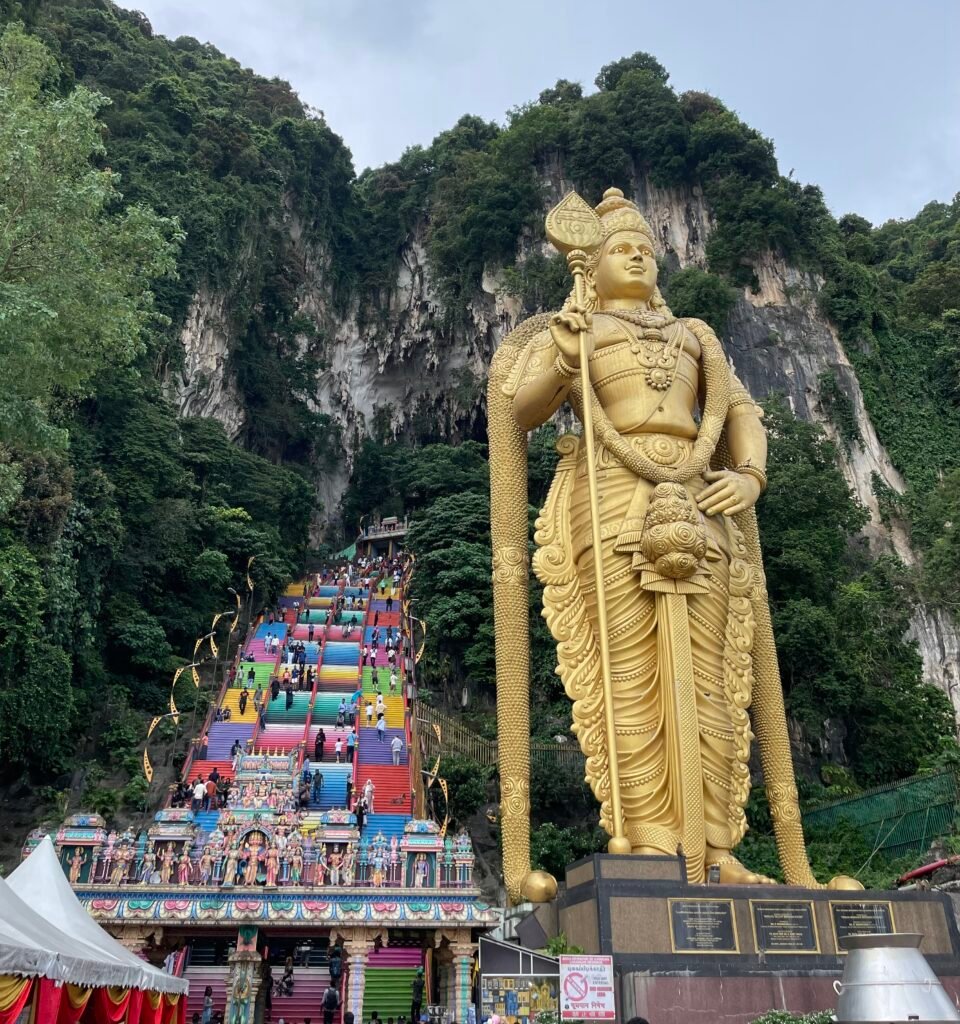
Lord Murugan: PHOTO: T. Vishnudatta Jayaraman, SAH
Muruga is the son of Parvati and Shiva, brother of Ganesha, and a god whose life story has many versions in Hinduism. An important deity around South Asia since ancient times, Muruga is particularly popular and predominantly worshipped in South India, Sri Lanka, Singapore and Malaysia. He is known by numerous names in ancient and medieval texts of Indian culture. Most common among these are Karthikeya, Kumara, Skanda, Vēla, Swaminatha, Saravaṇabhava, Arumugam or Shaṇmukha and Dandapani. The systematic worship of Muruga was classified by Adi Shankaracharya as Kaumaram, one of the six streams of Shanmatham
Kartikeya is an ancient god, traceable to the Vedic era. Archaeological evidence from 1st-century CE and earlier, where he is found with the Hindu god Agni (fire), suggests that he was a significant deity in early Hinduism. The Atharva Veda describes Muruga as ‘Agnibhuh’ or son of Agni, the fire god. The Satapatha Brahmana refers to him as the son of Rudra and the ninth form of Agni. The Chandogya Upanishad refers to Skanda as the way that leads to wisdom. The Baudhayana Dharmasutra mentions Skanda as ‘Mahasena’ and ‘Subrahmanya.’ In the Bhagavad Gita (Ch.10, Verse 24), Krishna, while explaining his omnipresence, names the most perfect being, mortal or divine, in each of several categories. While doing so, he says: “Among generals, I am Skanda, the lord of war.”
The legend of Muruga
Advertisement
According to mythology, the very purpose of the birth of Muruga was to annihilate the two demons Tarakasura and his brother Surapadma. Muruga was born out of the sparks that emanated from Lord Shiva’s third eye when he opened it to burn Manmatha, who tried to disturb Shiva’s meditation. As the sparks were unbearable, the fire was transported by the river Ganga to a forest of reeds (sharavanam), where the sparks became six children.
They were raised by the six Krittikas or Karthika, the stars that make up the Pleiades, earning the name Karthikeya. The six Krittikas are known as Śiva, Sambhūti, Prīti, Sannati, Anasūya and Kṣamā. Parvati combined the six babies into one with six faces, Shanmukha or Arumugan. – eesanam, sathpurusham, vamadevam, agoram, sathyojatham and adhomugam. Since he was born in the Saravana forest, he is also called ‘Saravanabhava’.
Muruga, as per legend, seems to have been a brilliant, captivating boy with an underlying streak of playfulness bordering on mischief, somewhat resembling Krishna’s character. The boy grew up into a handsome youth well versed in archery and warfare. He expectedly became the general of the demi gods – Devasenapathy – and prepared to fight the demons.
In Skanda Purana, it is stated that a terrible fight between Skanda and demon Tāraka at Māyāpuri, near the Krauñcha Hill in the Himalayas, resulted in the destruction of Tāraka and the shattering of Krauñcha. Soon after, the divine architect Vishwakarmā constructed a grand city named Devagiri for the victorious Skanda.
The six sites at which he sojourned while leading his armies against Soorapadma collectively came to be known as “Arupadai Veedu” meaning the six battle camps of the Lord – Swamimalai, Pazhani, Pazhamudhircholai, Thiruchendur, Thiruparankundram and Thiruthani. Each of the Arupadai Veedu has various colorful legends associated with it and is said to represent different stages in Muruga’s life.
A detailed study of textual references from the Vedas, Puranas, Kalidasa’s Kumarasambhavam and other literature brings out the gradual evolution of the Kumāra-Skanda-Kārtikeya persona who, during later times, developed into one of the popular and prominent members of the Hindu pantheon. In addition, research points to the initial development of the Skanda cult in North India, which later lost ground to the growing popularity of the Ganesha phenomenon.
Simultaneously, in the southern parts of the country, Muruga was growing in importance as a God in his own right. This has led to the present scenario with Skanda worship almost being forgotten in the North (except perhaps by South Indians) and the Murugan cult very strong in Tamil Nadu where he is regarded as “Tamil Kadavul.” Two symbols stand out: Vel (a divine spear carried by Muruga) and kavadi (a decorated wooden or metallic arched structure or burden carried by devotees in this form of worship.
Disclaimer: The opinions and views expressed in this article/column are those of the author(s) and do not necessarily reflect the views or positions of South Asian Herald.