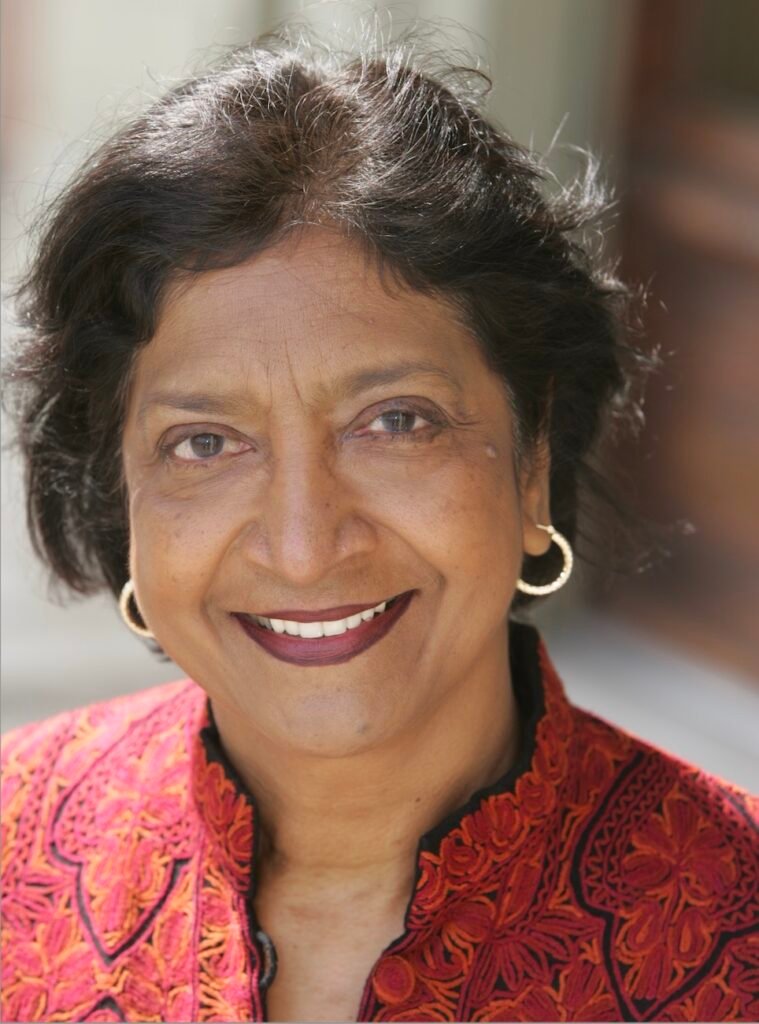
As the ‘official’ India seemingly observed silence with a smile, Indian media outlets, including the government-run Doordarshan, celebrated the “Indian origin” South African jurist Navanetham (Navi) Pillay, awarded the Nobel Peace Prize.
The reason for the ‘smile’ was dual and easy to discern: one, United States President Donald Trump, who claims to have resolved nine conflicts, including one between India and Pakistan last year, was passed over for the prize that he has so assiduously, openly and repeatedly coveted.
India’s differences with the Trump administration have been many, from high tariffs and absence of a trade agreement to harsh deportations of ‘illegal’ Indians, to the latest suspension of the visa regime under which over half a million Indians have contributed to America’s leadership in science, technology and more.
Two: A tactical brownie for India. Rival Pakistan’s equally assiduous endorsement of Trump was automatically passed over. Worse, probably in anticipation that Trump was not getting it, Pakistan Prime Minister Shahbaz Sharif endorsed it, one last time, hours before the official announcement of the award came, to reiterate Pakistan’s proximity to Trump. After all. the US President has shown great appreciation for Islamabad’s playing the facilitator in the elusive end to the Gulf War.
Advertisement
Incidentally, India is busy facilitating resolution of the other big war, in Ukraine, having earned appreciation of both Russia and Ukraine. This, while Trump made yet another announcement of his resolve to end the conflict the same day he was ignored for the Nobel.
The present-day geopolitical jostling apart, India has hosted for long years the Dalai Lama from Tibet and Mother Theresa, the Albanian-born saint who made India her home as long as she lived. Myanmar’s Aung San Suu Kyi was educated in India.
India also applauded the award to Malala Yousafzai of Pakistan, the youngest Nobel laureate to date.
In 2006, it welcomed the Nobel to Mohammed Yunus, the Bangladeshi economist. However, Yunus, on being appointed with an American nod to head an interim government, tilted towards the anti-India Islamists and attacked India because it hosts his bete noire, ousted former premier Sheikh Hasina.
Welcoming freedom fighters of Asia and Africa awarded the Nobel has also been part of India’s ethos post-independence. Durban-born Navi Pillay is of Indian-Tamil origin. India has also been associated with four other South Africans: Nelson Mandela, Desmond Tutu and Albert Luthuli. Because of its own history of anti-colonial struggle, India has consistently shared deep geopolitical and emotional ties with leaders fighting for liberty, civil rights, and poverty alleviation. India was among the first developing nations to oppose apartheid in South Africa. Even today, African leaders acknowledge the inspiration and contribution of Mahatma Gandhi and Jawaharlal Nehru in their respective freedom movements.
India has produced nine Nobel laureates across various fields, including physics, medicine, literature, economics, and peace.
These laureates are generally grouped into two categories: Indian citizens who won the prize, and foreign citizens of Indian origin or residency whose roots and monumental work are deeply tied to India.
Indian Citizens who held Indian citizenship at the time they received their Nobel Prizes:
Rabindranath Tagore (Literature, 1913): The first non-European to win a Nobel Prize. He was awarded for his profoundly sensitive, fresh, and beautiful verse in Gitanjali. He famously reshaped Bengali literature and music.
Sir C.V. Raman (Physics, 1930): Awarded for his groundbreaking work on the scattering of light and the discovery of the phenomenon named after him—the Raman Effect. He was the first Asian scientist to win a Nobel Prize in any science field.
Mother Teresa (Peace, 1979): Born in modern-day North Macedonia, she moved to India in 1929, became an Indian citizen, and founded the Missionaries of Charity in Kolkata. She was recognized for her work in bringing help to suffering humanity.
Kailash Satyarthi (Peace, 2014): Awarded jointly with Malala Yousafzai for his tireless, decades-long crusade against the suppression of children and young people, and his struggle for the right of all children to education through his organization, Bachpan Bachao Andolan.
Then there are Nobel Laureates of Indian Origin or of Indian Connection. These winners were either born in India, had Indian ancestry, or did their prize-winning work while living in India, but held foreign citizenship when they won:
Har Gobind Khorana (Medicine, 1968): Born in undivided India, this Indian-American biochemist shared the prize for his research showing how the order of nucleotides in nucleic acids controls the cell’s synthesis of proteins.
Subrahmanyan Chandrasekhar (Physics, 1983): An Indian-American astrophysicist (and nephew of C.V. Raman) who won the prize for his theoretical studies of the physical processes important to the structure and evolution of stars, establishing the Chandrasekhar Limit.
Amartya Sen (Economic Sciences, 1998): The Indian economist was awarded the prize for his monumental contributions to welfare economics and his research on famines and poverty. While he holds Indian citizenship, his prize is often classified under the UK/US academic frameworks where he taught.
Venkatraman Ramakrishnan (Chemistry, 2009): An Indian-American-British structural biologist who shared the Nobel Prize for his critical studies of the structure and function of the ribosome.