India’s effort to strengthen women-led economic development is gaining momentum as rural entrepreneurs seek to transform traditional skills and community-based livelihoods into sustainable businesses with national and global reach.
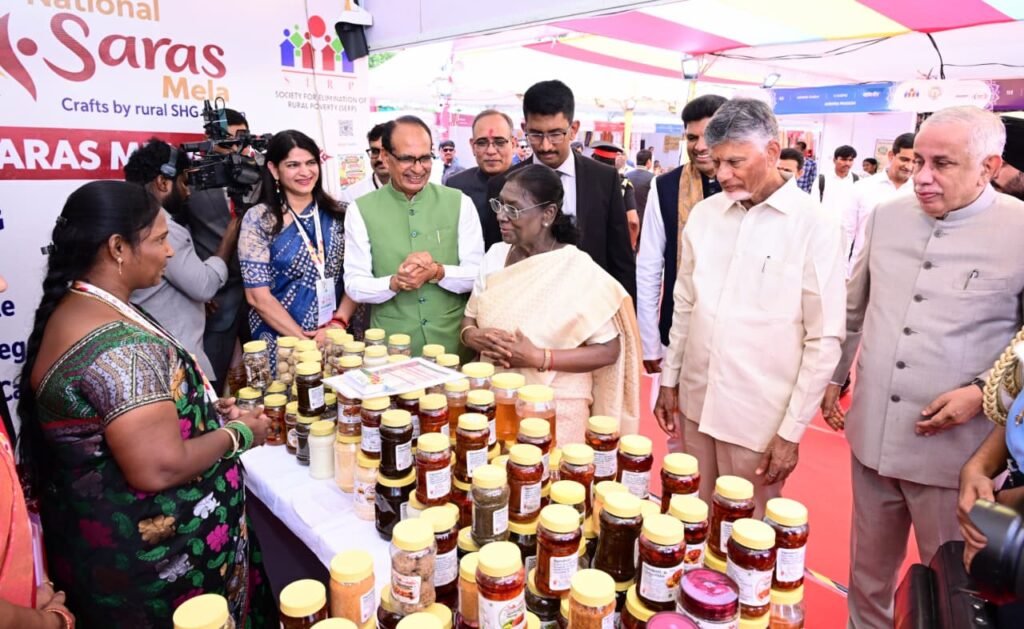
The National SARAS Aajeevika Mela 2026 in Vijayawada, Andhra Pradesh, is providing a platform for this transformation, bringing together rural women entrepreneurs, artisans and Self-Help Group (SHG) members to showcase products, connect with consumers and explore opportunities for business expansion.
Organized by the Ministry of Rural Development, Government of India, in collaboration with the Government of Andhra Pradesh, the Mela is being held from October 13 to 31. According to the official government announcement, approximately 1,500 women entrepreneurs, including Lakhpati Didis, are showcasing their products through more than 650 stalls representing 34 States and Union Territories.
President of India Droupadi Murmu visited the Mela on October 15, interacting with Lakhpati Didis and highlighting the contribution of women’s Self-Help Groups to rural development and economic empowerment.
Advertisement
The event reflects a broader ambition: to help women move from collective livelihood activities to independent entrepreneurship, build recognizable brands and explore markets beyond their immediate communities.
From Grassroots Groups to Business Ownership
Self-Help Groups have become an important part of India’s rural development framework, helping women access savings, credit, skills and livelihood opportunities through collective action.
For many members, entrepreneurship begins with small-scale production rooted in traditional knowledge. Handloom weaving, handicrafts, textiles, food processing and other locally produced goods provide opportunities to generate income while preserving regional craftsmanship.
The challenge is to transform these activities into sustainable businesses with regular customers, reliable production and stronger profit margins.
SARAS Aajeevika Mela addresses part of this challenge by connecting rural producers directly with consumers and providing exposure to products from different regions. It also allows entrepreneurs to observe market preferences, learn from other businesses and explore opportunities for repeat sales.
For participating women, the Mela can serve as a bridge between local production and larger commercial markets.
Lakhpati Didi to Crorepati Entrepreneur: An Emerging Aspiration
The Lakhpati Didi initiative seeks to help women associated with SHGs achieve sustainable annual household incomes of at least ₹1 lakh. It represents an important step towards financial independence and a greater role for women in household and community decision-making.
The next aspiration is to support women in building enterprises that can grow beyond household-level production and develop into commercially sustainable businesses.
The idea of a Crorepati entrepreneur captures this ambition. It represents the possibility of building enterprises with substantial turnover, assets, profits or business value. These measures are different, however, and achieving one does not automatically mean achieving the others.
Moving towards this goal requires more than producing additional goods. Entrepreneurs need business planning, working capital, quality control, competitive pricing, professional packaging, digital marketing and dependable distribution systems.
Access to business mentors, institutional buyers, retailers and export partners can also help women identify opportunities and make informed decisions about expansion.
The objective is to ensure that rural women are not merely participants in economic activity, but also owners and decision-makers capable of building enterprises that create lasting value.
Traditional Products and the Global Marketplace
India’s rural economy draws strength from its diverse traditions of craftsmanship, textiles, food production and indigenous knowledge.
Products showcased at SARAS fairs reflect regional identities and specialized skills developed over generations. These products can appeal to wider domestic and international markets when supported by consistent quality, effective branding and reliable supply chains.
However, moving from a local product to a global brand requires a structured business approach. Entrepreneurs must understand customer expectations, packaging requirements, pricing, product differentiation and the regulatory standards applicable to their markets.
Digital commerce can help small producers reach customers beyond their geographical boundaries. Partnerships with established retailers, exporters and e-commerce businesses can provide additional routes to market.
For some enterprises, international expansion may begin with a niche product that reflects a distinctive regional identity. For others, growth may come through domestic retail networks, institutional orders or partnerships with larger businesses.
The important consideration is that expansion should strengthen the earning potential and ownership of the women who produce the goods.
Market Access Beyond the Mela
While exhibitions provide valuable visibility, long-term business growth depends on what happens after an event concludes.
Rural entrepreneurs need sustained access to buyers, logistics, working capital, digital platforms and professional guidance. Without these connections, increased visibility may not translate into consistent sales.
Government programs, financial institutions, private-sector partners and business organizations can contribute by helping SHGs improve product standards, strengthen packaging, understand market demand and establish regular distribution channels.
Digital platforms, including eSARAS, offer opportunities to improve the visibility of SHG products beyond physical exhibitions. Their effectiveness depends on product quality, customer service, delivery arrangements and the ability to maintain a consistent supply.
Collective business models can also help women pool resources, share infrastructure and negotiate more effectively with buyers. Such arrangements may enable smaller producers to participate in markets that would otherwise be difficult to access individually.
Women-Led Enterprises and Inclusive Development
The expansion of women-led rural enterprises has implications beyond individual household incomes. Sustainable businesses can create local employment, support traditional occupations, strengthen community institutions and contribute to regional economic activity.
For women, greater economic participation can also improve financial decision-making and access to opportunities outside conventional livelihood structures.
Realizing this potential requires attention to persistent challenges, including limited access to finance, infrastructure gaps, digital literacy and the additional burden of unpaid care responsibilities.
Business training and market access must therefore be accompanied by a supportive environment that allows women to manage and expand their enterprises.
India’s SHG ecosystem provides an important foundation for this process. The next stage is to convert that foundation into more resilient businesses with clear growth strategies and lasting market connections.
A Wider Opportunity for India
The National SARAS Aajeevika Mela in Vijayawada illustrates how rural development, entrepreneurship and cultural heritage can intersect.
It offers an opportunity to showcase the products and capabilities of women from across India while encouraging a shift from small-scale livelihood activities towards sustainable enterprise development.
The long-term ambition is to create a stronger pathway from Self-Help Group membership to business ownership, from Lakhpati Didi to Crorepati entrepreneur, and from locally recognized products to brands capable of competing in wider markets.
That journey will depend on sustained support, commercial discipline and partnerships that connect rural producers with consumers and buyers throughout the year.
For India, the opportunity extends beyond promoting rural products. It lies in building an entrepreneurial ecosystem in which women can preserve traditional skills, create modern businesses and participate more fully in economic growth.
The ultimate measure of success will be whether rural women can turn their skills into sustainable profits, their enterprises into recognized brands, and their economic participation into long-term financial independence.