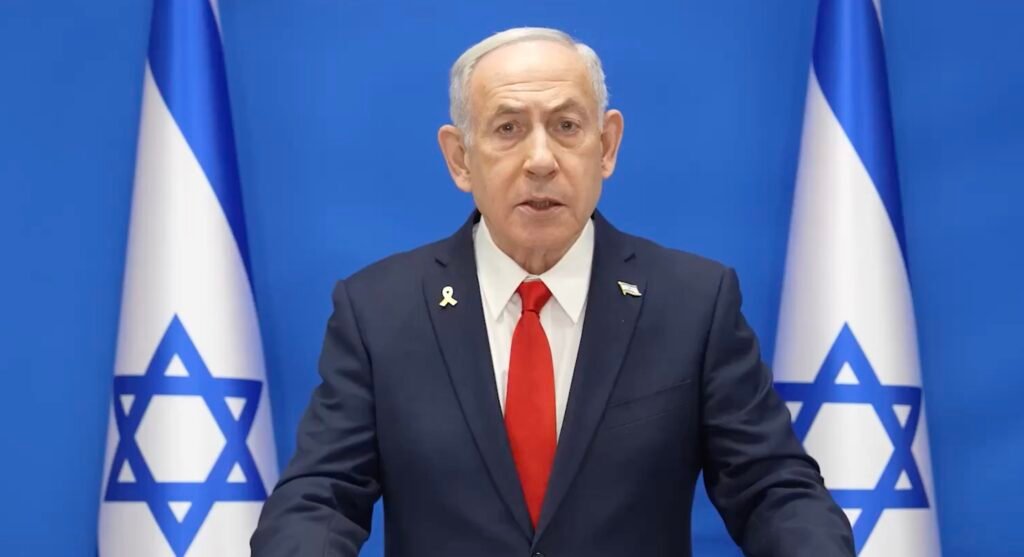
These are anxious times for Israel. At stake is not only the political future of the right and the far right but also of individual politicians like Prime Minister Benjamin Netanyahu who have been at the helm of affairs on and off for about two decades.
Israelis turned out in record numbers to vote in an election to the national parliament, the Knesset, which they perceived as coming at a critical time both for domestic and foreign policies. The Central Elections Committee has said that nearly 78 percent of eligible voters came out to vote—a seven percentage point increase from 2022– or the highest numbers since 1999. It is said that more than 60,000 Israelis came home from abroad to participate as did nearly 70 percent of the armed forces.
Much of the anxiety stems from a lack of clear message of the exit polls which shows neither the Likud of Netanyahu nor the Opposition bloc led by Gadi Eisenkot having made it even by a small margin. Adding to the confusion is the conflicting versions put out by Television Channels, at least one of them maintaining that the Likud has taken a narrow lead. The nail-biting wait will be for the official tally will be announced on November 4 after which the actual jockeying for formation of government. The last option would be fresh elections in the event of a deadlock with Netanyahu remaining as caretaker Prime Minister.
In ways more than one, this election was seen as a referendum on Prime Minister Netanyahu and not just confined to the conduct of the Iran war and his obsession with regime change in Tehran. At this time Israelis were also in solemn remembrance of the gruesome slaughter of some 1200 of their people at the hands of the Hamas terrorist thugs and in a systematic reign of terror unleashed in the Gaza by way of retribution leaving some 70,000 people dead over a three-year period, with many in the international community convinced of an organized pogroms bordering on genocide.
Advertisement
There had been allegations that Prime Minister Netanyahu was informed of the impending Hamas attack of October 7, 2023, but had failed to pass on the information to his security chiefs. The Israeli leader has flatly rejected such reports and insinuations. On the domestic front the Prime Minister was saddled with charges of corruption or trying to revamp the judiciary to his liking in the guise of reforms. But by far the biggest foreign policy crisis was the war against Iran along with the United States that started on February 28 with American bombers targeting nuclear sites and Israeli jets trying to wipe out the political and military leadership of Iran.
Political commentators have made the point that there are compelling reasons why these particular Parliamentary elections witnessed such a huge turnout and interest. The Palestinian voters in Israel appeared determined not to be passive spectators but, in an effort, to have their voices heard. Or as Omar Baddar, a Palestinian American analyst and a member of the national policy council of the Arab American Institute told Al Jazeera, “They have turned out in unprecedented numbers because they are determined to be a factor in whatever happens next and not to sit on the sidelines of it.”
The interest and motivation of Palestinians in Israel or that of the Arab parties that have participated in the polls are not perceived as indications of imminent changes in official policies. “Both of them [Netanyahu and Eisenkot] are committed to denying Palestinians freedom or human rights, they are determined not to give them a state of their own and determined not to grant them equality. Their vision for Palestinians is that they will remain under brutal military occupation indefinitely,” Baddar said adding “We have to be very clear about the fact that whatever happens in this election, Israel’s status is an apartheid state supported by the United States.”
Iran seems to be prime fixation of Prime Minister Netanyahu who apparently tried his best to get Washington into a second round during the elections time. In fact, there were those in Israel who were worried that the Israeli leader could himself start the war against Tehran as a way of postponing the polls to the Knesset. In the absence of well-defined objectives, or strategies for that matter, ordinary Israelis have come to bear the brunt of the conflict by way of their country targeted by proxies like the Hamas, Hezbollah and the Houthis who indiscriminately unleashed rockets from ordering areas in the name of supporting the Palestinian cause.
Prime Minister Netanyahu is not the only person anxiously waiting for the announcement of the officially tally on November 4. Some six thousand miles away President Donald Trump of the United States would be watching the finalization of returns of his midterms on November 3, knowing full that even if he has another two years left in his tenure, the political going will be quite tough if Republicans lose control of Congress.
Disclaimer: The opinions and views expressed in this article/column are those of the author(s) and do not necessarily reflect the views or positions of South Asian Herald.