The proposed visit of Nepalese Prime Minister Balendra Shah to India in November is a chance to reset India-Nepal relations. The meeting is no routine affair for New Delhi. It is a chance to reconcile old differences and make changes to its neighbourhood policy in the context of Nepal’s more assertive foreign policy.
India and Nepal have a strong historical, cultural and economic relationship. The relationship is strategically significant due to their open border, the deep people-to-people ties, trade ties and security cooperation. However, this proximity has not stopped tensions from breaking out again and again on the diplomatic front. In recent times, mutual trust has been undermined by territorial disputes and by the view that bilateral projects are being obstructed by political maneuvers.
Shah’s first foreign ventures had been more concerned with the governance in his country. But his likely visit to India underscores the need for India to have good relations with him. India needs to understand that Nepal’s changing diplomatic agenda calls for engagement on the basis of mutual interest, not assumptions.
India’s regional security concerns take China’s growing involvement in Nepal into account. Beijing has boosted its economic and political footprint in Kathmandu by making infrastructure investments and establishing connectivity programmes and the Belt and Road Initiative (BRI).
Advertisement
It is not only a foreign policy goal for Nepal to diversify international partnerships, it is also an objective that is legitimate. This approach is even more critical in the landlocked regions of the country and for regions that require development. China’s presence in a strategically significant neighbour in the Himalayas, however, has introduced security concerns for India regarding the country’s influence in the region over the long haul.
New Delhi’s dilemma is that it needs to tell between Nepal’s strategic diversification and hostility to India. Any Nepal-China deal would be seen as a zero-sum game in the geopolitics of the region and would eventually push Kathmandu away. But India needs to build up its stakes through sustainable development partnerships and prompt project realization and engagement in diplomacy. Just being located in a particular geographic area does not mean that influence is guaranteed in that area.
Kalapani, Lipulekh and Limpiyadhura issues continue to be one of the most delicate issues in bilateral relations. The new political map of Nepal adopted in 2020, which includes these regions, further raised tensions. With the opening of the Kailash Mansarovar route in India through Lipulekh, formal protests were made by Kathmandu. Such conflicts go beyond matters of territory to issues of nationhood and sovereignty. Both governments should vigorously use institutional mechanisms to facilitate dialogue and should not let domestic politics get in the way of negotiations.
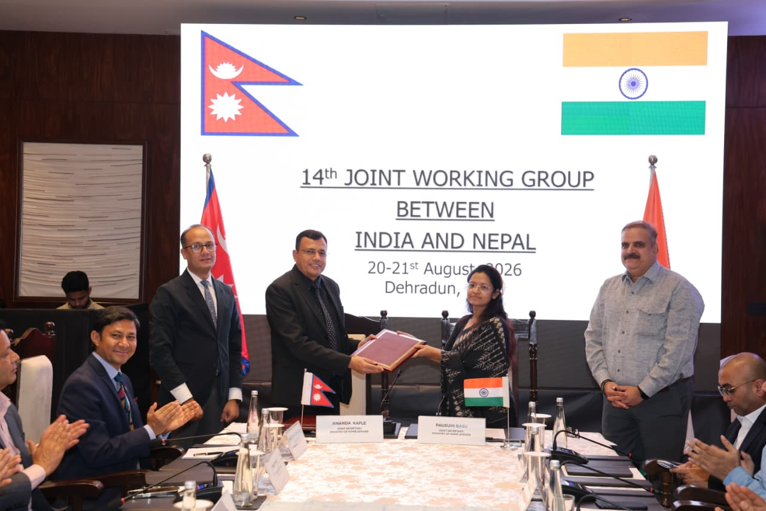
A forum for the consideration of some of the areas of the bilateral relations, including the Treaty of Peace and Friendship of 1950, is the Eminent Persons Group (EPG) established for this purpose. However, the lack of meaningful progress on its recommendations highlights the institutional limitations of bilateral engagement. There should be a broader change in a diplomatic approach to the treaty and unresolved territorial questions.
Economic cooperation continues to be one of the most solid bases of India-Nepal relationship. India is one of the largest development, transit and trade partners for Nepal. But Kathmandu continues to be worried by the ongoing trade deficit. In FY 2025–26, India-Nepal merchandise trade stood at approximately $9.38 billion, with Indian exports to Nepal amounting to around $7.45 billion, compared with imports of approximately $1.94 billion from Nepal. Expanding Nepal’s export capacity, improving access to Indian markets and addressing non-tariff barriers would therefore be important steps towards making economic interdependence more equitable.
There is a lot of potential for cooperation in hydropower. Nepal’s electricity generating power complements the increasing demand of electricity in India, providing opportunities for cross-border electricity trade, transmission line capacity build-up and long-term power purchase agreements.The long-term power trade agreement signed in January 2024, under which India agreed to facilitate the import of up to 10,000 MW of electricity from Nepal over ten years, provides a foundation for this partnership. The inauguration of the first trilateral power transaction from Nepal to Bangladesh through India’s electricity grid in November 2024 further demonstrated how bilateral energy cooperation can contribute to wider regional integration.
However, the implementation is difficult. The Pancheshwar multipurpose project, which is planned in the framework of the Mahakali Treaty, is a good example of the challenges faced in the implementation of bilateral projects. The project has been deemed to have potential for hydropower generation and irrigation and flood control but continues to have disagreements on project modalities and benefit sharing.
These differences must be addressed by both governments to set reasonable implementation timelines. To ensure that future agreements can be built upon, existing commitments must be delivered.
Historical ties, geographical proximity and economic interdependence have been the bases of Indian traditional influence in Nepal. But these benefits are not enough to achieve political alignment for an indefinite period. New Delhi had to adjust to Kathmandu’s sovereign rights to diversify its partnerships in the changing political environment of Nepal. The proposed visit should accordingly be based on tangible progress towards the following areas: territorial and treaty issues, speed up of infrastructure implementation, intensified energy cooperation, enhanced access to trade, further coordination on border security.
It is in India’s long-term interests to ensure a Nepal that is stable and economically buoyant and is able to build a constructive relationship with India. There is the potential for strategic urgency as China makes its presence known, but it can’t replace a coherent Nepal policy. New Delhi has to create its regional stature through reliable economic relations and diplomatic sensitivity.The goal is not to restrict Nepal’s strategic options, but to make sure that the relationship with India continues to be strong, through respect and institutional trust and shared prosperity.
Disclaimer: The opinions and views expressed in this article/column are those of the author(s) and do not necessarily reflect the views or positions of South Asian Herald.