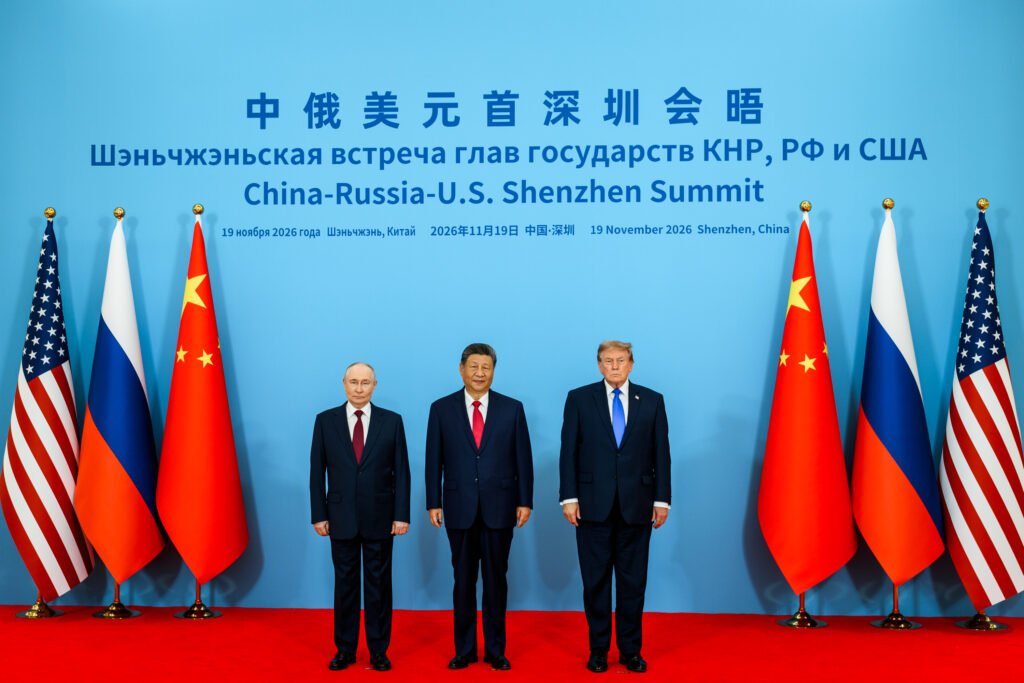
Even before Presidents of the United States, Russia and China could formally get together in Shenzhen for the Summit of Three, the buzz in some quarters was that it was another Yalta Moment, a reference to the 1945 Conference that was considered significant as it shaped the post World War Two global order. That Yalta meeting was attended by leaders of America, Britain and the Soviet Union.
The Shenzhen summit is significant in that it involved three top military powers getting together at a time of global turmoil and persisting uncertainties. The Shenzhen Three signed a Peace Declaration that covered many areas such as reforms of the United Nations, limiting the role of the International Criminal Court, commitment to avoiding a nuclear war and a pledge to boost supply of petroleum products to meet the energy challenges. President Donald Trump saw the gathering as “really making history.” The only sideshow missing in what has been described as a “theatre” was Chairman of North Korea, Kim Jong Un.
In and of itself the Peace Declaration is significant in that there has been an understanding to avoiding a nuclear war especially at a time when there has been some loose talk on the use of tactical or theatrical nukes without understanding the potential for immediate escalations. This has especially been the case with the ongoing five-year-old war between Russia and Ukraine and the vague threats coming at different times of the war in the Middle East.
The Shenzhen Declaration had little or nothing to say about the ongoing wars in Ukraine and Iran. These conflicts may have been discussed in the bilaterals that the three leaders had engaged in; but it should come as some relief that Washington, Moscow and Beijing are not deciding things amongst themselves in the absence of Ukraine and Iran. The apprehension in Europe and Asia was not just about the two ongoing wars, but in any effort to carve out spheres of influence as was done at Yalta, not that it would be easy to achieve.
Advertisement
The leaders of three powerful nations have no illusions about the Yalta of 1945 and Shenzhen of 2026; the international system having undergone such profound changes that it is almost impossible to dictate to third countries. The rise of Middle Powers and their growing clout in international affairs is for all to see; and in ways more than one Asia, Africa and Latin America play a prominent role in political, military and economic policies of the international system. The war in the Middle East showed the extent to which Iran could stand up to the United States and bring the entire region to a standstill.
“The worry about today’s meeting [in Shenzhen] was it would be a repeat of Yalta where the big powers get together to determine the future of other regions and smaller states without them being represented at the table. That’s been the concern from the European perspective, that this meeting will make a determination about Ukraine without Ukraine at the table and without the countries supporting Ukraine at the table,” the former Ambassador to NATO under the Biden administration Julianne Smith has been quoted in Politico.
Even within the top three, there have been considerable unease on different issues which is perhaps one reason why the leaders at the summit limited their focus for instance on nuclear weapons. President Trump, in walking away from the New START Treaty this February, has been pushing for a more vibrant arrangement that would include China. This on the premise that Beijing was aggressively adding on to its nuclear arsenal. But Beijing would have no truck with a lop-sided arrangement that would leave the United States and Russia with 5000 warheads apiece but China in the neighborhood of 500. It would only be prudent to assume that until China came close to the levels of Moscow and Washington, it would have no truck with any START agreement.
Likewise, the three leaders that gathered on the sidelines of the Asia Pacific Economic Cooperation Forum meeting talked about United Nations reforms that have been going on for more than a decade or for that matter on the International Criminal Court. At least publicly little has been discussed on the tensions in the South China Seas or freedom of navigation that nations in the Indo Pacific are so concerned about in light of heightened rhetoric by claimants to the disputed Spratlys Island.
Presidents Trump, Xi Jinping and Vladimir Putin went away with something even if Europe and Asia are seen as having left short-handed in the process. At a broad level, President Trump can take comfort that he has been able to sharpen his image in his country and globally especially as he has just come away badly bruised by the mid terms of November 3. It is a grand diplomatic show for President Xi; and President Putin, after being shunned for several years, must have found encouragement in the newfound spotlight.
In spite of all the encouraging words in the aftermath of his bilateral with President Putin, Europe is still concerned that the principals for a settlement of the Ukraine conflict are being sidelined even if a valid argument has been made for the absolute necessity for a “deal” given the tremendous human and economic costs.
Likewise, an Asia that has long played carefully between Washington and Beijing is worried about the Trump administration cozying up to President Xi. The perceived “cold shoulder” or “chilly” treatment given to Prime Minister, Sanae Takaichi may not get the Japanese worked up, but surely signals an environment that may not be to the liking of East and Southeast Asia.
Disclaimer: The opinions and views expressed in this article/column are those of the author(s) and do not necessarily reflect the views or positions of South Asian Herald.