The political journey of Indian Americans in the United States, which began with a struggle for the most basic rights of citizenship and political participation, has reached a new milestone. Nearly seven decades after Dalip Singh Saund became the first Indian American elected to the US Congress, victories in the November 3, 2026, midterm elections have reinforced the community’s presence in the House of Representatives, while gains across state legislatures, executive offices, local governments and the judiciary point to a broader transformation.
The significance of the latest results extends beyond the number of candidates elected. They reflect the gradual conversion of an immigrant community’s economic, professional and organizational influence into an increasingly established presence in American political institutions. What was once an exceptional achievement by individual pioneers is becoming a more sustained process of political participation, leadership development and institutional representation.
The election of Democrat Amish Shah from Arizona’s 1st Congressional District is particularly significant. Shah defeated Republican Jay Feely, a former National Football League player, with 52.49 per cent of the vote against 45.45 per cent. His victory made him the first Indian American to represent Arizona in Congress and flipped a Republican-held seat. An emergency-room physician and former state legislator, Shah had contested the district in 2024 but lost. His return to the electoral contest and eventual victory illustrate how political representation is built through sustained engagement rather than a single electoral breakthrough.
Shah joins five other Indian-American lawmakers in the House. Pia Dandiya’s victory in Florida’s 22nd Congressional District, where she defeated Republican Casey Askar with approximately 52 per cent of the vote, is another milestone. She becomes the first Indian American to represent Florida in Congress and the third South Asian American woman in the House. Her victory extends the community’s congressional presence beyond its traditional geographical concentrations.
Advertisement
The re-election of Ro Khanna and Ami Bera in California, Pramila Jayapal in Washington and Suhas Subramanyam in Virginia consolidates the community’s established representation. Together, the six lawmakers constitute the Indian-American congressional contingent, although the overall number of South Asian-origin representatives is larger when politicians of Pakistani, Afghan and other regional backgrounds are included.
The outcome is notable because the community’s representation has developed across different political and geographical settings. Khanna, Jayapal and Bera have built established congressional constituencies, while Subramanyam represents a newer generation of political leadership. Dandiya and Shah demonstrate that candidates of Indian origin can also build winning coalitions in districts where ethnic identity is not necessarily the principal determinant of voting behavior.
The deeper significance of the results, however, becomes clearer when viewed against the historical barriers that confronted the first generation of Indian immigrants.
From exclusion to political participation
The political story began long before Indian Americans acquired the professional and economic prominence associated with the community today. Early Indian immigrants, many of them Punjabi workers and farmers, faced racial discrimination, restrictions on property ownership and exclusion from citizenship.
The 1923 US Supreme Court judgment in United States v. Bhagat Singh Thind ruled that Indians were not eligible for naturalization under the racial restrictions then governing citizenship. The decision effectively denied Indian immigrants access to a fundamental route towards political participation.
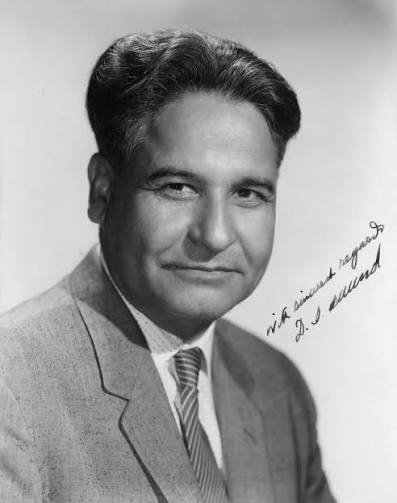
The turning point came with the Luce-Celler Act of 1946, signed by President Harry Truman on July 3. The legislation allowed Indian and Filipino immigrants to become naturalized American citizens, although the quota for Indian immigration remained extremely restrictive. Among those who had campaigned for the change was Dalip Singh Saund, an Indian immigrant from Punjab who had arrived in the United States in 1920 to study at the University of California, Berkeley.
Saund’s contribution was not confined to securing citizenship rights. After becoming a US citizen in 1949, he entered local politics, served as a judge in California’s Imperial County and was elected to Congress in November 1956. He took office in January 1957, becoming the first Indian American and the first person of Asian descent elected to the House of Representatives with full voting rights.
His election was a remarkable achievement in an era when racial prejudice remained deeply embedded in American public life. Saund served three terms, representing a predominantly agricultural district and advocating farmers’ interests, economic opportunity and stronger relations between India and the United States.
For several decades, however, his achievement remained largely an individual breakthrough rather than the beginning of a continuous congressional presence. The community was still relatively small; immigration was tightly restricted and the political infrastructure necessary to produce candidates and sustain electoral campaigns had yet to develop.
The Immigration and Nationality Act of 1965 fundamentally changed that environment. By abolishing the national-origins quota system and expanding immigration through family reunification and employment preferences, the legislation opened the door to a much larger flow of immigrants from India and other Asian countries. Subsequent migration brought professionals, academics, entrepreneurs, physicians, engineers and students who gradually established substantial economic and social networks.
The expansion of the Indian-American population created the demographic and institutional foundations for a different kind of political engagement. Professional associations, community organizations, religious institutions, advocacy groups and business networks became increasingly important in mobilizing voters, raising campaign funds and identifying future political leaders.
Yet economic success did not automatically translate into political representation. For much of the late 20th century, Indian Americans were more visible in corporate management, technology, medicine and academia than in elected public office. Political participation was often channeled through campaign donations, lobbying, community advocacy and engagement with established political parties.
That pattern has progressively changed.
From individual pioneers to an institutional presence
The emergence of Indian-American political leadership accelerated in the 1990s and 2000s, as a larger second generation entered public life and immigrant professionals became more active in local and national politics.
The election of Bobby Jindal to the US House in 2004 marked a new phase. Jindal, who subsequently became Louisiana governor, demonstrated that Indian-origin politicians could move beyond congressional representation into statewide executive leadership. His political trajectory also exposed the ideological diversity within the community, particularly as he established himself as a Republican.
The election of Kamala Harris to the US Senate in 2016, followed by her elevation to the vice-presidency in 2021, represented another historic development. Harris, whose mother was Indian and father Jamaican, became the first woman and first person of South Asian and African American heritage to serve as US vice-president. Although her political identity cannot be reduced to her Indian ancestry, her ascent expanded the visibility of South Asian heritage in the highest levels of American government.
Other developments reinforced this transition. Ro Khanna, Ami Bera and Pramila Jayapal established durable congressional careers, while state-level politicians such as Aruna Miller, Jay Chaudhuri, Manka Dhingra and Ash Kalra demonstrated that representation could be sustained across different institutional settings.
The 2026 elections have extended this progression.
At the state level, the scale of participation is particularly striking. Indian-American candidates secured approximately 30 state legislative victories, with some additional contests still awaiting final confirmation. Democratic candidates accounted for most of the victories, although Republican candidates also retained representation.
Several results carry particular historical importance. Pooja Sethi won Texas House District 47, defeating Republican Jennifer Mushtaler with 57,543 votes against 33,291. Her election makes her the first Indian-American woman elected to the Texas Legislature and adds a new dimension to South Asian political representation in a state where immigration, education, economic growth and demographic change are central political questions.
Jyot Singh’s victory in Georgia’s 97th State House District, with approximately 68 per cent of the vote, makes him the first Indian American and Sikh American elected to the Georgia General Assembly. His election is significant not merely as a community milestone but as evidence of the growing political participation of Sikh Americans in the American South.
In Michigan, Ranjeev Puri’s re-election to the state House has strengthened his position within the Democratic Party. With Democrats regaining control of the chamber, his prospects of assuming the speakership have attracted attention, although the position remains subject to the party’s internal selection process.
Other incumbents, including Manka Dhingra in Washington, Ash Kalra in California, Arvind Venkat in Pennsylvania, Jay Chaudhuri in North Carolina and Ram Villivalam in Illinois, have retained their seats. Their continued presence illustrates the consolidation of political careers that were once considered unusual within the community.
The gains are not confined to Indian Americans. Pakistani-American politicians, including Saud Anwar, Maryam Khan, Salman Bhojani, Suleman Lalani and Farooq Mughal, have also strengthened South Asian representation in state legislatures. Their electoral successes underline the need to understand the wider South Asian political experience without treating its constituent communities as a single political constituency.
The political base is widening
The most consequential aspect of the 2026 election may ultimately be the expansion of representation below the federal level. Political influence is not created exclusively in Congress or through prominent statewide victories. It is cultivated through school boards, municipal councils, county administrations, state legislatures and judicial institutions, where decisions directly affect the daily lives of citizens.
This year’s results provide several examples. Tina Sodhi’s election as an Albany County Court judge in New York marks a milestone for women of South Asian Punjabi heritage in the state’s judiciary. Her professional journey through public service and legal practice illustrates another route through which immigrant communities are entering public institutions.
At the municipal and county levels, victories by candidates such as Salt Lake County District Attorney Sim Gill, Wake County commissioner Mona Singh and Harris County education board member Silky Joshi-Malik add to this institutional presence. These positions may attract less national attention than congressional races, but they provide opportunities to influence public administration, criminal justice, education and local governance.
The re-election of Maryland Lieutenant Governor Aruna Miller and Wisconsin Attorney General Josh Kaul also demonstrates that Indian-origin politicians have moved into executive and constitutional offices. Miller’s position is particularly significant as the first South Asian woman elected lieutenant governor in the United States.
The geographical spread of these victories is equally important. Indian-American political representation is no longer concentrated in California and a handful of metropolitan areas. It is becoming visible in Texas, Georgia, Arizona, Michigan, Pennsylvania, Wisconsin, Washington and other states. This suggests that the community’s political participation is increasingly integrated into the broader American electoral landscape.
There is also a generational shift underway. Earlier immigrant generations frequently approached politics through concerns about immigration restrictions, racial discrimination, religious freedom, international relations and recognition of their communities. Their children and grandchildren are increasingly entering elections with a broader political vocabulary encompassing healthcare, education, housing affordability, employment, taxation, infrastructure, environmental policy and technology regulation.
Pooja Sethi’s emphasis on public education, healthcare and infrastructure, and Jyot Singh’s focus on public service and community welfare, illustrate how candidates can acknowledge the historical significance of their elections while presenting themselves as representatives of entire constituencies.
This distinction is essential. Political integration cannot be measured simply by the ethnic background of elected representatives. It must also be judged by their ability to build coalitions across racial, religious and economic communities, influence legislation and establish a credible record of public service.
Political diversity and the limits of ethnic identity
The election results also reveal the ideological and partisan differences within the Indian-American community. Democratic candidates accounted for the overwhelming majority of the reported state legislative victories, while Republican candidates experienced a more difficult election cycle.
The most prominent setback was Vivek Ramaswamy’s defeat in the Ohio gubernatorial contest against Democrat Amy Acton. Saritha Komatireddy also lost her challenge to New York Attorney General Letitia James. These outcomes demonstrate that Indian ancestry does not confer an electoral advantage independently of party affiliation, campaign positioning, local political conditions or the wider national environment.
Ramaswamy’s defeat is particularly relevant because his political profile had extended well beyond the Indian-American electorate. His campaign was shaped by Republican politics, his association with the Trump movement and the broader debate over the direction of the party. His loss should therefore be understood within that political context rather than interpreted as a verdict on Indian-American participation.
The community’s political diversity is, in fact, one of its defining characteristics. Indian Americans include conservatives, liberals, moderates and independents, with differing views on taxation, immigration, social policy, foreign affairs and the role of government. Their religious, linguistic, regional and class backgrounds are equally varied.
A sustainable political constituency cannot be built around an assumption of shared ethnicity or common political allegiance. Its strength will depend on the ability of candidates and organizations to develop cross-community alliances while allowing different ideological perspectives to coexist.
The distinction between Indian-American and broader South Asian representation also deserves attention. Pakistani-American, Afghan-American, Bangladeshi-American and other politicians have their own political histories and constituencies. Their achievements contribute to a wider South Asian presence in American public life, but they should not automatically be counted as Indian-American victories. The election of Afghan-American Aisha Wahab to a full term in California, for example, adds to the broader regional representation in Congress.
From economic influence to political agency
For decades, Indian Americans exercised influence through professional associations, corporate networks, campaign financing, technology entrepreneurship and advocacy organizations. The community’s presence in Silicon Valley, financial institutions, universities and healthcare systems gave it access to influential sections of American society. Yet access to decision-makers is different from participating directly in the institutions that make decisions.
The latest election results point to a gradual closing of that gap.
The growing political presence also has implications for India-US relations, although the relationship should not be viewed through an ethnic prism. Indian-American lawmakers are elected representatives of the United States, accountable to their constituents and the American Constitution. Their heritage does not make them automatic advocates of New Delhi’s diplomatic priorities.
Their potential contribution to bilateral relations lies instead in their familiarity with both societies, their professional networks and their capacity to facilitate dialogue on trade, technology, education, investment, immigration and strategic cooperation. Their influence will be most meaningful when it helps strengthen an institutional relationship based on shared interests rather than assumptions of cultural or ancestral affinity.
There is also a domestic dimension. As immigration, racial identity, religious pluralism and the definition of American belonging become increasingly contested political questions, the presence of representatives from immigrant backgrounds provides another channel through which these debates can enter legislative institutions. Their ability to address such questions will depend on their political records, not simply their personal histories.
The 2026 midterms, therefore, represent neither the culmination of the Indian-American political journey nor an automatic guarantee of greater influence. They mark another stage in a process that began with the fight for citizenship, advanced through local political participation and gradually expanded into congressional and statewide representation.
Dalip Singh Saund’s election in 1956 was an extraordinary exception in an era of exclusion. Nearly 70 years later, six Indian Americans in the House, alongside dozens of state legislators and an expanding presence in local and executive offices, suggest that such representation is becoming increasingly institutionalized.
The next test will be whether this growing presence translates into sustained legislative influence, leadership positions, effective public administration and political networks capable of nurturing future generations. Historic firsts provide visibility, but institutions provide permanence.
For Indian Americans, the transition from economic prominence to political participation is now well underway. The more consequential question is whether the community can turn that participation into a lasting capacity to shape the political and policy choices of the country it has made its home.
Disclaimer: The opinions and views expressed in this article/column are those of the author(s) and do not necessarily reflect the views or positions of South Asian Herald.