
Politics in South Asia has rarely been short of symbolism, and few political figures understand the power of symbolism better than Sheikh Hasina. Her reported intention to return to Bangladesh on December 16, the nation’s Victory Day, is not merely a travel plan. It is a political message aimed at supporters, opponents and international stakeholders alike. The timing is deliberate. Victory Day holds a sacred place in Bangladesh’s national consciousness. It represents sacrifice, liberation and the birth of a sovereign nation. By associating her proposed return with this historic occasion, Hasina appears to be seeking not only political relevance but also a reconnection with the national narrative that has long underpinned her political identity. Yet symbolism alone cannot alter political realities.
More than two years after her dramatic exit from power and subsequent stay in India, Bangladesh is a markedly different country. The political landscape has shifted. Public expectations have changed. The debates dominating national discourse are no longer centered solely on development and economic growth, but increasingly on accountability, democratic governance and institutional reform.
Against this backdrop, Hasina’s proposed return raises a fundamental question: Is this the beginning of a genuine political comeback, or simply a strategic effort to remind the nation that she remains a force in Bangladeshi politics?
Her supporters view the announcement as an act of political resilience. They see Hasina as the leader who oversaw Bangladesh’s transformation from a lower-income country into one of South Asia’s fastest-growing economies. They argue that despite her removal from power, her influence continues to resonate among millions of Bangladeshis who associate her tenure with economic progress, infrastructure development and regional diplomacy.
Advertisement
Her critics, however, see a different story. For them, her years in office were marked by shrinking democratic space, allegations of electoral manipulation, suppression of dissent and an increasingly centralized political system. To this constituency, a return by Hasina represents not a restoration of stability but a revival of the political polarization that has long troubled Bangladesh.
These competing narratives explain why the prospect of her return remains so contentious.
The reality is that Hasina’s path back to Bangladesh is obstructed by more than political opposition. Legal challenges remain a significant barrier. The authorities have consistently maintained that any return would unfold within the framework of ongoing judicial proceedings. Whatever one’s political perspective, it is difficult to imagine a scenario in which such legal considerations can simply be set aside. This is where the issue transcends politics and enters the realm of statecraft.
A mature democracy must be capable of separating justice from political reprisals. If allegations exist against former leaders, they should be examined through due process and credible institutions. Equally, any legal proceedings must be seen as impartial and transparent. The legitimacy of Bangladesh’s democratic transition will depend not only on how it handles its political future but also on how it addresses its political past.
The international dimension is equally significant.
Since Hasina remains in India, New Delhi inevitably occupies a central place in any discussion about her future. India has deep strategic interests in Bangladesh, ranging from border security and trade to connectivity and regional stability. Decisions relating to Hasina’s status therefore extend beyond the fate of one politician and enter the broader landscape of bilateral relations. Interestingly, India’s public silence may be the most important signal of all. In diplomacy, silence often reflects caution rather than indifference. Neither Dhaka nor New Delhi appears eager to escalate a matter with obvious legal, political and geopolitical implications. Equally important is what the announcement reveals about the state of the Awami League itself.
The party that dominated Bangladeshi politics for more than a decade now faces an uncertain future. Many of its senior leaders remain politically weakened, while organizational structures have been significantly disrupted. In such circumstances, Hasina’s declaration serves an important strategic purpose. It reassures supporters, revitalizes party networks and projects an image of continuity at a time of uncertainty.
Yet history teaches us that political movements cannot survive indefinitely on symbolism or nostalgia.
If the Awami League hopes to remain a relevant force in future Bangladeshi politics, it must eventually offer more than a promise of Hasina’s return. It must address difficult questions about governance, accountability and political reform. Likewise, the current political establishment cannot assume that the disappearance of a rival automatically guarantees legitimacy or public trust.
The larger issue facing Bangladesh is therefore not simply the future of Sheikh Hasina. It is whether the country can build a political order that accommodates competition, dissent and accountability without descending into cycles of exclusion and retaliation.
That challenge extends beyond parties and personalities.
Bangladesh’s democratic future will be shaped less by whether one former prime minister returns than by whether institutions emerge stronger, more independent and more trusted than before. Political leaders may come and go. Institutions endure.
For now, Hasina’s proposed return remains more political signal than political certainty. The legal hurdles are substantial, the diplomatic calculations complex and the political consequences difficult to predict. But the announcement has already achieved one objective: it has brought questions about power, legitimacy and the future direction of Bangladesh back to the center of public debate.
Whether December 16 ultimately marks the beginning of a political comeback or merely another chapter in Bangladesh’s evolving political drama remains to be seen.
What is certain is that the country’s future will be determined not by the ambitions of any single leader, but by the strength of its democracy and the wisdom of its institutions.
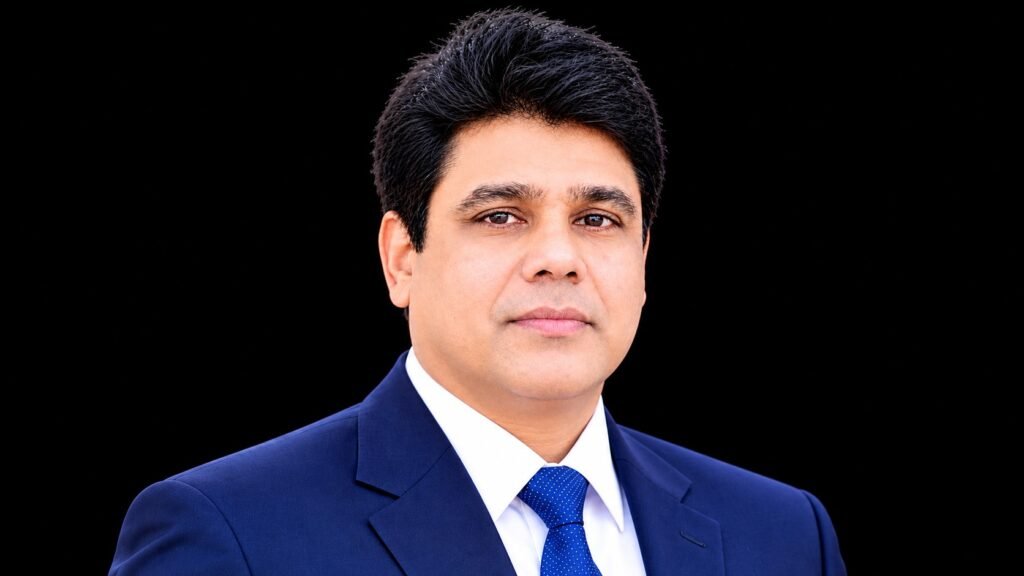
The writer is a political analyst, private banking financial crime compliance specialist, columnist and poet based in Geneva, Switzerland. He can be reached at shahidul.alam@bluewin.ch.
Disclaimer: The opinions and views expressed in this article/column are those of the author(s) and do not necessarily reflect the views or positions of South Asian Herald.