Join WhatsApp Channel


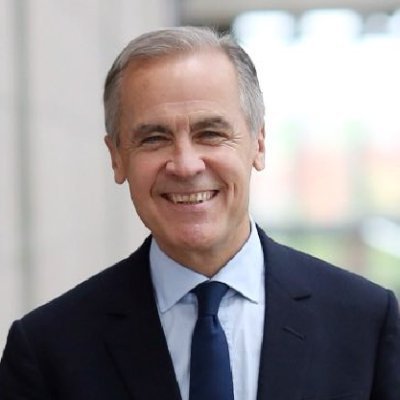
Canadian Prime Minister Mark Carney will make his first official visit to India, arriving in Mumbai on February 26 before traveling to New Delhi for meetings with Indian leaders.
Carney’s trip marks the first visit to India by a Canadian prime minister since Justin Trudeau traveled there in 2023. Trudeau had previously visited India in 2018. Former Prime Minister Stephen Harper also made official visits in 2009 and 2012.
According to a statement from the Prime Minister’s Office, the visit comes at a time of global uncertainty and reflects Canada’s efforts to strengthen its economic and strategic position.
“In a more divided and uncertain world, Canada’s new government is focused on what we can control. We are building a stronger, more independent, and more resilient economy. We are building our strength at home, diversifying our trade abroad, and attracting massive new international investment.”
Carney announced that he will travel to India, Australia, and Japan from February 26 to March 7 to advance cooperation in trade, energy, technology, and defense. The visits are aimed at deepening ties with key Indo-Pacific partners and expanding opportunities for Canadian workers and businesses.
“In a more uncertain world, Canada is focused on what we can control. We are diversifying our trade and attracting massive new investment to create new opportunities for our workers and businesses. We are forging new partnerships abroad to create greater certainty, security and prosperity at home,” said Carney while announcing dates of his travel.
India Visit to Focus on Trade and Strategic Cooperation
In India, Carney will meet Prime Minister Narendra Modi in New Delhi. The discussions are expected to center on strengthening and expanding the Canada–India relationship, including new partnerships in trade, energy, technology, artificial intelligence, talent exchange, culture, and defense.
The Prime Minister is also scheduled to meet business leaders in Mumbai and New Delhi to explore investment opportunities and promote commercial partnerships between the two countries.
India remains the world’s fastest-growing major economy and a leading force in global commerce and technology. In 2024, India was Canada’s seventh-largest trading partner in goods and services, with bilateral trade totaling $30.8 billion.
At last year’s G20 Leaders’ Summit, Canada and India agreed to formally launch negotiations toward a Comprehensive Economic Partnership Agreement. The proposed deal aims to help Canada more than double two-way trade with India to $70 billion by 2030.
In addition, Canada, India, and Australia announced a trilateral technology and innovation partnership on the margins of the G20 summit. The initiative is designed to enhance collaboration in critical and emerging technologies and to strengthen secure and resilient supply chains.
Expanding Engagement with Australia
Following his visit to India, Carney will travel to Sydney and Canberra to meet Australian Prime Minister Anthony Albanese. Talks are expected to focus on defense and maritime security, critical minerals, trade, and advanced technologies, including artificial intelligence.
Canada and Australia maintain strong economic ties. Bilateral merchandise trade reached $6.1 billion in 2024, while Canadian direct investment in Australia totaled $58.8 billion in the same year.
During the visit, Carney will address both Houses of Australia’s Parliament and invited dignitaries, marking the first such address by a Canadian prime minister in nearly two decades. He is also expected to engage with business leaders and investors to encourage new capital flows and strengthen two-way trade and investment.
Strengthening Ties with Japan
The final leg of the tour will take Carney to Tokyo, where he will meet Prime Minister Sanae Takaichi. Discussions will focus on expanding cooperation in clean energy, advanced manufacturing, critical minerals, food security, and mutual investment.
The two leaders are also expected to discuss security and defense cooperation, including support for a free and open Indo-Pacific.
Japan is the world’s fourth-largest economy and an important commercial partner for Canada, with annual bilateral trade valued at $36.4 billion.
The Prime Minister’s Office underscored Canada’s broader economic strategy, noting that the country is leveraging its strengths in energy, critical minerals, technology, and skilled talent to deepen international partnerships.
“Canada has what the world wants – abundant energy, critical minerals, expertise in technology, and world-class talent. In a changing world, we are investing in our strength, diversifying our trade, and cultivating a dense web of new connections throughout the world to build Canada strong.”
Related posts:
 India–Canada Uranium Deal, Trade Talks May Advance During Prime Minister Carney’s Expected March Visit
A New Chapter: Rebuilding the India-Canada Partnership
India–Canada Uranium Deal, Trade Talks May Advance During Prime Minister Carney’s Expected March Visit
A New Chapter: Rebuilding the India-Canada Partnership
 G7 Summit 2025 Ends with Renewed Alliances, Sharp Divides, and a Surprise Exit by President Trump
 Canadian PM Mark Carney Breaks Silence on US Tariffs