Across time and space certain people do deserve the limelight simply because their legacy could become the keystone where future societies could be hinged upon. And so here was one of those men who hardly was given his due by historians or biographers. Hence his recall value today remained largely faint for future generations. He was sighted once and as all good men the earth produced, melted into the abyss of time and space, never to return to this realm. This man left more than an inedible footprint for the world to follow. In fact, he had created a world order that was timeless, enduring and so much relevant especially in today’s context –-his simple elixir for festering issues– embrace plurality and craft a socio-cultural platform where an amalgam of differences within humanity is celebrated and recognized rather than being despised and hated!
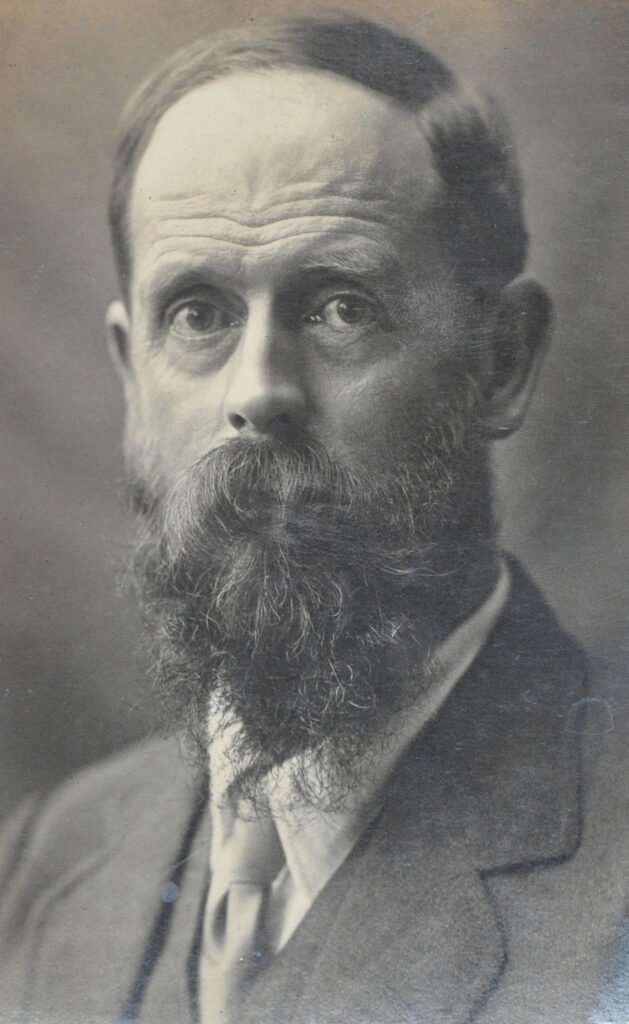
The man in contention was none other than Charles Freer Andrews (1871-1940), Mahatma Gandhi’s close friend ‘Charlie’; the man who worked closely with the Indian National Congress and the man who later taught philosophy at Delhi’s St Stephens’ College. His epic contribution remained his singular focus on building bridges amongst people, especially in a plural society like India. His life was an epitome of humility and he chose to live so in obscurity till his last breath. Today, his contributions to humanity and the rich legacy that he left behind has been almost forgotten, at best relegated to a mere footnote in the sands of time.
His natural adoption of a humble stance has become even more relevant in today’s world where the understanding or worse, the refusal to accept diversity of human culture has given rise to an endless cycle of violence and avoidable mayhem. To underline the fact that Andrews’s world view is becoming more and more relevant today as we hurtle towards insanity and violence of epic proportions all across this planet. Not to speak of the great disruptions caused to humanity through increasing incidents of protracted wars, religious strife, famine, environmental disasters, the all-pervading Artificial Intelligence (AI) to name a few all of which has already started taking its toll globally causing more and more people to leave their homes and look for livelihoods elsewhere. If we do not embrace plurality and diversity at this moment, like Andrews showed us, how will humanity survive? Why can’t today people pause and think, that the whole future of life on this planet is at stake. Soon, the world will be flooded (it’s beginning to happen already) by people who are looking for sheer survival, migrants escaping growing environmental disasters, wars and other man made cataclysms. The population complexion is today poised for a massive shake-up all across the world even as global migration is scaling up driven by demographic gaps, economic divergence, and climate and conflict pressures, with the number of displaced humans surpassing 304 million.
Andrews, who came to India as a missionary educator and who pioneered a lone course in inter-faith theology and partnerships while advocating Indian independence overcame deep personal risks but threw himself into relationships with diverse people. This was a reflection of a complex mindset, which was way ahead of his times, a willingness to accept and side step that constant cycle of ignorance, fear, suspicion and cold indifference that besieged the cultivation of human plurality, explained Dr Bernardo A Michael who teaches history at Messiah College, Pennsylvania and is working feverishly on a biography, with scintillating details on Andrew’s, hitherto unknown facts. His ongoing research has taken him to places like the Fiji Islands, Australia, New Zealand, United Kingdom and India.
Advertisement
In a freewheeling chat exclusively with South Asian Herald, Dr Bernardo pointed out that “our existence today is inescapably plural, and only an embrace of plurality can provide the foundational materials for crafting societies where our differences and our shared humanity are simultaneously recognized and celebrated.’’ This is what the essence of Andrew’s focus was all about in the past.
‘’Today there is a hardening of religious identities which presents a challenge to living in meaningful and responsible relationships with others who are different. It has resulted in a growing dysfunction in public life and political culture where name-calling, xenophobia, recrimination, and criminality have become common spectacles. Mutual generosity, toleration of dissent, and trust building are perhaps at their lowest ebb in any country. Such trends seem to hide from view the longstanding relations of mutual accommodation and understanding that have marked the relationships between religious communities in the past. There are vivid examples of social groups having engaged in practices of daily accommodation and hospitality despite the presence of inequalities, exclusion, and conflicts,” comments Dr Bernardo.
He is of the opinion that as extremist versions of religious nationalism begin to flex their muscles (in today’s context) the human history of inter-religious/cultural dialogue and exchange could provide foundational materials for forging new forms of communal solidarity capable of countering the forces of extremism and develop a humanistic ethic based on pluralism.
According to Dr Michael, building friendships across differences is an ethical task that we need to pursue with vigor and a sense of urgency if human communities are to build a positive future. Such ethical work is quite risky, observes Judith Butler, an American ethicist and gender theorist, in that we are called to throw ourselves into relationships with people so divergent from ourselves that we risk being personally “undone” by identifying with them. Yet Butler’s emphasis on a “willingness to become undone” might in fact be a way out of the cycle of ignorance, fear, suspicion, and cold indifference that continues to oppose the cultivation of a profoundly plural humanity.
This openness to be undone is what allowed Andrews to overcome his own biases, ignorance, and fear as he reached across the boundaries of differences. It must be recalled that Andrews came to India in 1904 with a rather skewed understanding of race and empire and then spent his first ten years in India as a missionary and as an educator at St. Stephen’s College, Delhi. The experience became a game changer in dismantling his paternalistic attitudes on imperialism and even the ignorance about his racial privilege. At St. Stephen’s College, where he worked from 1904 to 1914, colleagues like Susil Rudra and S. A. C. Ghose would help Andrews further realign his views towards his transformation towards becoming a staunch critic of European racial attitudes. In particular, his friendship with Rudra helped defamiliarize India for him and years later Andrews would gratefully acknowledge how Rudra had “weaned” him away from his arrogance, thereby breaking down the barriers that had separated him from others. ‘’Andrews also began to disavow the idea of the civilizing mission of British imperialism his devout father had espoused and by 1910 had begun to entertain the idea that Britain needed to grant India complete and unconditional independence, long before such an idea was formally adopted by Indian nationalists,’’ says Dr Bernardo. He had rejected high positions and careers in the fields of religious service and education, both in England and in India. He had himself put himself into a cleft stick suspected by the imperial British and seen with a wary eye by Indians.
‘’He had to bear the financial, emotional, and physical toll of his work. Andrews’s itinerant life brought him no regular income and he donated his meager possessions to the Indian National Congress. His frugal lifestyle, frequent travel, and overwork were punctuated by bouts of fatigue, anxiety, nervous breakdowns, and ill health, and compounded by difficulties in hearing,’’ says Dr Bernardo. As a fallout Andrews had to pay a heavy price to become “Deenabandhu,” or “friend of the poor.”
It must be noted that the foundational spark came even before Andrews’s Indian experience. Between 1895 and 1899, Andrews worked at the Pembroke College mission at Walworth, a poor urban neighborhood in South London inhabited by street vendors, some casual laborers, porters, and carriers. The work included a penny bank, rescue and preventive work among young girls, a Band of Hope, temperance meetings, soup kitchens, and so on. Here, Andrews’s work among the urban poor took him out of the comforts and heady intellectual environment of Cambridge and his own middle-class upbringing. He had to unlearn his privileged status to work effectively among the poor. ‘’This work gave Andrews a critical awareness of the limitations of his bourgeois roots and helped him to steer away from the common fate of his education, which, he told a friend, would have consigned him to Britain’s “decadent” educated middle class. His experiences at Walworth helped to prepare him for a life spent in service of the poor,’’ according to Dr Bernardo. In 1938, two years before his death, he reported to a correspondent that “the whole of later life which I have spent here in India among the poor received its first impulse in those years when I lived in the same manner in London. They were not only the best, but also the most formative years that I have ever spent; for they shaped the whole of my life in this one direction.”
Andrews’s affinity for the poor and the discriminated against would take him around the world seeking inclusion and equity for overseas indentured Indians in Fiji, British Guyana, South Africa, Australia, New Zealand, and other places. ‘’Andrews began to look beyond European Christianity to the East for new theological resources. During his years at Cambridge, he continued to confront this issue of reconciling his family’s religious values and his own emerging ones. Andrews gradually moved away from the narrow confessional claims of his conservative Irvingite Christian roots to become part of the Anglican Church during his college years,’’ says Dr Bernardo.
Andrews’s disillusionment with the exclusivism and narrow theological outlook of Western Christianity and his own financial dependency on government and mission aid brought him to a breaking point in his relationship with the Anglican Church. In 1914, he decided to leave the Anglican Church. This decision was an important marker in Andrews’s story of being undone. His inner life underwent a change and he gradually grew accustomed to this new way of thinking outside the conventional paradigm of a Western missionary. Again, it was the presence of friends, and Tagore in particular that forced him to confront this issue with greater urgency. Andrews’s actions would result in the loss of most of his English friends.
He was deeply troubled by the theologically exclusivist claims of the Athanasian creed whereby salvation was only possible through a knowledge of Jesus Christ) which left his closest friends, such as Tagore, condemned to eternal damnation. His friendship with the Arya Samajist educator Munshi Ram (later known as Swami Shraddhanand) drew him out of his confessional boundaries to undertake the study of Hindu religion and philosophy, according to Dr Bernardo. ‘’So undone and removed from the conservative Christianity he had inherited was Andrews, that he was willing to give room to other religions in their dialogue with Christianity. Therefore, in 1914 he entertained the notion that the Hindu reform organizations such as the Brahmo Samaj and Arya Samaj would through their good work “bring in the Kingdom of Christ and might in the future, even bear some relationship to the Church,” points out Dr Bernardo.
This period of doubt and theological undoing, which lasted for nearly twenty years (1904-21), caused great consternation among the English community in India and posed risks to Andrews’s religious career in Christian circles. It also caused him considerable anxiety. However, this painful experience of being undone also left him unfettered to broaden his friendships across religions and pursue interfaith dialogue and understanding. In 1913, he wrote to his friend Munshi Ram that “revival of the true spirit of religion not in mutually exclusive forms but rather inclusive forms, not by the revival of a zeal which makes for new and bitter rivalries but by a zeal which makes for harmony & peace.” He believed that “the whole world is getting tired and wearied at heart with these ceaseless rivalries of races & creeds & with the sectarian spirit whether in Church or state & that the future is not with the warmakers but with the peacemakers.”
A few months after Andrews’s death in April 1940, Tagore recalled: ‘’Andrews came to India in the days of her strenuous political struggle. Once he was convinced of the justice of Indian aspirations, his Christian faith and charity led him to immediately take up the cause of the oppressed and the lowliest in the face of ridicule and active opposition from his own countrymen. We must clearly realize it is one thing to sacrifice oneself for one’s own motherland, the inspiration being common and usual, it is quite another thing to sacrifice oneself to the cause of a foreign land. To recognize the common bond of the human soul, an infinite resource of love and inspiration is needed. And this he had in an ample measure.’’
Dr Bernardo explains that Andrews worked in close association with Indian leaders to bring about social reform and improve the predicament of the downtrodden, whether it was plantation workers in Fiji, East Africa or Assam in India, or unpaid workers in the Shimla hills. He was indifferent to material comforts and was known to give away his shawl or his overcoat to impoverished people he met along the way. He also gave away money, and this often left him penniless. His biographer Benarsidas Chaturvedi has said no one still knows how he supported himself during those years in India. Many Indians and Englishmen were known to have helped him financially.
There now appeared an air of suspicion amongst the British colonial administrators towards Andrews “this dhoti-clad, Hindi-speaking Englishman.” His name was deleted from the list of nominees for fellowships at Punjab University by the provincial governor for being regarded as a friend of Indians. Andrews however, was never jailed because of the immense public opinion that lent their undying support to him in India. Talking about the popularity quotient the British had rightly observed, “If today the Viceroy were to say ‘do this’ and Andrews were to say ‘no’ ninety-nine per cent of Indians would obey Andrews rather than the Viceroy.” One of the members of the British House of Commons had even demanded that he be deported to England and tried for sedition! Such was the man’s charisma that Andrews wielded considerable influence on Viceroy Lord Hardinge, British Prime Minister Ramsay MacDonald, the Governor of British-Guiana Lord Gordon Guggisberg, or General Jan Smuts of South Africa. His careless dressing was legendary, turning up at meetings at elite London clubs wearing canvas shoes, unpressed flannel trousers and a shirt with frayed collars prompting Secretary of State, Edwin Montagu to comment on Andrews as “God’s own fool.” Andrews also had a role in pushing the same Montagu to end the system of indentured labor in the Fiji Islands in 1920. He also spoke on behalf of the vulnerable section of the plantation workers not only in Fiji but in East Africa, Assam, and in the Shimla hills.
Like a paradox, his friends included well-known nationalists, activists, and religious figures such as Mohandas K. Gandhi, Agatha Harrison, Gurdial Mallik, Jawaharlal Nehru, W. W. Pearson, Susil Kumar Rudra, Munshi Ram (Swami Shraddhanand), Rabindranath Tagore, and Munshi Zaka Ullah. Andrews also had close connections with government officials and multitudes of Indians, rich and poor, living in India and abroad. Andrews never failed to express his profound admiration and gratitude even while he had disagreements with these friends. It is with the help of these numerous friends that he cultivated a remarkable ability to cross boundaries formed by empire, race, class, gender, religion, theological outlook, and caste, with a unique blend of care, compassion, and humility. ‘’This openness to be undone is what allowed him to overcome his own biases, ignorance, and fear as he reached across the boundaries of difference,’’ says Dr Bernardo.
A poignant anecdote by Chaturvedi, his biographer had described Andrews’s meeting an old friend encapsulates the man he was: I was waiting for Mr. Andrews who had gone to see the Poet (Rabindranath Tagore) in connection with the case of the detainees, when an elderly gentleman of dark complexion, haggard face and vacant look came and asked me about him. I said that Mr. Andrews had gone to see Gurudev (as Tagore was referred to) and would be returning soon. I requested the gentleman to take a chair. He humbly declined to do so. As soon as Mr. Andrews saw him from a distance he dashed forward to meet this man. “Oh, dear-dear! You are Akshay! I was anxious about how I should be able to see you at Calcutta. Now you must stay with me till I go to Calcutta after three days.” Mr. Andrews kept him in his embrace for a few minutes and will not leave him. There were tears of joy in the eyes of both. I never knew who this great friend of Mr. Andrews was until I was told by a teacher in Shantiniketan that Akshaya Babu was a humble and self-sacrificing worker of Shantiniketan, who had developed leprosy and had to leave the place. It was Dinabandhu Andrews who arranged for his treatment, which he was undergoing at Calcutta. The scene instantly reminded me of a passage in the Bible telling us how Christ Himself embraced a leper and truly does this C.F.A (Andrews) move about on the face of the earth in the footsteps of his Lord.
Disclaimer: The opinions and views expressed in this article/column are those of the author(s) and do not necessarily reflect the views or positions of South Asian Herald.