Nature travel in India has moved decisively from the margins to the mainstream. What was once a niche pursuit for wildlife enthusiasts and ornithologists has become a mass-market aspiration, propelled by a post-pandemic hunger for open landscapes, the relentless pull of the tiger photograph, and a hospitality industry eager to monetize the last remaining pockets of wildness.
The numbers tell a story of extraordinary momentum: the country’s sustainable tourism segment is expanding at a pace that outstrips almost every other travel category, with eco-tourism commanding the largest share of that growth. Yet the very success of nature-focused travel is now forcing an uncomfortable question upon travelers, forest departments, and the communities who live closest to the ecosystems in question. Can a boom of this scale be reconciled with the ecological limits that make the boom possible in the first place?
The answer, increasingly, depends less on the number of visitors and more on where the money goes, who holds the decision-making power, and whether the experience on offer extends beyond the bonnet of a safari vehicle. Across India, a quiet but consequential experiment is underway: the attempt to turn forest-fringe residents from passive bystanders — or reluctant neighbors of dangerous wildlife — into economic stakeholders in conservation. The logic is seductive in its simplicity. If a family earns a steady income from hosting travelers, guiding bird walks, or supplying produce to a local homestay, the forest ceases to be a liability and becomes an asset worth protecting. Conservation, in this framing, is not imposed from above but embedded in the household economy.
Some of the most instructive models have emerged from unlikely places. In eastern India, a cluster of mud-and-clay homestays overlooking a wetland sanctuary has been run entirely by women from forest-dependent families, several of whom had previously relied on manual labor or the collection of forest produce for survival. The revenue-sharing architecture is deliberate: a substantial share goes directly to the homestay operator as wages, a portion is earmarked for village development, and a smaller slice feeds a corpus fund for training and capacity building. The early results are modest but meaningful — hundreds of visitors hosted, lakhs in revenue generated, and monthly earnings that, while not transformative, represent a reliable income stream where none existed before. More significantly, the village has used its new role as a conservation partner to adopt zero-plastic norms, universal sanitation, and household-level waste management, precisely because the tourism product depends on the cleanliness of the landscape.
Advertisement
This pattern repeats, with local variations, across the country. In the forests of central India, women have trained as naturalists and safari guides, entering a workforce from which they were previously excluded and, in the process, reshaping the relationship between villages and the reserve on their doorstep. In the Himalayan foothills, village cooperatives have converted birdwatching from a hobbyist pursuit into a livelihood, with local residents serving as trackers, interpreters, and hosts. In the Northeast, development finance has begun to flow into models that explicitly link nature-based tourism with climate-smart farming and community forest restoration, recognizing that a tourist facility is only as sustainable as the watershed around it. The common thread is not charity but ownership: communities are not merely employed by eco-tourism; they are becoming its proprietors, or at least its shareholders.
Yet the boom is outpacing the institutional scaffolding meant to keep it honest. The pressure points are most visible in the landscapes that have become synonymous with Indian wildlife tourism. In the Himalayan trekking corridors, once-quiet trails now host multiple groups simultaneously, with peak campsites swelling to well over a hundred people, generating waste that the high-altitude ecology cannot absorb and contaminating streams that downstream villages depend upon. In the buffer zones of flagship tiger reserves, luxury resorts and event venues have proliferated, marketed less as gateways to the forest than as destinations in themselves, complete with destination weddings, corporate retreats, and the noise and light pollution that accompany them. The forest becomes a backdrop; the wildlife, an incidental amenity. When that happens, the economic case for conservation is hollowed out from within, because the revenue generated no longer depends on the ecological integrity of the place.
Regulators have responded, albeit unevenly. The enforcement of carrying-capacity norms by the highest court, coupled with advance booking systems and vehicle caps in tiger reserves, represents a necessary attempt to place ecological limits on an industry that had grown accustomed to treating the forest as an infinitely expandable resource. But regulation alone cannot redesign the product. When permits for popular reserves sell out months in advance, the bottleneck is not a failure of conservation policy but a failure of imagination. The safari — a vehicle-bound dash through a core zone in pursuit of a charismatic megafauna sighting — remains the dominant experience, and its scarcity is felt as denial rather than as an invitation to engage differently.
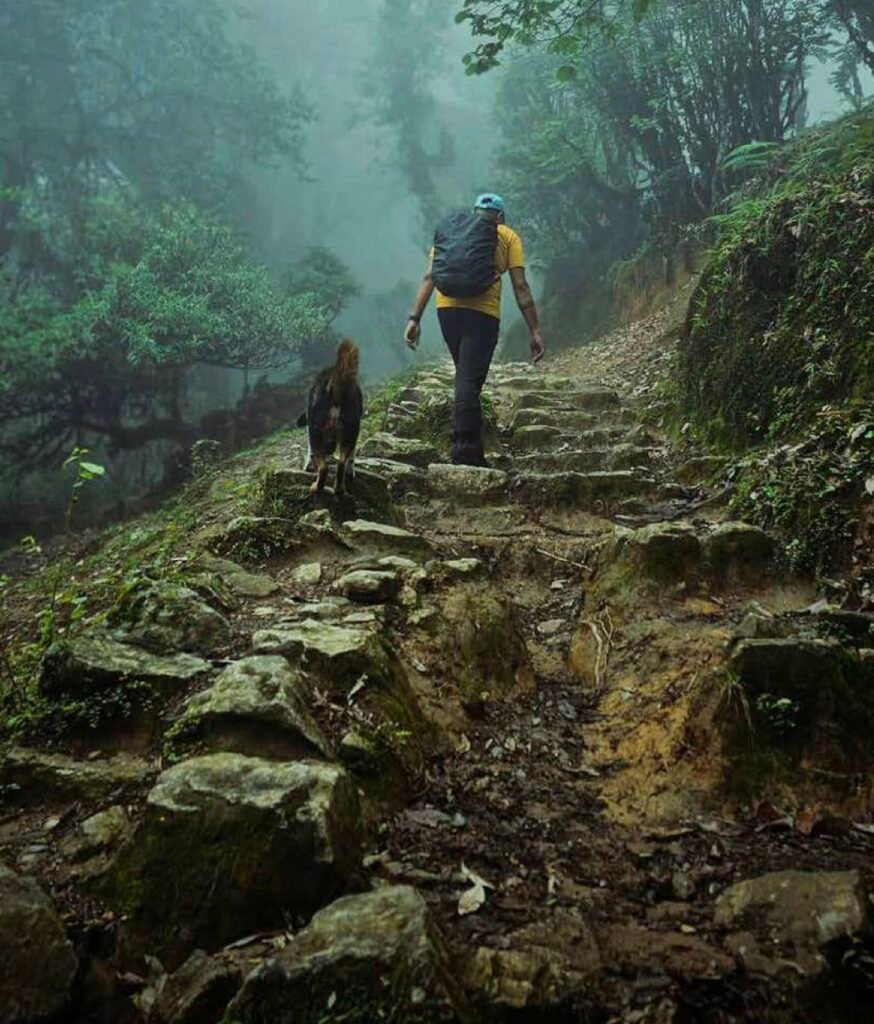
The alternative is already visible in a handful of landscapes where walking safaris, canoeing, bird-focused trails, and community-led interpretive walks have begun to supplement, and in some cases supplant, the vehicle-based model. These experiences are slower, lower in volume, and higher in engagement. They distribute visitors across buffer areas and lesser-known reserves, relieving pressure on the most congested core zones. They also create a wider range of local employment: not just drivers and guides, but trackers, cooks, artisans, and storytellers. The challenge is that such experiences require training, marketing, and a traveler willing to pay for depth rather than a checklist. They do not scale as quickly as a new resort, and they demand a different kind of patience from an industry conditioned to measure success in footfall.
The deeper tension is between two visions of what nature travel is for. One vision treats the forest as a stage for human leisure, with conservation as a constraint to be managed. The other treats it as a living system in which tourism is one among several economic activities, and in which the test of success is not how many people arrive but whether the arrival leaves the ecosystem and its human neighbors better off. The first vision will always gravitate toward volume, because volume is what the business model rewards. The second requires deliberate choices: limits on numbers, redistribution of revenue toward local institutions, investment in experiences that reward attention over acceleration, and a willingness to accept that some places are simply not suited to mass visitation.
India’s eco-tourism boom is not going to recede. The demand is real, and the economic opportunities for marginalized communities are too valuable to dismiss. But the boom is at an inflection point. If it continues on the path of least resistance — more vehicles, more resorts, more volume in the same handful of overcrowded landscapes — it will consume the very assets that made it attractive. If, instead, it can be steered toward community ownership, diversified low-impact experiences, and a genuine acceptance of ecological limits, it may yet become something rarer than a successful industry: a durable conservation economy. The choice is not between tourism and conservation. It is between a tourism that funds conservation and a tourism that quietly undermines it. The communities who are already running homestays, guiding walks, and sharing the revenue are showing which way that choice could go. The question is whether the rest of the industry — and the travelers it serves — will follow.
Disclaimer: The opinions and views expressed in this article/column are those of the author(s) and do not necessarily reflect the views or positions of South Asian Herald.