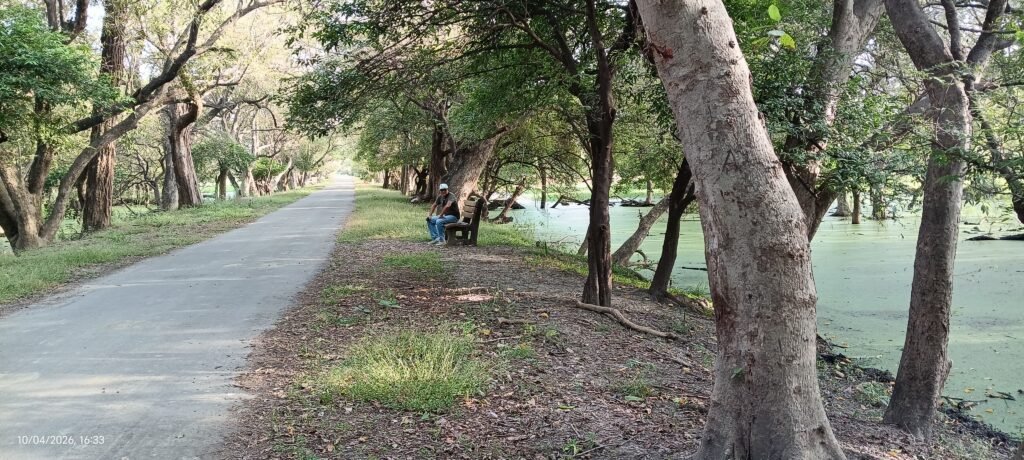
One fine Sunday, we set off in our beloved seven-seater Suzuki, zipping across the vast expanses of the Indo-Gangetic plains. Traversing the Braj region via Mathura and Vrindavan, we made our way from Delhi to our destination: the UNESCO World Heritage Site of Keoladeo National Park, better known as the Bharatpur Bird Sanctuary. Along the way, medieval history, tales of erstwhile kingdoms and the natural landscapes of northern India unfolded before us, offering much to savor as we journeyed towards this avian paradise.
Stretching in every direction were the ubiquitous, intensively cultivated agricultural lands, interspersed with unmistakable signs of rapid, albeit haphazard, urbanization encroaching upon these once predominantly rural landscapes. The alluvial soils of the region, enriched by organic matter and potash, together with an extensive irrigation network that includes canals such as the Agra Canal, have made the area highly productive for cash crops. The rabi, or winter, cropping season was just getting underway, with mustard being the defining crop of the Bharatpur–Mathura belt, accompanied by wheat, barley and pulses. During winter, vast stretches of farmland turn a brilliant yellow as mustard blossoms across the landscape, reflecting the region’s importance as one of northern India’s major mustard-oil-producing belts.
We were travelling through Braj, also known as Braj Bhumi, a culturally and religiously significant region of northern India centered on the Yamuna River. Its geographical extent is variously estimated at between 3,800 and 5,000 square kilometers. The Delhi–Bharatpur route cuts across an agricultural corridor spanning Haryana, Uttar Pradesh and Rajasthan. Situated largely on the famed alluvial plains, the region also includes areas of arid, sandy-loamy soils. Supported by canal and tube-well irrigation, these fertile tracts sustain intensive, often double-cropping agricultural systems.
Braj’s history, both documented and legendary, stretches back thousands of years. At its heart lies Mathura, one of India’s oldest continuously inhabited cities, with a history extending back more than 2,500 years.
Advertisement
Mathura emerged as a major urban, religious and artistic center, flourishing particularly under the Kushan Empire between the first and third centuries CE. Over the centuries, Buddhism, Jainism, Hinduism and Islam all left their distinctive imprints on the city’s cultural and architectural landscape.
Further along our route, we passed through Dholpur, once associated with the Bamrauli dynasty of the Jat community. Today, the former royal family’s titular head is Maharaj Rana Dushyant Singh, son of Maharaj Rana Hemant Singh, who held the title of Maharaj Rana of Dholpur until 1971, and Vasundhara Raje Scindia, the former Chief Minister of Rajasthan. Dholpur occupies a strategically significant position at the junction of Rajasthan, Uttar Pradesh and Madhya Pradesh.
sv:16.2.13.3.W30;
module: photo;hw-remosaic: false;touch: (-1.0, -1.0);sceneMode: 8;cct_value: 0;AI_Scene: (-1, -1);aec_lux: 0.0;aec_lux_index: 0;HdrStatus: auto;albedo: ;confidence: ;motionLevel: 0;weatherinfo: null;temperature: 34;
Throughout medieval history, Dholpur lay along important western approaches connecting major centers of power. Its geographical position made it a crucial passage for armies travelling southwards from Delhi and Agra towards the formidable fortress of Gwalior and the prosperous plains of Malwa. Whoever controlled Dholpur held considerable sway over the military movements and commercial traffic passing between northern and central India.
As we continued towards our destination, the sylvan stretches of the countryside were repeatedly interrupted by towns and settlements. Here, the contrast between the region’s natural beauty and its deteriorating civic infrastructure was difficult to ignore. Several rural and semi-urban roads lay submerged beneath thick sludge, accumulated mud and heaps of uncollected waste. The filth had reportedly become so severe in some localities that public transport vehicles and tractors routinely became stuck, sometimes requiring bulldozers to pull them free.
Stagnant water was ubiquitous, particularly outside the few shops lining these roads, raising concerns about sanitation and public health. Poor street lighting added to the difficulties faced by residents after dark. The local administration had reportedly come under considerable criticism for its inadequate waste-management practices.
Instead of transporting municipal waste to designated disposal facilities, sanitation workers had frequently dumped rubbish in open spaces near expanding urban settlements, according to Sanju Singh, a resident of Brahmabad. Residents of Nagla Samahad had also voiced concerns about the absence of regular door-to-door waste collection, leaving domestic garbage to rot on public streets. Local resident Shamlal was among those who highlighted the persistent sanitation problems.
These were troubling sights along a journey otherwise marked by fertile fields, historic settlements and evocative landscapes. As we drove past the good, the bad and the ugly of the countryside, we were reminded that the region’s rich cultural and natural heritage existed alongside pressing challenges of urban planning, public sanitation and environmental management.
Bharatpur: A Legacy of Rajputana and Jat Power
Eventually, we entered Bharatpur, the former capital of the Jat kingdom ruled by the Sinsinwar clan, whose historical influence extended across parts of Braj and Mewat. One could not help but sense the weight of history permeating the city.
Often described as the Eastern Gateway to Rajasthan, Bharatpur has a rich and layered past. Its wider historical landscape is associated with ancient settlements and the Matsya kingdom, while the city itself is best known for its later emergence as a powerful Jat stronghold. Its majestic forts, palaces and historic buildings bear testimony to the political ambitions and military prowess of its former rulers. Meanwhile, bustling markets and lively streets offer glimpses of contemporary local life, creating an intriguing contrast between the city’s regal past and its vibrant present.
Bharatpur State was founded in 1722 by Maharaja Badan Singh and expanded considerably under Maharaja Suraj Mal, who ruled from 1755 to 1763. An astute statesman and formidable military leader, Suraj Mal consolidated the kingdom’s territories and strengthened its political standing. During his reign, the state’s annual revenue was reportedly estimated at 17,500,000 gold coins. Through strategic alliances and military campaigns, he established Bharatpur as a formidable power capable of resisting challenges from the Mughal Empire and other regional forces.
The region’s political history was further shaped by the competing ambitions of the Marathas, including the Scindias of Gwalior, and the expanding influence of the British East India Company. Bharatpur and the neighboring states experienced shifting alliances, military confrontations and changing political relationships before eventually becoming part of independent India.
Vishvendra Singh, a prominent Rajasthan politician and descendant of the former Bharatpur royal family, remains associated with this enduring legacy.
Keoladeo National Park: An Avian Paradise
Today, Bharatpur’s greatest claim to fame is undoubtedly Keoladeo National Park, one of India’s most celebrated bird sanctuaries. Spanning approximately 29 square kilometers, this remarkable wetland complex comprises shallow lakes, marshes, grasslands, scrublands and woodland habitats that sustain an extraordinary diversity of birdlife.
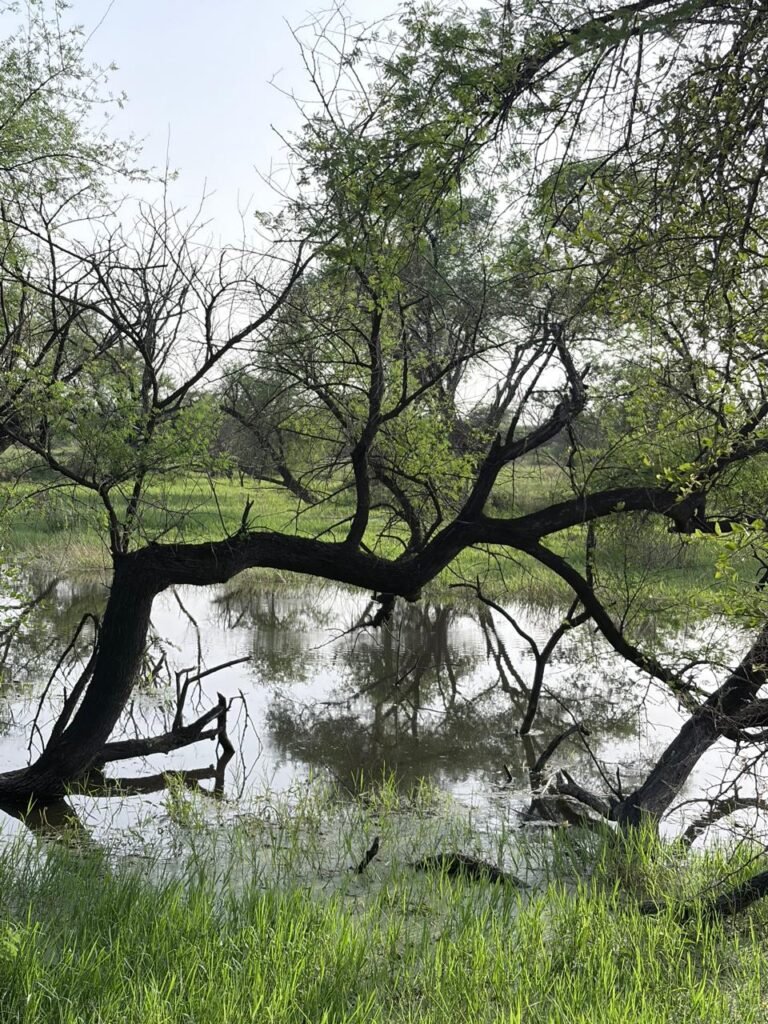
The park has recorded more than 370 bird species, attracting ornithologists, naturalists, photographers and bird enthusiasts from around the world. Migratory birds travelling from Siberia, China, Europe and other distant regions congregate here during the winter months, transforming its wetlands into a spectacular theatre of avian activity.
The park’s biodiversity extends well beyond birds. Rock pythons, sambar deer, nilgai, jackals and wild boars inhabit its varied ecosystems. Its recorded fauna also includes seven species of turtles, 75 species of butterflies, 13 types of snakes, eight species of frogs and 27 species of mammals. An earlier survey documented 57 fish species, although officials have since reported a decline to 35.
According to Gajendra Singh, a local resident living near the park, resident birds begin arriving around July and August, while migratory species generally appear between October and November, with many subsequently forming breeding colonies.
The forest department also monitors 26 satellite wetlands around the park, which provide additional habitats for birds and other wildlife. Park officials have recorded approximately 375 bird species, including around 200 migratory species, 100 local migrants and 75 resident species.
The diversity of habitats within Keoladeo is central to its ecological importance. Woodlands, wetlands, scrublands, grasslands and savanna-like tracts, dotted with trees and shrubs, collectively provide food, shelter and breeding grounds for a wide variety of species.
From a Royal Hunting Ground to a UNESCO World Heritage Site
Formerly known as the Bharatpur Bird Sanctuary, Keoladeo National Park is recognized as one of the world’s most important bird breeding and feeding grounds. Its origins lie in the nineteenth century, when the area was developed as a royal hunting reserve and subsequently used as a game reserve by the Maharajas of Bharatpur and British colonial officials.
The wetlands once hosted grand duck shoots attended by senior colonial dignitaries. Lord Linlithgow, Viceroy of India from 1936 to 1943, was among those associated with the hunting tradition; historical accounts record that his party shot thousands of ducks in a single day.
Fortunately, the sanctuary’s fortunes eventually changed. Conservation efforts helped transform the former hunting ground into a protected haven for wildlife. In 1982, Keoladeo was declared a national park, and in 1985, it was inscribed on UNESCO’s World Heritage List.
Its strategic position along the Central Asian Flyway, combined with the availability of wetland habitats and food, makes the park particularly important during winter. Large congregations of ducks, geese, coots, pelicans and waders arrive seasonally, creating one of India’s most rewarding bird watching experiences.
The celebrated Indian ornithologist and naturalist Salim Ali played an important role in advocating for the park’s protection and securing government support for its conservation.
Keoladeo was also historically renowned as a wintering ground for the rare and elusive Siberian crane, once among the sanctuary’s most prized avian visitors.
Exploring the park is an experience in itself. Its well-defined trails can be covered on foot, by bicycle or in cycle-rickshaws. Particularly noteworthy is the park management’s initiative to train rickshaw pullers in bird identification and observation. These knowledgeable guides often possess an intimate understanding of the sanctuary’s habitats and seasonal bird movements, making them invaluable companions for visitors.
The Missing Siberian Crane
For many bird enthusiasts, one of the most poignant aspects of Keoladeo’s changing fortunes is the prolonged absence of the Siberian crane (Leucogeranus leucogeranus), also known as the Siberian white crane or snow crane. Once a celebrated winter visitor to Bharatpur, the species has not returned to the sanctuary for roughly a quarter of a century.
According to the International Crane Foundation, Siberian cranes are critically endangered and now survive primarily in a single major population in East Asia, alongside a few remaining birds associated with the historic western and central populations.
The eastern population breeds in northeastern Siberia and winters at Poyang Lake in China’s lower Yangtze River basin. The western and central populations have suffered catastrophic declines, with a lone crane continuing to winter along the southern coast of the Caspian Sea in Iran.
The disappearance of these magnificent birds from Bharatpur serves as a sobering reminder of the fragility of migratory bird populations and the complex ecological pressures affecting their survival.
Nevertheless, Keoladeo continues to offer rewarding sightings of other spectacular avian species. Among its resident highlights are the elegant Sarus crane, one of the tallest flying birds in the world, and the striking black-necked stork.
The wetlands are particularly attractive to surface-feeding, or dabbling, ducks such as the northern shoveler, northern pintail and teal. Gadwalls and garganeys are also frequently seen gliding across the water. Many of these ducks’ breed in regions farther north and migrate to India during winter.
Among the resident waterfowl, the lesser whistling duck and cotton pygmy goose, also known as the cotton teal, are species worth looking for. Both can be surprisingly unobtrusive, requiring a patient eye to spot them among the vegetation.
Diving ducks tend to be less abundant in the sanctuary’s relatively shallow waters, although the striking tufted duck, with its distinctive black-and-white plumage, can be easier to identify.
The greylag goose, recognizable by its pinkish-orange bill, is another fascinating visitor. Populations of this species breed across parts of Europe and Asia and migrate southwards during winter, with some undertaking remarkable journeys across the Himalayas. There are even accounts of greylag geese flying at exceptionally high altitudes over the Himalayan mountain range.
The red-wattled lapwing, a familiar resident across much of India, can also be spotted, alongside the grey-headed lapwing, a winter visitor to the subcontinent.
For us, the late-afternoon light added a special dimension to the birdwatching experience. As the sun dipped lower, the plumage of the birds was illuminated in warm, golden hues, making their movements and markings all the more striking.
Yet the spectacle was tinged with sadness. Bharatpur was once renowned for its vultures, too, but populations of several vulture species have collapsed dramatically across the Indian subcontinent. Their decline remains one of the region’s most serious wildlife-conservation crises.
A Wetland Under Threat: The Recurring Water Crisis
Even as Keoladeo continues to draw visitors from across the world, the sanctuary faces a recurring ecological challenge: water scarcity.
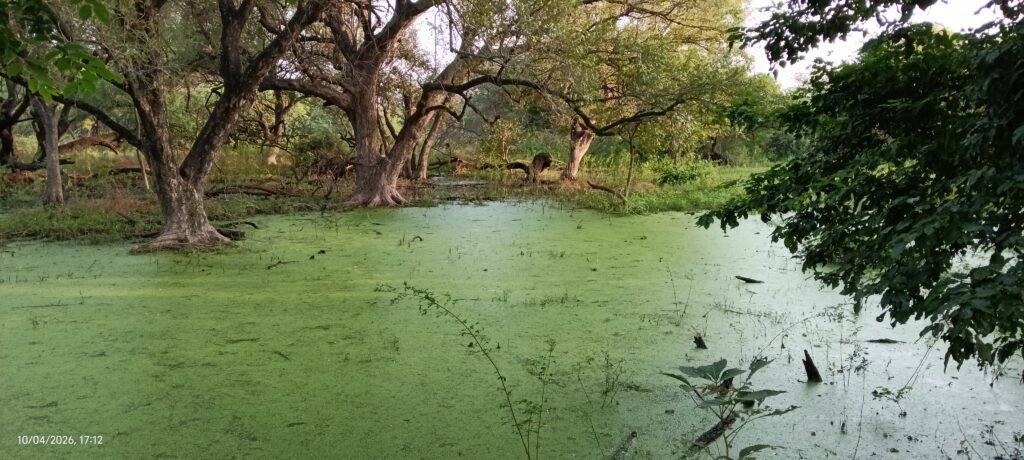
Inadequate rainfall and the irregular release of water from Panchana Dam have, at various times, left substantial portions of the park’s wetlands dry or severely depleted. In response, water has sometimes been brought in from the Chambal River to prevent conditions from deteriorating further.
However, concerns have been raised about the suitability of this emergency arrangement for the park’s ecological requirements. Although Chambal water may provide temporary relief, it does not necessarily supply the seeds, fish and other natural food resources that are carried by water from the Panchana–Ajan system and are important to the wetland food chain.
Water released from Panchana Dam first reaches Ajan Dam, from where it is diverted towards Keoladeo Ghana National Park. This supply is particularly important for maintaining the wetland habitats upon which the sanctuary’s birds and other wildlife depend.
During summer, as water levels recede, hundreds of fish have reportedly died in shrinking pools. In some instances, fish rescued from blocks where water levels were falling have been transferred to Block D, where conditions were more favorable. Yet continued water shortages threaten not only fish populations but also the wider web of life sustained by the wetlands.
Water has also been supplied to several areas by tankers, underscoring the difficulties of maintaining this internationally important ecosystem during periods of scarcity.
Panchana Dam: Water, Livelihoods and Competing Claims
Located in Karauli district, approximately 100 kilometers from Bharatpur, Panchana Dam was constructed at the confluence of five small rivers, giving the structure its name. Over time, however, it has become the center of a protracted dispute over the distribution of water.
As the monsoon began this year, residents of 39 villages surrounding the dam reportedly gathered there to prevent water from being released towards the command area. They argued that their land had been acquired for the dam’s construction and that they should therefore receive priority access to its water.
Farmers in the command area, meanwhile, pressed for the release of water to support their agricultural activities. The competing demands reflect the difficult choices facing a region where water is essential not only for farming and rural livelihoods but also for the survival of a globally significant wetland ecosystem.
The dispute eventually reached the High Court, which directed the government to release water from the dam.
Residents and officials have attributed the region’s continuing water problems to several factors, including the construction and subsequent expansion of Panchana Dam, competing demands for irrigation water and local political considerations. Disagreements over water allocation have, at times, led to road and railway blockades and required intervention by political leaders and government ministers.
For Keoladeo, these disputes have consequences that extend far beyond local agriculture. The timing, quantity and quality of water reaching the sanctuary influence the availability of fish, aquatic plants and other food resources, ultimately determining the health of the wetland ecosystem and the bird populations it supports.
The challenge, therefore, is not simply to secure more water, but to establish a dependable and ecologically appropriate system of water allocation that accommodates the legitimate needs of farmers and local communities while safeguarding the sanctuary’s long-term survival.
Conservation: The Road Ahead
Keoladeo’s management efforts encompass habitat improvement, scientific research, wildlife monitoring and the restoration of wetland conditions. Forest department officials have indicated the need for further bird censuses, the removal of invasive weeds and the planting of kadamba trees to improve habitat quality.
Favorable monsoons during 2024–25 helped replenish water levels and supported biodiversity, offering some relief after periods of concern. Nevertheless, uncertainty over subsequent rainfall patterns and the reliability of water supplies continues to raise questions about the sanctuary’s ecological future.
Effective conservation will require more than periodic emergency interventions. It will depend on reliable water management, the control of invasive plant species, the restoration of suitable habitats and sustained cooperation between government agencies, farmers, local residents, researchers and conservationists.
Equally important is the need to recognize that Keoladeo is not an isolated island of biodiversity. Its survival is closely connected to the surrounding agricultural landscape, the management of regional water resources and the livelihoods of communities living in its vicinity.
A conservation strategy that balances ecological requirements with the needs of local people is therefore essential if the park is to remain a thriving refuge for migratory and resident wildlife.
A Journey That Leaves a Lasting Impression
Our Sunday journey from Delhi to Bharatpur was far more than a drive across the plains of northern India. It was an encounter with a landscape shaped by centuries of history, agricultural enterprise, royal ambition and religious tradition. From the cultural legacy of Braj and the strategic importance of Dholpur to the formidable Jat kingdom of Bharatpur, every stretch of the route offered a glimpse into the region’s layered past.
Yet it was at Keoladeo National Park that these diverse threads came together most vividly. The sight of birds moving across the wetlands, the soft glow of the late-afternoon sun and the quiet rhythms of the natural world offered a welcome respite from the bustle of towns and highways.
At the same time, the sanctuary’s water crisis, the disappearance of the Siberian crane and the wider decline of certain bird populations served as reminders that natural heritage cannot be taken for granted.
Keoladeo is much more than a birdwatcher’s paradise. It is a living ecological system, a repository of natural wealth and a reminder of the delicate relationship between people, landscapes and wildlife. Its future will depend on whether we can look beyond immediate political and economic interests to protect the natural resources upon which countless species—and human communities themselves—depend.
As we departed Bharatpur, the memory of its magnificent birdlife remained with us, accompanied by a sobering thought: preserving this avian paradise for future generations will require not merely admiration for its beauty, but a sustained commitment to its conservation.
Disclaimer: The opinions and views expressed in this article/column are those of the author(s) and do not necessarily reflect the views or positions of South Asian Herald.