Join WhatsApp Channel

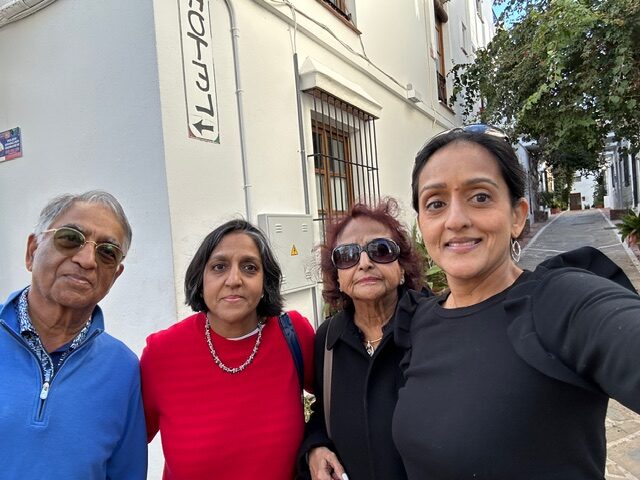
Raj Gupta served as chairman and CEO of Rohm and Haas Company with a 13.5% average annual shareholder return at Rohm and Haas over the period of 1948–2009 with the second-best S&P 500 performance during 1998–2009. During his time, 51 ROH alumni have risen to CEO positions in 54 companies across seven countries. He has been chair of two Fortune 500 companies Delphi/Aptiv and Avantor, and lead independent director of HP, Arconic as well as director of DuPont, Tyco, Vanguard, Airgas, amongst others.
He also served as director of seven Private Equity (PE) and two private companies. He is co-chair of the board of advisors of Johns Hopkins Gupta-Klinsky India Institute and founder of the Raj & Kamla Gupta Governance Institute at Drexel University’s LeBow College of Business. He has also authored “Eight Dollars and a Dream: My American Journey” which has sold 50,000 plus copies so far.
In this wide-ranging conversation, Gupta reflects on stakeholder capitalism, philanthropy, education, India’s manufacturing ambitions, the Indian diaspora, talent development, navigating a BANI world, and the transformative potential of artificial intelligence. He stands apart as a pinnacle of Indian American business from arriving in the US in 1968 to leading a Fortune 500 company.
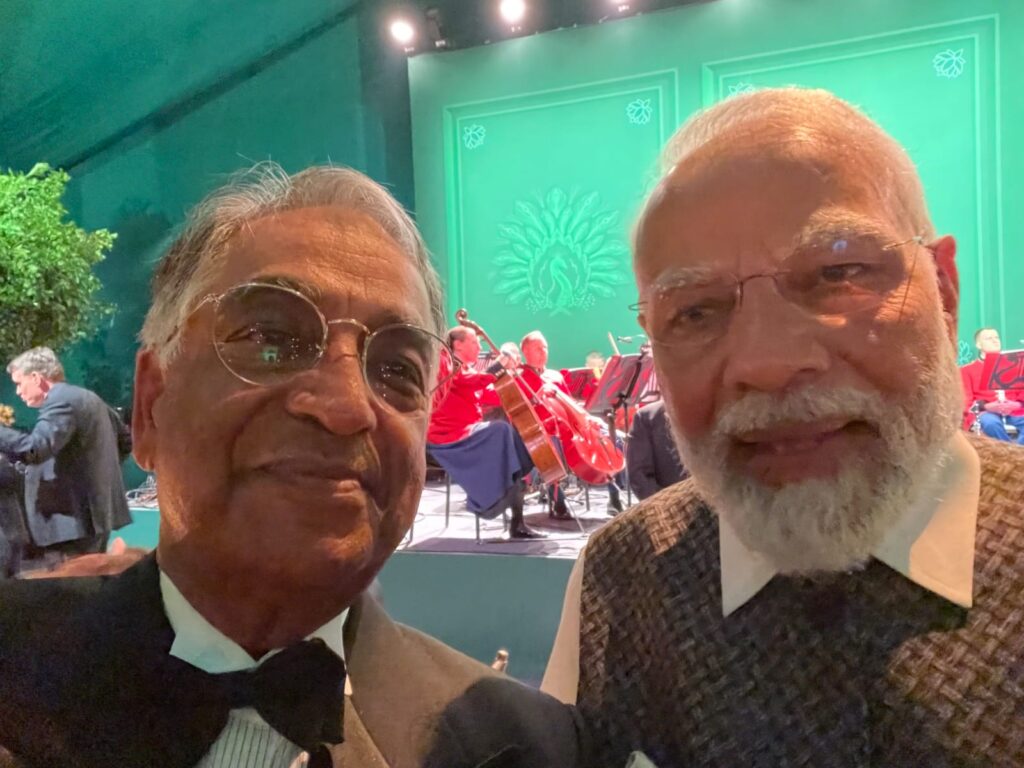
In this wide-ranging exclusive interview with South Asian Herald, he reflects on stakeholder capitalism, India’s future, the power of education, and navigating an increasingly complex world.
Rethinking Capitalism: Stakeholders at the Core
Raj Gupta has long challenged conventional corporate thinking. For him, sustainable success does not begin with quarterly earnings- it begins with people.
“The only way to generate long-term value,” he says, “is by taking care of customers, employees, communities, and the environment. Too often, leaders get this backwards.”
At Rohm and Haas, this philosophy translated into a structured framework-the “Five Voices”: owner, customer, employee, community, and environment. “It gave us a disciplined way to embed stakeholder thinking into real business decisions,” he explains.
The results speak for themselves: decades of strong shareholder returns driven not by short-termism, but by long-term alignment.
Purposeful Giving: A Philosophy of Focus and Trust
Gupta’s philanthropic journey is deeply personal. After retiring, he and his wife Kamla set out with a clear mission- to give back meaningfully.
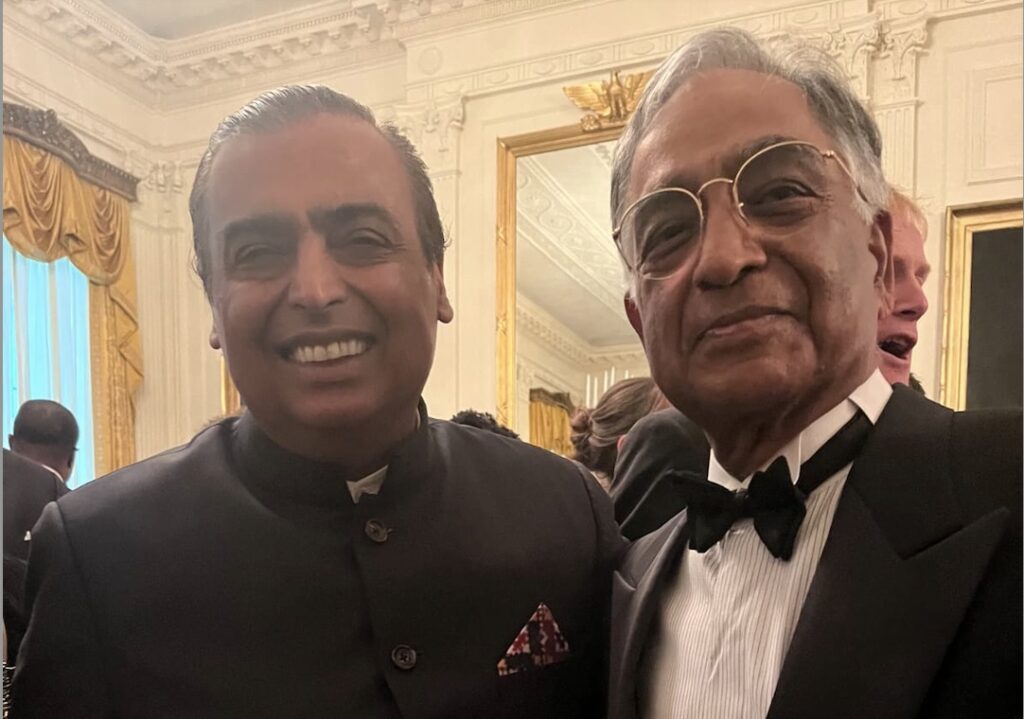
“I asked myself: what made the biggest difference in my life? The answer was education and healthcare.”
That clarity led to the founding of the Ujala Foundation in 2009, with a focus on impact rather than scale. “We don’t believe in building large bureaucracies. We partner with institutions we trust and hold ourselves accountable to outcomes.”
Between our family foundation Ujala and our partners, we have contributed nearly $40 million across institutions in the U.S. and India. The approach remains grounded in conviction and focus.
Education as Transformation: Competing, Adapting, Evolving
Gupta credits his education at IIT Bombay and Cornell as transformative- but in very different ways.
“As for the future, I believe both institutions need to evolve. The IITs, which have been outstanding at engineering and teaching techniques and engineering, need to place greater emphasis on research if they want to become truly world-leading institutions. They need to think about how to create scientists with original thinking and breakthrough research – not just engineers who apply existing knowledge. Academic institutions in India, like the IITs, need to emphasize innovation and entrepreneurship beyond just technical capability and meet their potential from the changing global landscape for research.”
“Leading universities in the US, for their part, face a different but equally pressing challenge. Government funding for research is being cut back, and institutions must find broader sources of private funding to maintain their leadership in innovation and research. This is one reason my wife Kamla and I have invested in institutions we believe in – including the Hopkins India Institute and a PhD fellowship in biochemistry at Cornell. Both in India and the US, academic institutions need to meet the opportunities that the changing global landscape presents.”
Roots and Relationships: The Foundation of Leadership
For Gupta, leadership is rooted in upbringing.
“My parents raised six children with simple values: give your best, respect everyone, and stay humble.”
Equally central has been the role of his wife, Kamla. “She made enormous sacrifices and supported every step of my journey,” he says, crediting her as a foundational force behind his success.
A Global Career Shaped by Opportunity and Adaptability
Reflecting on a 41-year corporate career spanning continents and functions, Gupta underscores the role of opportunity – and the responsibility to rise to it.
“At Rohm and Haas, I had 13 different assignments across finance, strategy, regional and global businesses, and geographic leadership in North America, Europe, and Asia,” he says. “Each role required me to adapt, learn, and grow in completely different environments.”
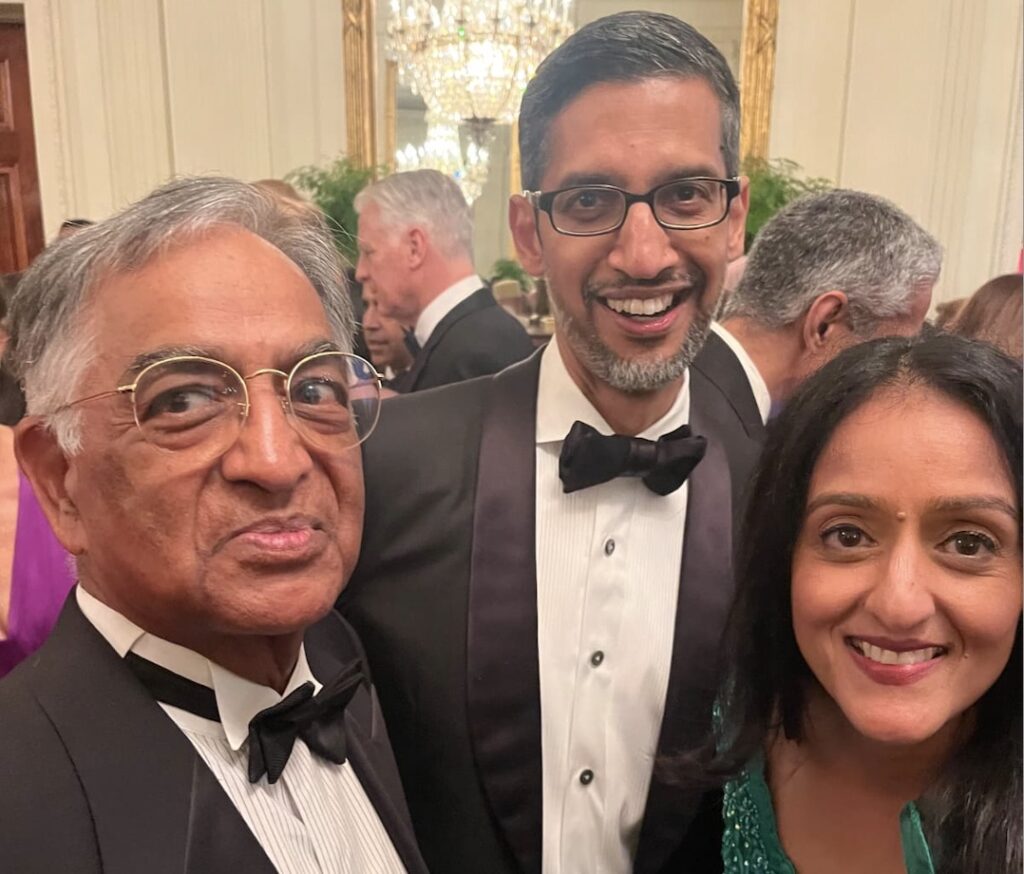
Working under 17 different leaders, he gained not just experience, but perspective. “Understanding cultures, adapting to new realities, and building a global network – those were the most valuable outcomes of that journey.”
For Gupta, leadership is not built in a straight line, but shaped through constant evolution.
India’s Moment: Scale, Strategy, and Global Ambition
On India’s manufacturing ambitions, Gupta is optimistic – but clear-eyed.
“These are excellent initiatives,” he says, referring to Aatmanirbhar Bharat and Viksit Bharat. “But if India wants to be a true global manufacturing leader, it must operate at a very different scale.”
He points to China’s model – not just factories, but deep investments in technology, capital, and workforce development.
In a striking perspective, he even suggests rethinking competition itself. “India and China have complementary strengths. Collaboration, rather than imitation, could redefine global manufacturing.”
The Diaspora Dividend: Influence Beyond Remittances
With over 35 million Indians abroad, Gupta sees immense untapped potential.
“The real opportunity lies with highly skilled professionals in leadership positions across the world,” he says. “They can shape perceptions, open doors, and build bridges.”
While remittances remain important, he emphasizes strategic engagement. “It’s about leveraging networks, knowledge, and credibility to elevate India globally.”
Building Leaders: Talent, Culture, and Long-Term Investment
Across his corporate career, Gupta developed a reputation for building leaders – and he believes many organizations still get this wrong.
“The biggest blind spot is underinvesting in people because of high turnover,” he explains. “But that creates a vicious cycle.”
For him, the solution is clear: invest anyway.
“The best organizations build cultures of learning, merit, and opportunity. Diversity, in its truest sense, is about accessing the widest talent pool – without compromising on excellence.”
Leading Through Uncertainty: Navigating a BANI World
Gupta describes today’s global environment as fundamentally unpredictable.
“Geopolitics, AI, climate risks – these forces are beyond any leader’s control,” he says. “What matters is how you respond.”
His advice is grounded in clarity: focus on what you can control, build agility, invest in people, and communicate transparently.
“Leadership today is about resilience, trust, and the ability to adapt quickly.”
The AI Imperative: Balancing Innovation with Responsibility
On artificial intelligence, Gupta sees both immense promise and real risk.
“This is one of the most powerful forces we’ve ever encountered,” he says. “It will reshape every aspect of business and society.”
But he cautions against superficial understanding. “Leaders must go beyond hype and truly understand how AI can improve decision-making, efficiency, and innovation.”
Ultimately, he believes the future belongs to those who balance technology with human judgment. “AI must be guided by ethics, responsibility, and a commitment to stakeholders.”
Enduring Principles: Competence Anchored in Character
“The future will reward those who combine competence with character.”
Across themes – business, philanthropy, education, and technology – Gupta returns to a consistent idea: leadership is not just about capability, but values.
“In the end,” he reflects, “sustainable success comes from doing the right things, the right way, over the long term.”
Related posts:
 In Conversation with Rajesh Mehta: Abhishek Singh, CEO, IndiaAI Mission on India’s Global AI Vision
 In Conversation with Rajesh Mehta: Anand Deshpande, Founder, Persistent Systems
 Dr. Rahul Gupta Leads GATC Health’s Push to Revolutionize Drug Discovery for Chronic and Rare Diseases with AI
 In Conversation with Rajesh Mehta: Ambassador Ajay Bisaria