Join WhatsApp Channel

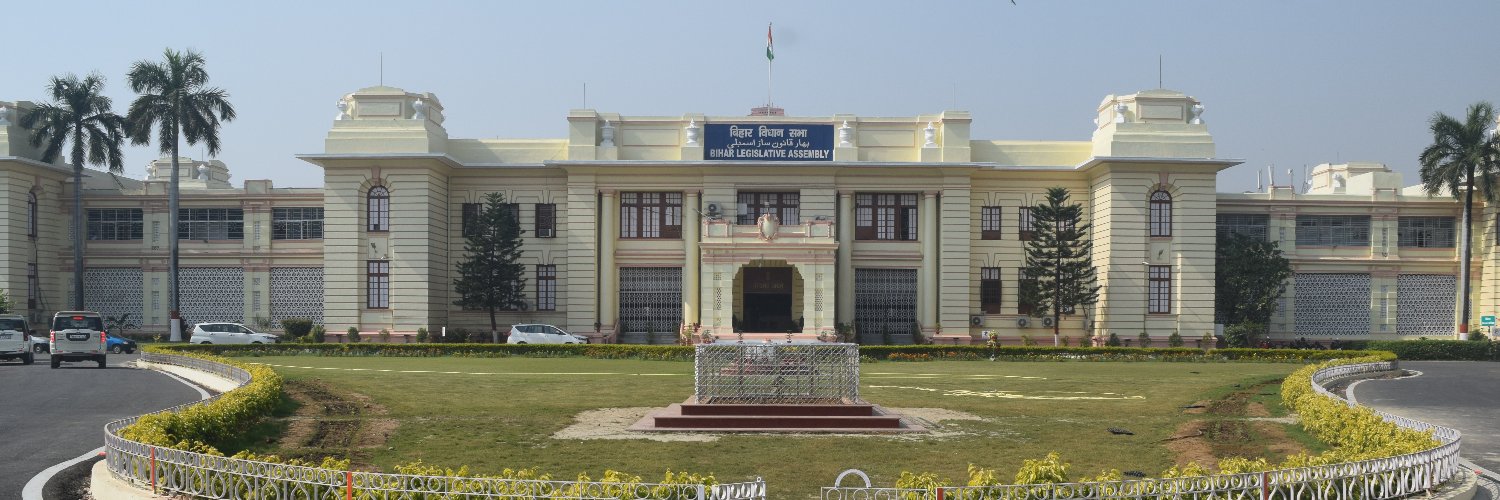
Patna, India — Bihar’s fiercely contested Assembly election — marked by record turnout, generational rhetoric, and a two-phase voting marathon — has concluded with an unmistakable headline from India’s leading exit polls: the National Democratic Alliance (NDA) is poised for a sweeping return to power. If the numbers hold, this will not only reaffirm the BJP-JD(U) combine’s enduring hold on Bihar’s complex social arithmetic but also deal a heavy psychological blow to the Congress-Rashtriya Janata Dal (RJD) alliance led by the youthful but beleaguered Tejashwi Yadav.
A Polling Consensus with Rare Uniformity
In a state notorious for unpredictable outcomes, the convergence of exit-poll projections is itself a story. Almost every major survey released after the second and final phase of voting points to a decisive NDA edge, placing it comfortably above the halfway mark in the 243-member Assembly.
Here’s how the major pollsters stack up: Exit Poll Agency
- NDA (BJP + JD(U)) vs Mahagathbandhan (RJD + Congress) Matrize —147–167-70–90
- P-Marq (Republic)142–162- 80–98
- DV Research137–152- 83–98
- TIF Research145–163-76–95
- JVC Associates135–150-88–103
- People’s Insight133–148-87–102
- People’s Pulse133–159-75–101
- Dainik Bhaskar142–158-73–91
- Chanakya Strategies (ET Now)130–145-90–105
NDTV’s poll of polls, an aggregation of the above data, gives the NDA around 147 seats and the Mahagathbandhan (MGB) 90 seats — a comfortable margin for Nitish Kumar to return as Chief Minister with BJP’s support.
If accurate, this outcome would represent a dramatic comeback for the NDA following months of political uncertainty, coalition reshuffles, and speculation about Nitish Kumar’s waning appeal. For the opposition, especially the RJD-Congress combine, it would be a sobering confirmation that enthusiasm at rallies did not translate into votes on the ground.
The NDA’s Advantage: Arithmetic and Organization
The first explanation for the NDA’s predicted lead is numerical — a matter of vote efficiency. Unlike the MGB, whose strength remains concentrated in limited regions, the NDA’s vote base is better distributed across the state.
The BJP’s organizational machine, paired with Nitish Kumar’s reputation for administrative continuity, allowed the alliance to maximize gains from high turnout areas. Phase-two voting — the largest segment of the election — saw an unprecedented 64.6% turnout, with women and young voters participating in record numbers.
While high turnout traditionally suggests anti-incumbency, pollsters observed that the NDA’s booth-level mobilization, particularly in north and central Bihar, was formidable. The return of women voters — beneficiaries of Nitish’s welfare programs and law-and-order focus — appears to have blunted the opposition’s anti-incumbency message.
Adding to the NDA’s advantage is vote fragmentation within the opposition space. The presence of Prashant Kishor’s Jan Suraaj movement, smaller left parties, and independent candidates likely split anti-government votes in key constituencies.
The Opposition’s Struggles: Leadership and Messaging
For Tejashwi Yadav, the 35-year-old RJD leader who has tried to rebrand himself as Bihar’s youthful alternative, this election was supposed to be a referendum on stagnation and governance fatigue. Instead, exit polls suggest that his alliance struggled to convince voters that it represented a credible alternative.
The Congress — RJD’s principal ally — was widely seen as the weak link, failing to energize its base or field strong candidates in rural constituencies. Internal friction over seat-sharing also diluted campaign coherence.
Tejashwi’s messaging — focused on unemployment, corruption under Nitish, and youth discontent — resonated in urban centers but failed to break caste-based voting patterns that continue to shape Bihar’s politics. Pollsters found that while he drew enthusiastic crowds, his appeal did not consistently translate into votes among older or rural demographics still loyal to Nitish’s governance legacy.
Moreover, the “double-engine government” slogan — a pitch for continuity between the BJP-led central government and the NDA state government — seems to have resonated more strongly than anticipated, particularly as voters seek post-pandemic stability and continued infrastructure spending.
Modi’s Shadow and Nitish’s Revival
Prime Minister Narendra Modi’s campaign swing through Bihar in late October may have sealed the deal. His messaging — equal parts welfare populism and national pride — appeared to re-energize the BJP cadre and reframe the contest from local grievances to national progress.
Nitish Kumar, often dismissed as politically fatigued, benefited from this recalibration. The BJP’s emphasis on “Modi’s guarantees” gave Nitish the space to refocus on governance, women’s safety, and social welfare — areas where his reputation remains solid.
The exit polls also suggest that Muslim and Yadav votes, long the core of the RJD’s social coalition, did not consolidate as effectively as the MGB hoped. Some Muslim voters, wary of the Congress’s fading influence, reportedly shifted toward smaller parties.
The Polling Caveats
Even as TV anchors trumpet the NDA’s predicted victory, analysts caution against premature coronations. Bihar’s electoral geography is intricate — narrow margins can flip seats, and rural voters sometimes elude pollsters.
Historically, Bihar has produced election-night surprises. In 2015, for instance, exit polls underestimated the MGB’s performance; in 2020, they overestimated it. Much depends on the accuracy of seat-level sampling, which can vary sharply in a state with 7 crore voters.
Moreover, the NDA’s projected sweep rests heavily on the assumption that vote transfers between BJP and JD(U) were seamless — something not always guaranteed in alliances of convenience. If the arithmetic misfires in even a few dozen seats, the numbers could shift dramatically.
Why the Mahagathbandhan Fell Short
Beyond statistics, the MGB’s struggle this time reflects a deeper identity crisis. The RJD’s emotional appeal — rooted in the legacy of Lalu Prasad Yadav’s social justice movement — no longer automatically commands loyalty among younger voters born after the 1990s.
Tejashwi’s campaign invoked hope and generational change, but lacked the ideological glue to unite disparate allies. The Congress’s organizational weakness in rural Bihar, limited resources, and overreliance on Tejashwi’s charisma left the alliance exposed.
Caste alignments, meanwhile, did not shift dramatically. The NDA’s ability to hold together its upper-caste, OBC, and EBC blocs — aided by welfare benefits and symbolic outreach — insulated it from anti-incumbency waves.
Even in regions like Seemanchal and Mithilanchal, where the MGB expected gains, turnout patterns and ground reports suggested a more even split. The Jan Suraaj experiment further eroded margins in a few RJD-leaning constituencies, siphoning off disillusioned but anti-establishment voters.
The Road Ahead
If these projections translate into actual results on November 14, Nitish Kumar will emerge as one of India’s most resilient politicians — a survivor of realignments who once again defied predictions of irrelevance.
For the BJP, a decisive Bihar victory would reaffirm its national dominance and strengthen its 2026 Lok Sabha positioning in the Hindi heartland. For the Congress, the result could deepen its existential crisis and invite renewed questioning of its value as a coalition partner.
Tejashwi Yadav’s challenge will be to retain his credibility as the face of Bihar’s opposition — a generational leader who must now convert moral victories into durable politics.
In the immediate term, however, the momentum — and the narrative — belong to the NDA. Bihar’s voters may have chosen continuity over change, order over upheaval, and familiarity over experimentation.
But as any seasoned observer of the state will attest: Bihar’s politics has a way of defying pollsters, pundits, and even its own history. The real verdict, sealed in millions of EVMs, will be known only when the sun rises on counting day.
Advisory: Bihar Assembly Election Exit Polls
(While exit polls often provide useful indicators of electoral trends, they are not definitive results and can sometimes differ from the final outcome. The projections presented here reflect the predictions made by various agencies and political strategists based on post-poll surveys. Readers are advised to interpret these findings with caution and await the official results, which will be announced on November 14.)
Disclaimer: The opinions and views expressed in this article/column are those of the author(s) and do not necessarily reflect the views or positions of South Asian Herald.
Related posts:
 Bihar 2025: How the NDA Engineered a Near-Sweep — and Why the RJD-Congress Flame Flickered Out
 How the Modi-Nitish Alliance Crushed Bihar: A Lesson in Coalition, Caste, and Confidence
 Indian PM Modi’s BJP Hopes to Tighten Control of the Upper House of Parliament
 U.S.-India Insight: Bihar’s Big Chance: Be Bold and Basic