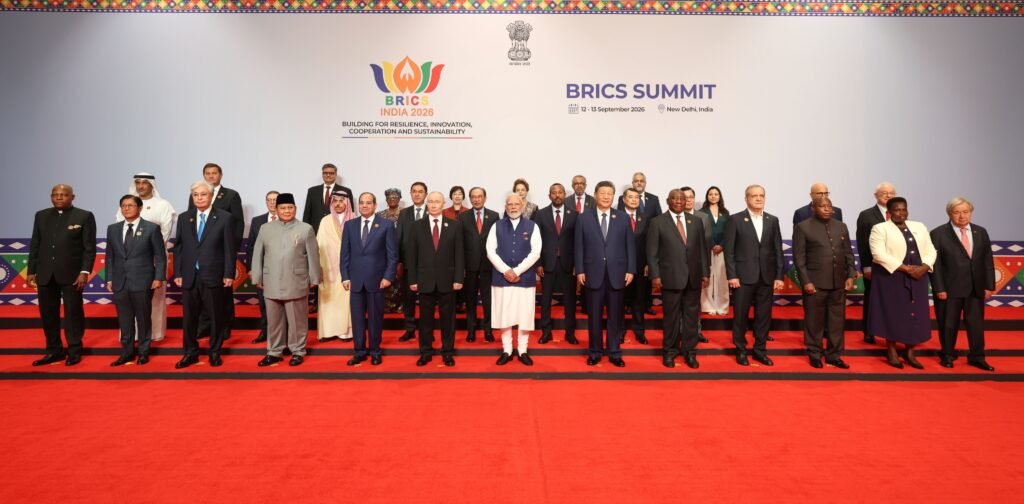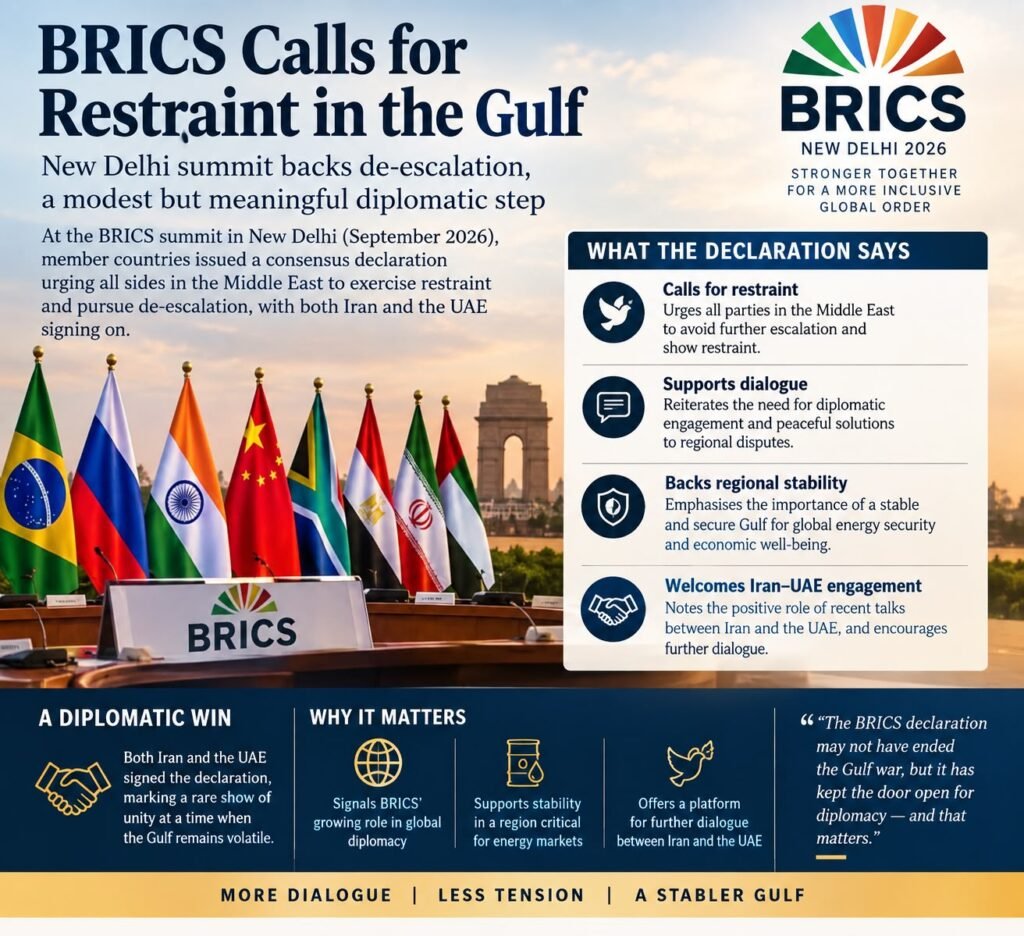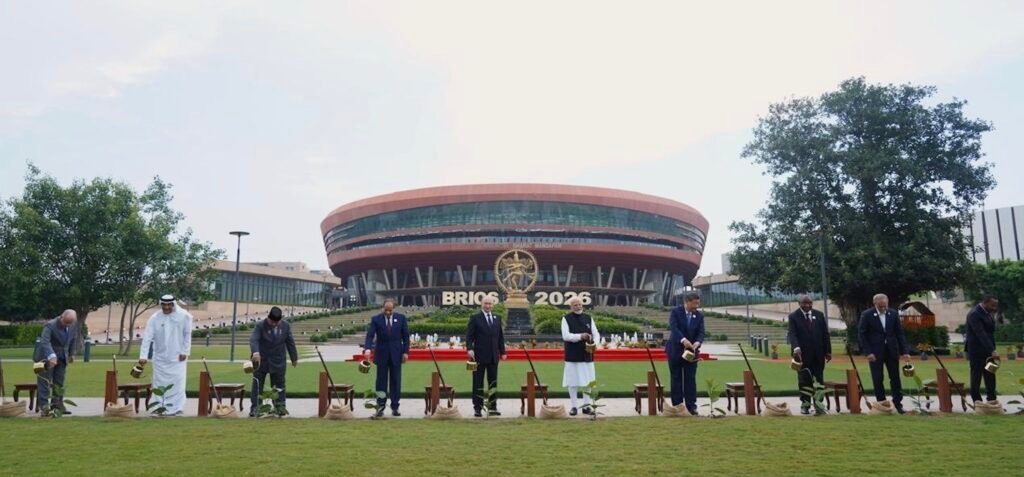
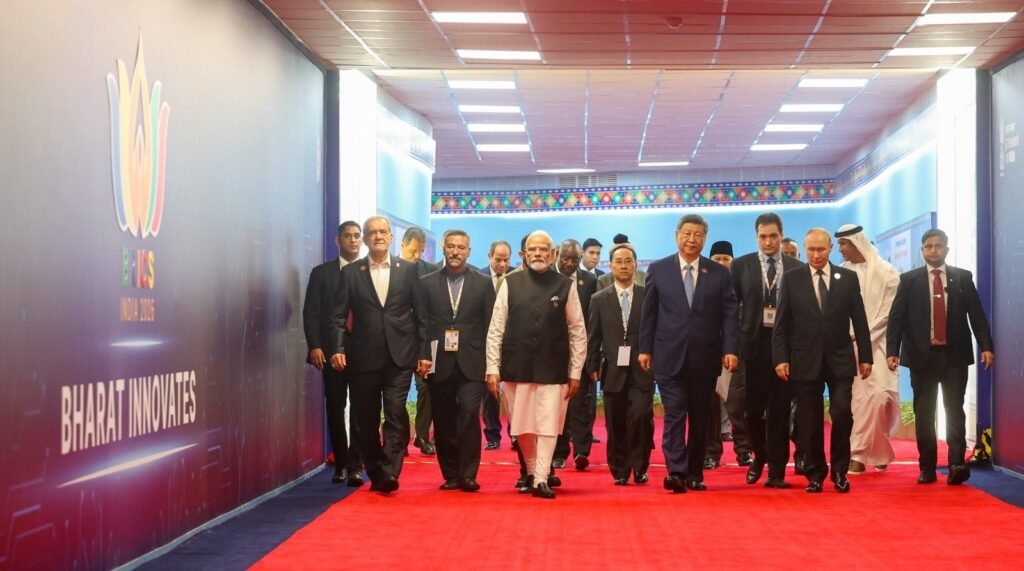
The 18th BRICS Summit in New Delhi (September 12–13, 2026) was a defining moment for the Global South. Eleven member states gathered under India’s chairship to adopt the New Delhi Declaration, a 45‑page text that carefully avoided overt anti‑Western rhetoric while still advancing the bloc’s ambition to reduce dependence on Western financial systems.
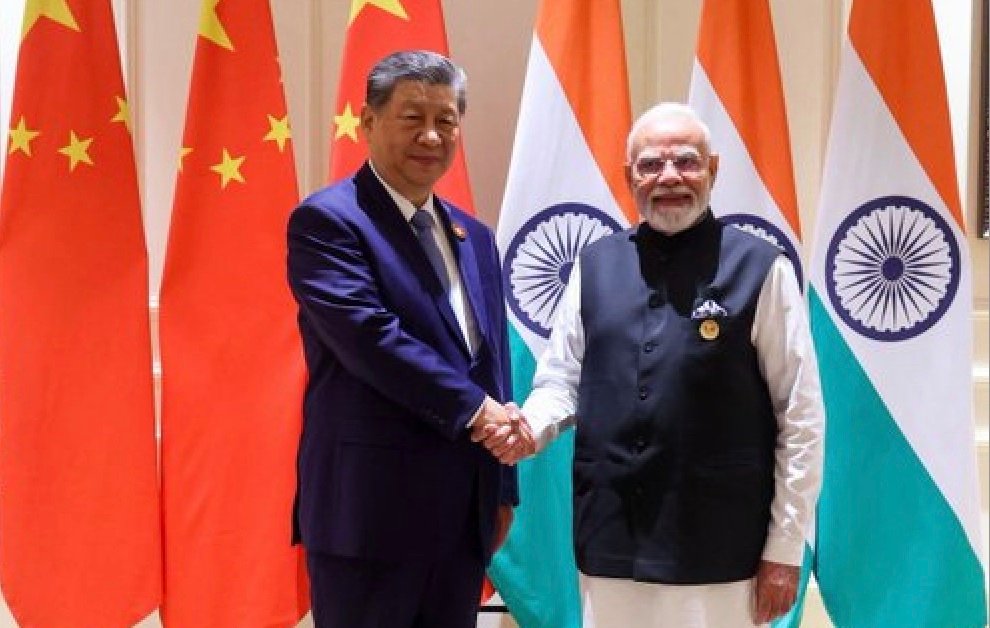
India’s Prime Minister Narendra Modi, aided by seasoned diplomats, steered the summit toward consensus by framing BRICS as the “voice of the Global South” rather than an “anti‑West” coalition. The outcome was a declaration that endorsed de‑dollarization in practice — limited to internal currency transactions and settlement frameworks — but stopped short of launching a common currency or directly challenging the dollar’s reserve status.
De-Dollarization: Incremental, Not Revolutionary
The summit’s most tangible achievement was the agreement to expand central bank digital currency (CBDC) settlement frameworks among BRICS members. This allows trade flows to bypass Western financial rails, reducing exposure to sanctions and tariffs.
Advertisement
- Scope: The mechanism is inward-looking, designed for intra‑BRICS trade rather than global currency displacement.
- Limits: India blocked proposals for a common BRICS currency, wary of destabilizing its own financial ties with the US and EU.
- Message: The bloc is “de‑risking” rather than dismantling the dollar system — a subtle but important distinction.
As one financial analysis noted, headlines about “dollar collapse” misread the intent. The declaration represents incremental diversification, not outright confrontation.
India’s Diplomatic Balancing Act
India’s role was pivotal. Russia, China, and Iran pressed for sharper language against Western institutions and the dollar. India resisted, insisting on a “balanced” text that would not jeopardize its $500 billion trade relationship with the US or its growing partnership with the EU.
The compromise was a declaration that condemned “unilateral measures” and “tariffs” without naming the United States. This ambiguity was deliberate — a way to acknowledge grievances while avoiding direct provocation.
Modi’s own framing captured the summit’s spirit: a call to move the Global South “from being a rule‑taker to a rule‑shaper.”
Washington’s Reaction: Tariffs Over Dialogue
The United States, under President Donald Trump, responded bluntly. Within hours of the declaration, Trump reiterated threats of tariffs up to 100 percent on BRICS members, extending a pressure campaign he has waged throughout 2026.
- Transactional Response: Washington did not engage with the declaration’s substance — IMF quota reform, UN Security Council expansion, or multipolarity. Instead, it issued tariff threats.
- Perception Gap: For India, the declaration was carefully hedged. For Washington, even ambiguity was read as hostility.
- Strategic Lens: The Trump administration views BRICS less as a forum to debate and more as a bloc to be priced out of existence through trade pressure.
This asymmetry — Delhi’s nuanced diplomacy versus Washington’s blunt tariffs — underscores the difficulty of placating the US while advancing Global South priorities.
Europe’s Reaction: Cautious Optimism
Brussels struck a markedly different tone. The EU Institute for Security Studies characterized India’s chairship as evidence of “multi‑alignment” — the ability to operate across competing groupings (G20, Quad, BRICS) without collapsing into one camp.
- Analytical Posture: Europe sees India’s balancing act as a diplomatic asset, not a provocation.
- Engagement Strategy: EU leaders Ursula von der Leyen and António Costa had already signaled in January 2026 that Europe seeks deeper cooperation with India, not confrontation.
- Outcome: Europe reads the New Delhi Declaration as cautious, constructive, and consistent with India’s broader strategy of positioning itself as a bridge between blocs.
This divergence between Washington’s combative stance and Brussels’s analytical optimism highlights India’s success in shaping perceptions differently across the Atlantic.
The Global South’s Takeaway
For the Global South, the summit delivered three key outcomes:
- Voice of Multipolarity: The declaration reiterated commitment to a world order where emerging economies are “rule‑shapers.”
- Practical De‑Dollarization: Internal currency settlement frameworks reduce vulnerability to sanctions without destabilizing global markets.
- Unity Despite Fractures: India managed to secure unanimity despite tensions over the West Asia conflict between Iran and Gulf members.
The achievement lies not in radical change but in incremental institutional capacity — BRICS is becoming a more capable challenger to Western‑dominated systems, even if not yet a unified anti‑Western bloc.
Analytical Verdict
The 18th BRICS Summit was a success by India’s metrics:
- It produced a unanimous declaration.
- It advanced de‑dollarization in a limited, pragmatic form.
- It avoided overt anti‑West rhetoric, preserving India’s strategic partnerships.
Yet the outcome also revealed limits: Washington remains unmoved by ambiguity, perceiving BRICS as inherently anti‑American. Europe, by contrast, sees opportunity in India’s deft diplomacy.
The broader lesson is that BRICS’s trajectory is not about confrontation but about diversification. The bloc is building tools to reduce dependence on Western systems while avoiding direct rupture. For the Global South, this is a step toward agency. For the West, it is a test of perception: whether to treat BRICS as a threat or as a partner in shaping multipolarity.
Conclusion
The New Delhi Declaration embodies the paradox of the Global South’s rise: assertive in ambition, cautious in execution. India’s diplomatic management ensured that BRICS advanced de‑dollarization without crossing into anti‑West territory.
The US responded with tariffs, reading hostility where India intended balance. The EU responded with cautious optimism, praising India’s deftness in handling China and Russia.
This divergence may prove decisive. If Europe continues to engage India as a bridge, while Washington persists in treating BRICS as a threat, the Global South’s incremental steps toward multipolarity could reshape the balance of global governance more through perception than confrontation.
Disclaimer: The opinions and views expressed in this article/column are those of the author(s) and do not necessarily reflect the views or positions of South Asian Herald.