|| आ नो भद्राः क्रतवो यन्तु विश्वतः
Ā no bhadrāḥ kratavo yantu viśvataḥ ||
“Let noble thoughts come to us from every side.”
— Rig Veda 1.89.1
India sits with China, Russia, and Iran in BRICS. It sits with the United States, Japan, and Australia in the Quad. It works closely with Europe while maintaining a relationship with Moscow. Despite its disputed border, India competes with China yet meets with it in many international forums.
To outsiders, India’s approach might look inconsistent. But for New Delhi, these relationships are part of a single foreign policy strategy. India believes partnerships do not have to turn into alliances, and working with one country does not mean being hostile to another. India’s BRICS presidency will test this approach more than ever.
BRICS today is very different from the grouping India helped create. Expansion has taken it from five countries to eleven, stretching across Asia, Africa, the Middle East, and Latin America. Together, BRICS members make up almost half the world’s population, about 40 percent of global GDP, and over a quarter of global trade.
Advertisement
Impressive numbers can disguise real differences. India and China remain strategic competitors. Iran’s relationship with Washington bears little resemblance to the UAE’s. Russia increasingly views BRICS through its confrontation with the West, while several other members have little appetite for choosing sides. BRICS has acquired considerable weight, but not necessarily greater coherence.
Views on what all this means vary widely. At one end, BRICS is seen as evidence of a new international order taking shape, with emerging powers challenging institutions long dominated by the West. At the other, it is little more than a collection of countries hedging their bets in an uncertain world. Somewhere in between lies a more persuasive view. BRICS does not have to become an alliance, common market or monetary union to matter, although finding common ground inevitably becomes more difficult as its membership expands.
India’s presidency offers another way of looking at the question. What New Delhi prevents BRICS from becoming may prove as important as what it builds.
India has dealt with difficult multilateral diplomacy before. Its G20 presidency in 2023 came amid deep divisions over Ukraine and deteriorating relations between Washington and Beijing. Still, New Delhi secured a consensus declaration, brought the African Union into the G20 as a permanent member, promoted digital public infrastructure, and started the Global Biofuel Alliance. Not every initiative has moved at the speed its architects might have hoped, but India proved it could find agreement even in a divided group.
BRICS is a harder room.
India has little interest in an anti-Western BRICS. Its relationships with the United States, Europe and Japan are too important economically, technologically and strategically. New Delhi has long sought reform of institutions in which developing countries remain underrepresented. It has not sought to tear them down simply because the West built much of the architecture.
A BRICS dominated by China would be equally problematic. China’s large economy means it will always have influence, but swapping Western dominance for Chinese dominance does not create a truly multipolar world. More trade in national currencies, resilient payment systems and reduced exposure to any single currency are sensible objectives. Trading dependence on the dollar for dependence on the renminbi is not.
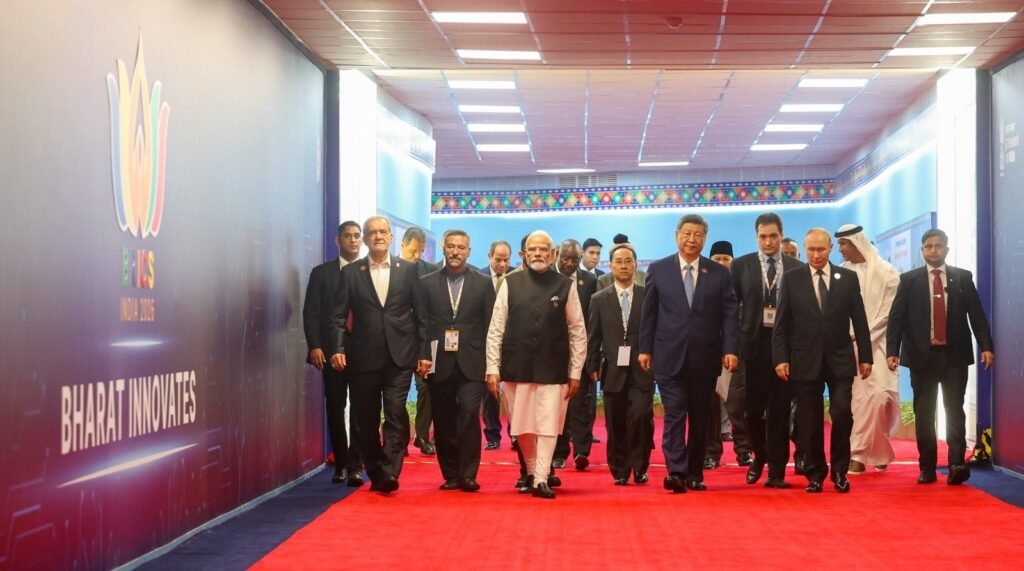
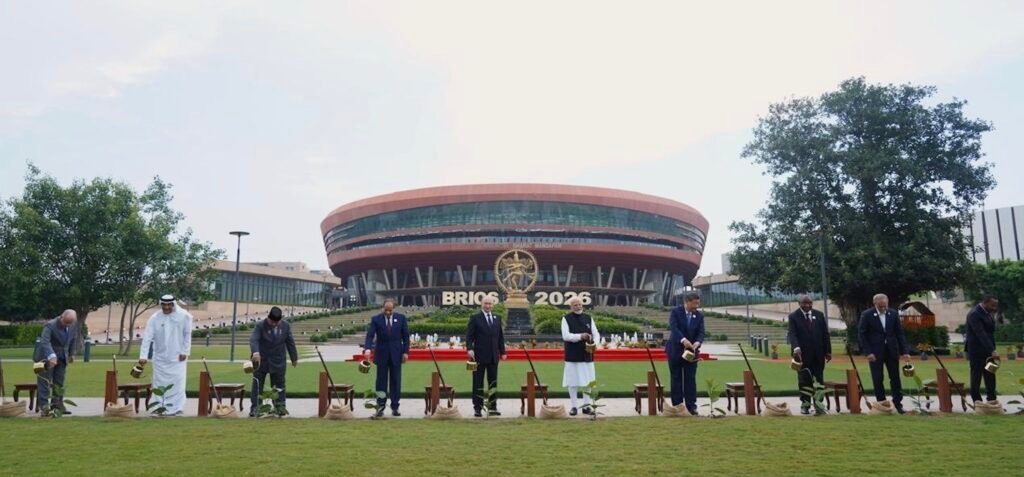
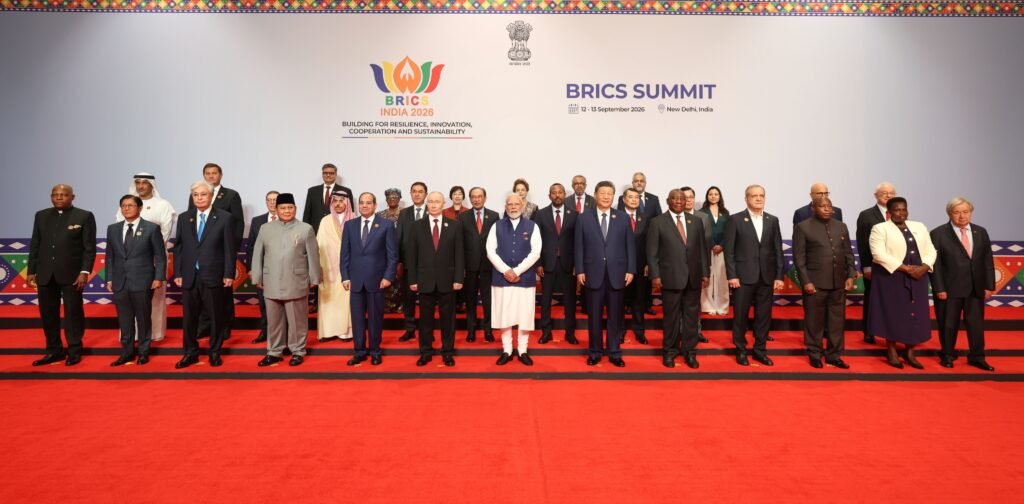
India wants BRICS to be important, but it does not want it to turn into a bloc. Prime Minister Narendra Modi made this clear at the summit, calling BRICS a platform that is “not against anyone.”
New Delhi has focused its presidency on resilience, innovation, cooperation, and sustainability. It is easy to make diplomatic statements, but what matters is whether they lead to real results.
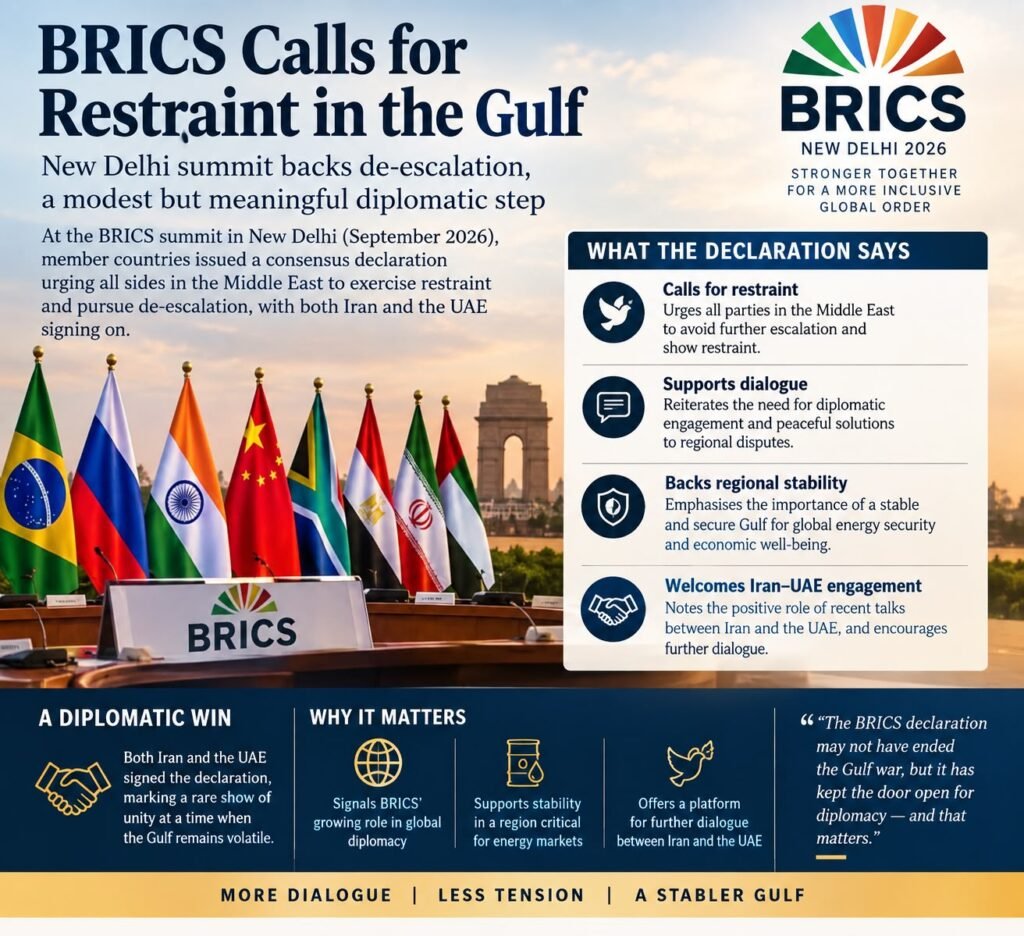
The recent New Delhi Declaration has shown some progress. BRICS leaders reaffirmed their support for openness, inclusiveness, sovereign equality, and consensus. They also backed reforms to the UN Security Council and called for more representation for developing countries in global financial institutions. China and Russia again supported a bigger role for India and Brazil at the United Nations, including the Security Council.
Smaller steps might end up being more important. BRICS members agreed to keep working on faster cross-border payments and using local currencies, while respecting each country’s priorities. They also supported more local-currency financing through the New Development Bank, stronger supply chains for critical minerals, and cooperation in artificial intelligence and digital infrastructure.
War in West Asia brought those differences directly into the summit. Oil prices crossed $100, raising concerns about energy supplies and freedom of navigation, with immediate consequences for India. Iran and the UAE, meanwhile, found themselves on different sides of a conflict even as they sat together in BRICS. The declaration eventually called for maximum restraint and diplomacy while emphasizing stable energy markets, uninterrupted flows from diverse sources, and protection of critical energy infrastructure.
India also secured language on terrorism that deserves attention. Leaders condemned the April 2025 terrorist attack in Jammu and Kashmir in the strongest terms and addressed the cross-border movement of terrorists, terror financing and safe havens. Getting a grouping that includes China to agree on such language is no small feat.
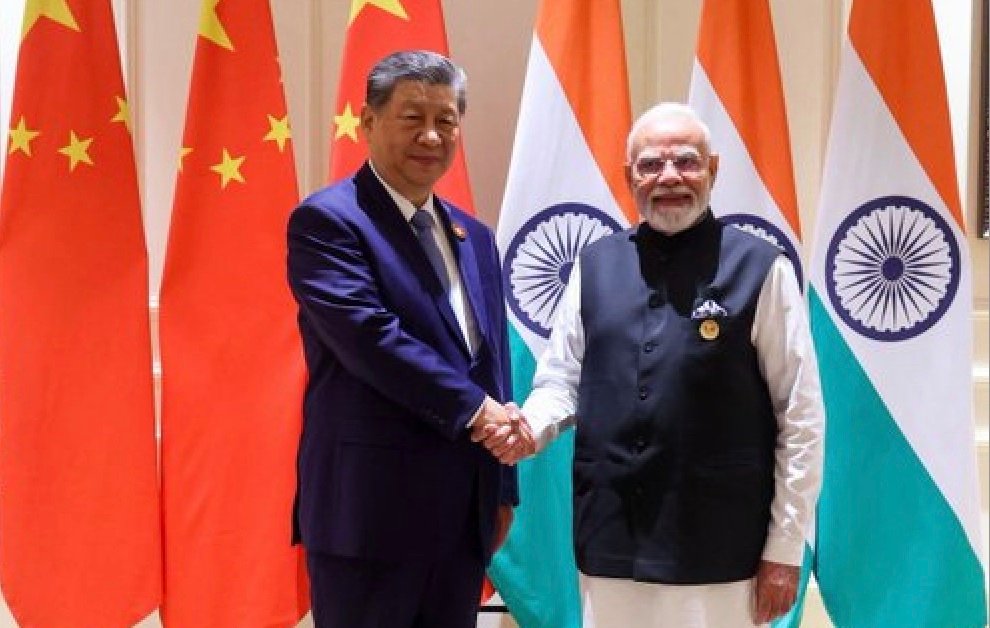
China remains the complication at the heart of India’s approach. Renewed engagement between New Delhi and Beijing is welcome, but relations have not returned to where they stood before the 2020 border crisis. An unresolved boundary remains, as does competition across Asia.
Yet India can work with China and Russia in BRICS while working with the United States, Japan and Australia in the Quad. Each forum serves a different purpose. The Quad helps India deal with concentrations of power in the Indo-Pacific. BRICS gives India another way to deal with concentrations of power in the wider international system.
Strategic autonomy has served India well, but the term is still too often reduced to India refusing to choose sides. A country of India’s growing economic and political weight should aim for something more ambitious.
New Delhi’s diplomacy shows that countries do not have to make permanent choices. Working with Washington does not mean being hostile to Beijing, and cooperating with Beijing does not mean moving away from Washington. Interests change, and partnerships can adapt to different situations.
Maybe this is what practical multipolarity really means.
India already handles much of its foreign policy like this. Success at BRICS should not be judged by how long the declaration is or how many new projects are announced. What matters most is whether BRICS can be useful without turning into just another geopolitical bloc.
For decades, India has worked within a global system mostly shaped by others. Now, with its growing influence, New Delhi can help shape the future.
BRICS without blocs may sound contradictory, but India’s presidency suggests the two need not be mutually exclusive.
India does not need BRICS to become another bloc. It needs BRICS to make a world of blocs less necessary.
Disclaimer: The opinions and views expressed in this article/column are those of the author(s) and do not necessarily reflect the views or positions of South Asian Herald.