Join WhatsApp Channel


Conflicts, often described as wars, have long disrupted not only societies but also the world of sports. History records several instances where global conflicts led to the cancellation of major events, including the 1940 and 1944 Olympic Games. In subsequent decades, geopolitical tensions have continued to affect prestigious competitions such as the Olympic Games, World Cups, Continental Games, and the Commonwealth Games.
In recent years, few major sporting events have remained untouched by the impact of global conflicts, although the extent has varied. In some cases, the effects have been symbolic, including boycotts of ceremonial gestures such as handshakes, podium group photographs, opening and closing ceremonies, and instances of disregard for national flags or anthems.
The most recent Winter Paralympics in Milano Cortina were also influenced by the ongoing Russia-Ukraine conflict. From the opening to the closing ceremonies, athletes from certain nations, particularly Ukraine, showed visible indifference toward medal winners from Russia and Belarus during podium moments.
Milano Cortina was not an isolated case. In early March, during the men’s qualifying tournament for the FIH Hockey World Cup held in Ismailia, Egypt, the United States withdrew its team after playing two pool matches. The decision, approved by the International Hockey Federation, followed a State Department advisory urging American citizens to leave the conflict-affected region in the Middle East.
The United States had earlier lost to England 0-5 and Japan 0-4, while its remaining matches against Pakistan, Malaysia, China, and Egypt were subsequently cancelled. The withdrawal highlighted the broader challenges faced by teams participating in international competitions amid geopolitical instability.
Meanwhile, Iran has reportedly urged the International Football Federation (FIFA) to shift its initial FIFA World Cup 2026 group-stage matches to Mexico. While Iran has indicated it will not withdraw from the tournament, it may consider boycotting matches scheduled on U.S. soil. The team is slated to play New Zealand on June 15, Belgium on June 21, and Egypt on June 26.
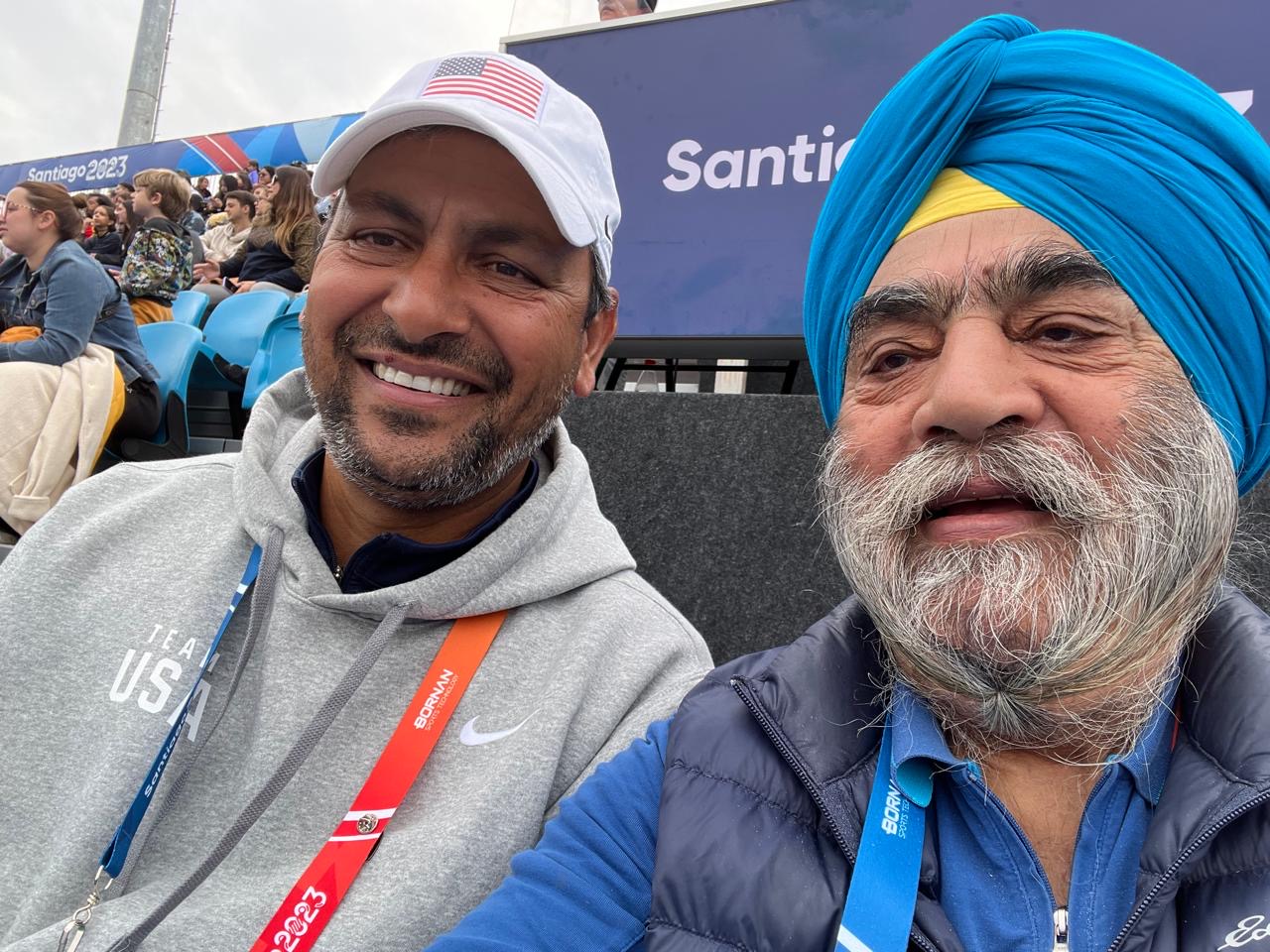
The ongoing tensions in West Asia have also raised concerns among sports observers about the scheduling of future events, including the Asian Games in Japan. Among those expressing apprehension is Dronacharya awardee and former Indian hockey coach Harendra Singh, who has also served as head coach of the U.S. men’s national team.
In a recent social media post, Singh reflected on the implications of the current geopolitical climate. I would like to get some genuine answers and suggestions from those who would love to see a truly competitive Asian Games-2028.
“Remember, athletes competing in the forthcoming Asian Games have a direct ticket to LA-2028 if they finish on top of the podium (gold medal). Therefore, a serious and introspective discussion may be required,” he said. “Is it really possible to conduct the Asian Games as per the scheduled dates under the current circumstances? A genuine question to the Asian Olympic Council: if the Games are held on the same dates, would it be unfair to the Gulf countries, whose preparations may be impacted due to the ongoing conflict?”
Singh further questioned whether the Asian Olympic Council is considering a deferment of the Games. A revised schedule, he noted, could provide teams, particularly in hockey, additional time to recover from World Cup commitments and prepare adequately for the Asian Games, while also easing the burden of an already demanding competition calendar.
“Have all teams prepared a Plan B in such a scenario? In Asia, we often say Plan B always works. Just a thought for reflection. I would love to hear the opinions of my Facebook friends and gather more ideas to ensure fairness and competitiveness,” he adds.
Responses to the concerns raised by Singh and other stakeholders may take time, as several nations remain focused on addressing the immediate consequences of ongoing conflicts, even as the global economy faces continued uncertainty.
Related posts:
 Indian Hockey’s Road to LA 2028: Tejinder Singh Aujla on Qualification Challenges, Transition, and Governance
 Milano-Cortina 2026 Opens with Dual Cauldrons, Historic Venues, and a Global Call for Respect
 India Clinches Asia Cup Hockey 2025, Secures Spot in FIH Hockey World Cup 2026
 Veteran Sports Journalists Honored at AIPS Ceremony Ahead of Milano Cortina 2026 Opening