Join WhatsApp Channel

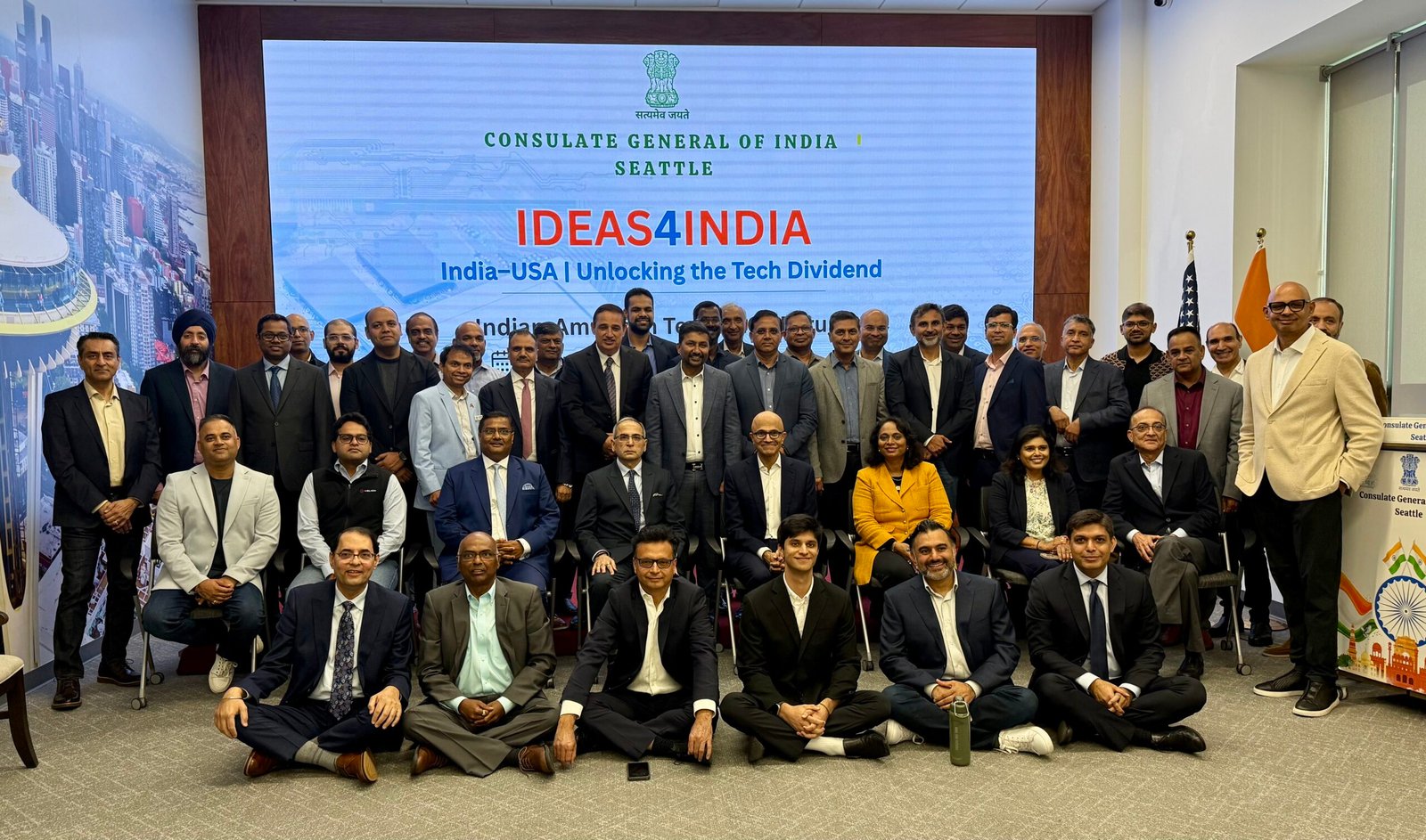
The Consulate General of India (CGI) in Seattle hosted “Ideas4India: Indian American Tech CEOs Forum | Unlocking the Tech Dividend” on September 17 as a follow-up to the India AI Impact Summit 2026.
The event sought to draw on the expertise of the Indian American technology community in the Greater Seattle area.
The forum brought together leading Indian-origin technology executives, several of whom have spent more than three decades working at the forefront of artificial intelligence, quantum computing, semiconductors, cloud infrastructure, aerospace and enterprise software.
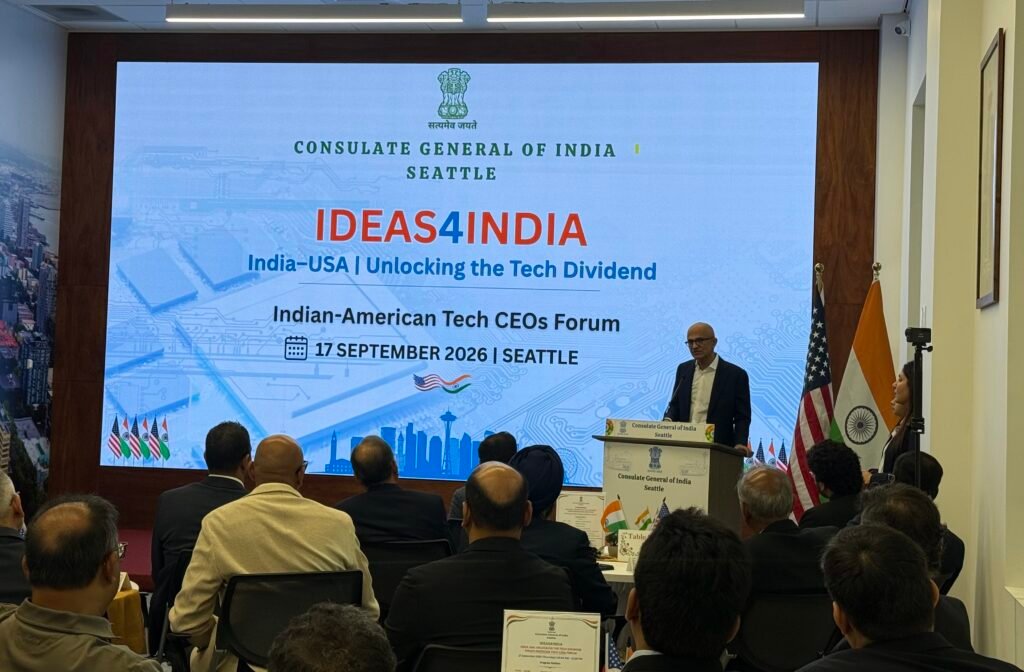
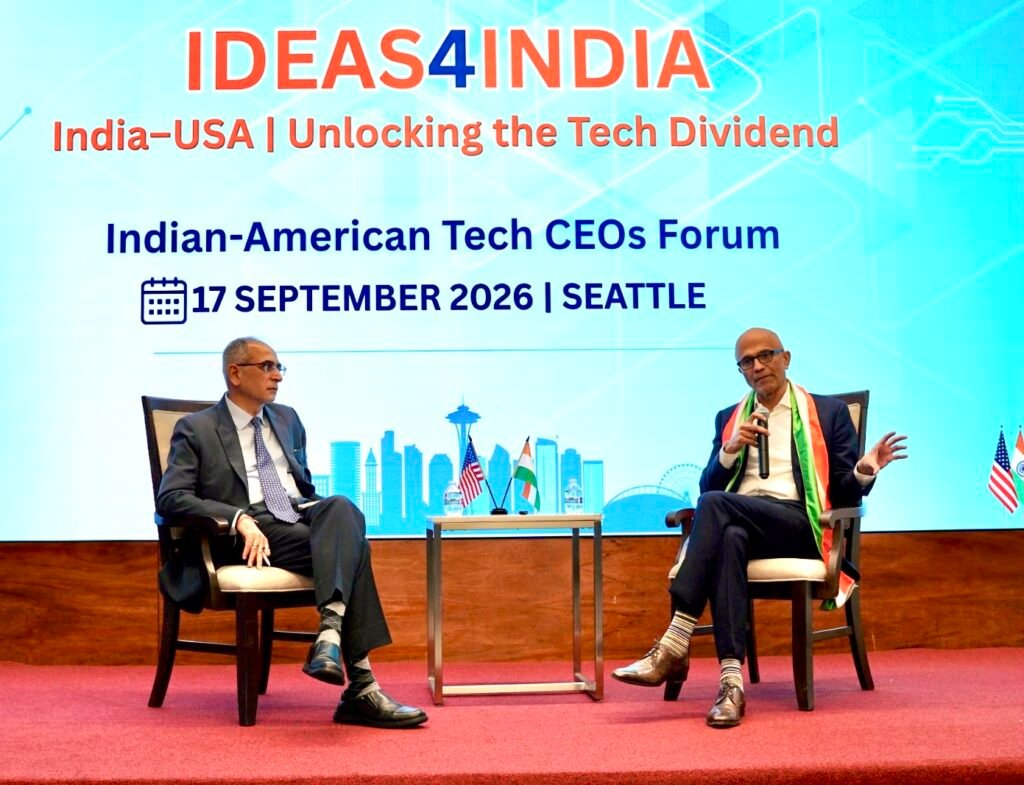
Microsoft Chairman and CEO Satya Nadella, the guest of honor, said he was proud to have witnessed the growth of Seattle’s technology community over approximately 35 years. He also welcomed its expanding relationship with India.
Nadella said members of the Indian American community in the Seattle region wear their “success lightly,” adding that the community is more Indian in that sense.
“It has a culture where you do more and talk less,” he said.
Nadella highlighted the emergence of a technology community that contributes to economic progress, helps distribute the benefits of technology more widely and builds stronger relationships with India.
“I think it is something that I definitely am very proud of having seen, even in the last 35 years, grow from strength to strength,” he said, adding that many technology leaders had played an instrumental role in that progress.
Nadella said it was wonderful to be part of the community and described himself as both a member of the broader Indian diaspora and a proud member of the technology community that has made Seattle and the Pacific Northwest its home.
He also discussed the potential for general-purpose technologies to generate a global economic dividend comparable to those created by previous technological revolutions. Nadella emphasized that the true success of AI would be measured by how widely it spreads across industries and countries, rather than solely by advances at the technological frontier.
Addressing global governance and sovereignty, Nadella called for new international norms that would allow countries to retain sovereignty over their knowledge and intelligence. He cautioned against “balkanizing” technology and said a collaborative global framework was necessary to enable countries to participate safely.
He also emphasized the importance of alignment science to ensure that powerful technologies remain under human control and serve human interests.
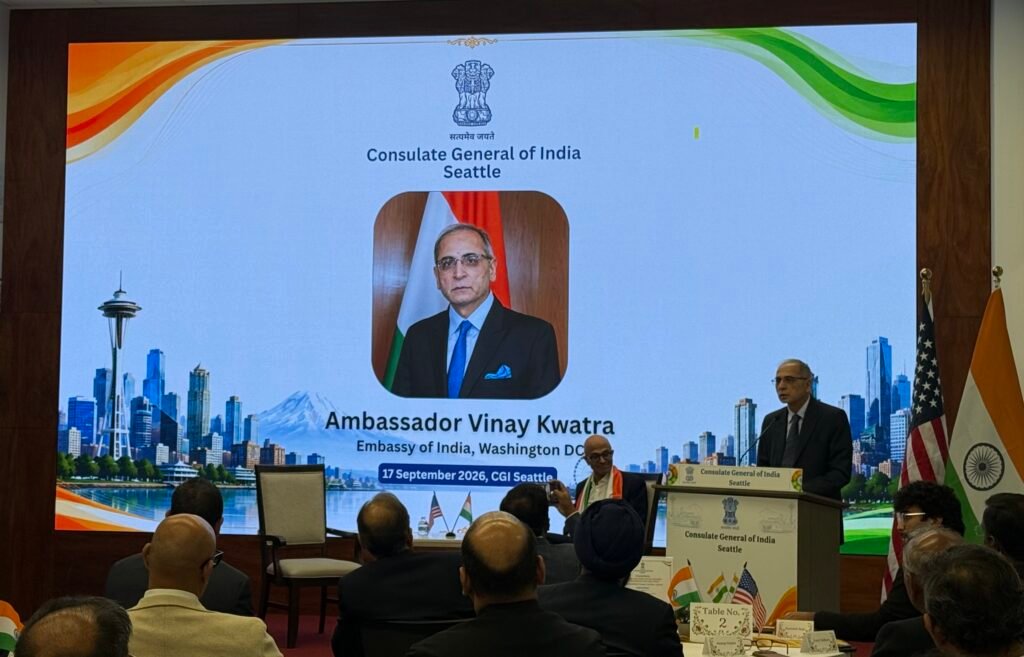
India’s Ambassador to the United States, Vinay Kwatra, welcomed the participants’ interest in deepening the bilateral technology partnership. He reaffirmed the Indian government’s commitment to working with relevant stakeholders to ensure that the country’s AI mission remains anchored in inclusivity, openness, sovereignty, democratized access, safety and trust.
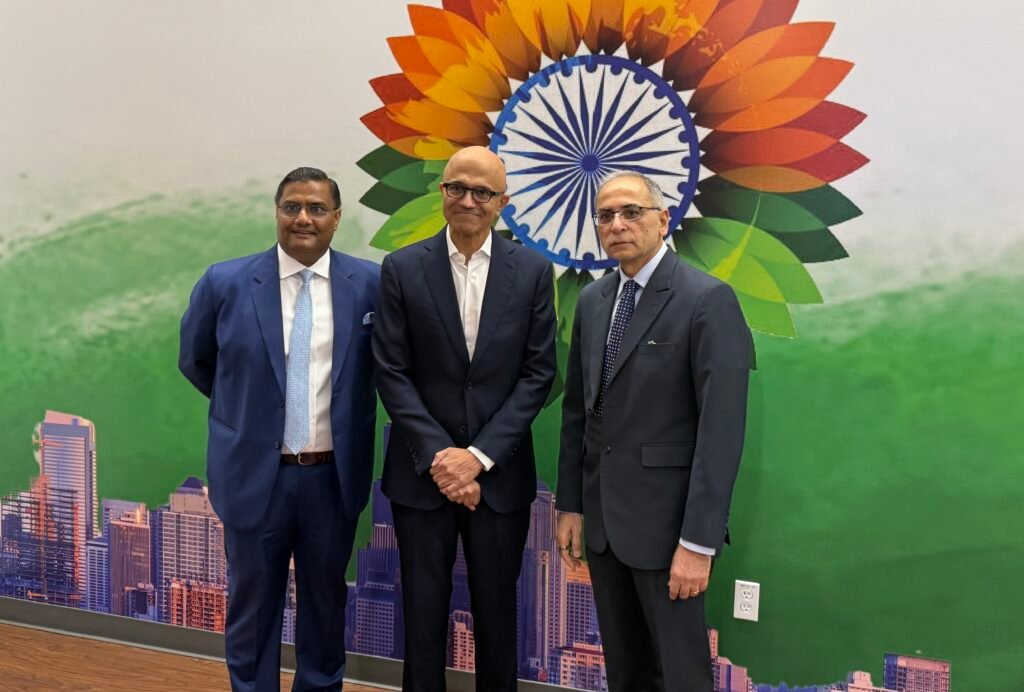
“As somebody who has served in the Government of India for over three decades now, I can tell you with absolute authority and authenticity that your achievements are a great contribution to how India has developed, how India is looked at, and how India is appreciated,” Kwatra said.
Referring to Nadella’s observation that what works in the Bay Area may not work in Seattle, Kwatra said, “I can tell you what works in the Bay Area and Seattle will not work in India,” prompting laughter from the audience.
Kwatra said India’s outlook is fundamentally “developmental” and cautioned against viewing the entire country through the lens of its technology sector.
“It’s only a tiny minority of the Indian middle class to upper-class elite that is tech-oriented, so to speak, in terms of the background. The rest of it is not,” he said, adding that much of the population uses technology but does not necessarily create it.
Consul General of India in Seattle Prakash Gupta said the Consulate had engaged with nearly every major stakeholder group in its jurisdiction since opening, including doctors, scientists, researchers, students, community leaders and elected officials.
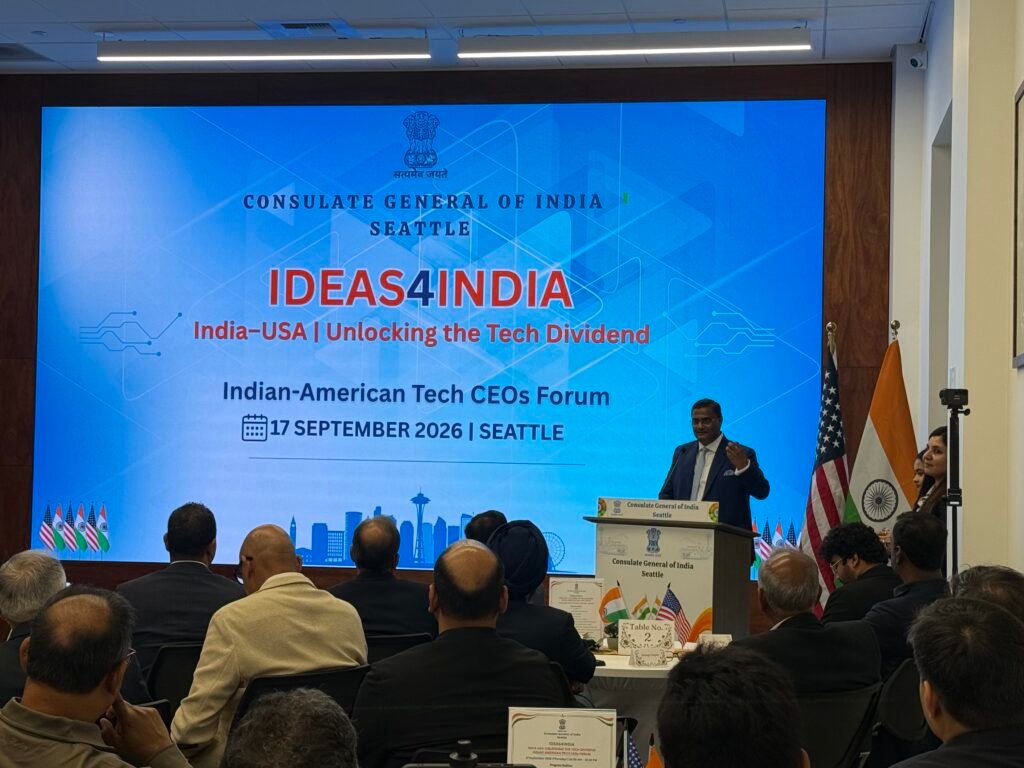
“But it has been a singular honor and privilege for me to interact with some of you individually and some of you in a group,” Gupta said, adding that two qualities had stood out during those interactions.
“One is, in spite of your stupendous success in your professional domains, your deep and abiding love and affection for the potential of the India story, and your genuine desire to help India achieve that,” he said. “The other thing, obviously, is your core competence in your professional fields, where you have taken the industry to where it stands today.”
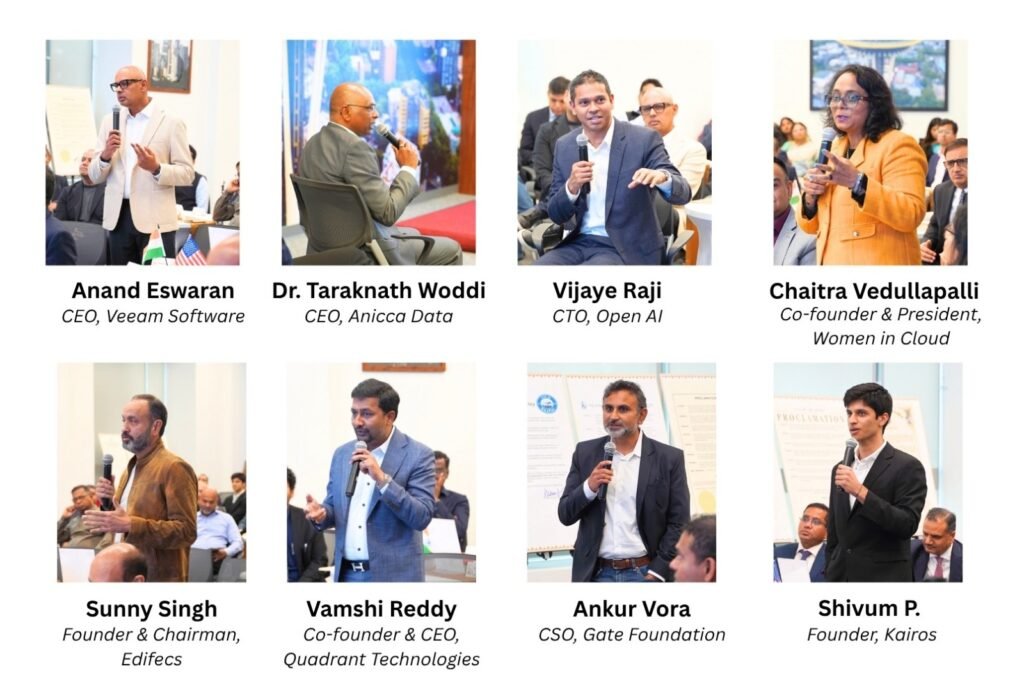
More than 40 Indian-origin CEOs and chief technology officers participated in the forum. They represented Microsoft, Amazon, Boeing, OpenAI, Anthropic, Intel, Veeam Software, Helion, Rhythms AI, Zenoti, Anicca Data, SeekOut, Stanley, Viome Life Sciences, Edifecs, the Gates Foundation, Orangetheory, Stanley 1913, Blink Health, CoralBricks AI, Qubra.ai, Cantina Labs, Waymakers and other leading technology companies in the Pacific Northwest.
During an interactive session, the executives shared ideas for strengthening the India-U.S. technology partnership. Their proposals covered AI infrastructure, data centers, semiconductor design and manufacturing, quantum research, workforce development, aerospace and advanced manufacturing.
The forum began with a minute of silence in memory of two prominent Indian-origin technology leaders from Seattle who recently died: Samir Bodas, co-founder and chief executive officer of Icertis, and S. Somasegar, managing director of Madrona Venture Group and a former corporate vice president at Microsoft.
Participants remembered their contributions to the growth of Seattle’s technology sector and their support for Indian-origin startups.
Padma Shri recipient Ajay Bhatt, who played a key role in developing USB technology during his tenure at Intel, also participated in the discussions.
The gathering reflected the two-way nature of the India-U.S. technology partnership. Several companies represented at the forum maintain significant engineering, research and business operations in India.
Microsoft has announced plans to invest $17.5 billion in India over four years, from 2026 to 2029, its largest investment in Asia. The funding will support cloud and AI infrastructure, workforce development and operations.
Amazon has announced a total investment of $48 billion between 2026 and 2030, including the expansion of Amazon Web Services data center capacity in Mumbai and Hyderabad. Costco is also establishing its first global capability center in Hyderabad.
According to the Consulate, the event marked the first time such a large group of Indian American technology leaders had been convened in Seattle.
The Consulate said the “Ideas4India” forum is expected to serve as an important platform for strengthening the India-U.S. technology partnership, including through the India-U.S. TRUST initiative, or Transforming the Relationship Utilizing Strategic Technology.
Under the initiative, the two countries are working to connect their innovation ecosystems and expand collaboration, including co-development and co-production, in “artificial intelligence, quantum, semiconductors, space, telecom and biotechnology.”
Related posts:
 Invest India Business Forum in Seattle Advances Trade and Technology Links with India
 Microsoft’s $3 Billion Investment in India to Boost AI Innovation and Skilling Initiatives
 India’s 77th Republic Day Celebrated in Washington State with Senate Resolution and Official Receptions
 Seattle’s Space Needle Hoists Indian Flag for the First Time to Mark India’s 79th Independence Day