
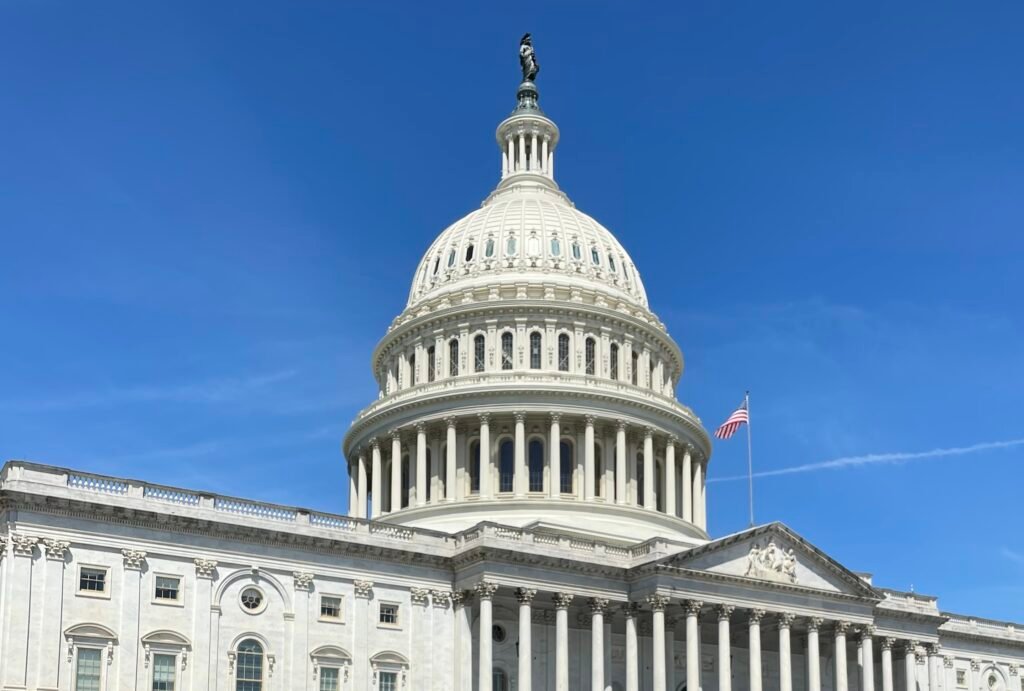
As Americans prepare to vote in the November 3 midterm elections, President Donald Trump faces a political question that extends well beyond the battle for control of Congress: how much of the country continues to support his presidency, and how much is prepared to use the ballot box to register its discontent?
The numbers emerging from the final days of campaigning make uncomfortable reading for the White House. A state-by-state tracker reported by USA Today on October 6 found that Trump’s approval rating was positive in only 11 states, while his disapproval exceeded his approval in the other 39.
The states where he retained positive net approval were Alabama, Arkansas, Idaho, Kansas, Montana, North Dakota, Oklahoma, South Dakota, Utah, West Virginia and Wyoming. All states in the south and mid-west.
The distinction matters. The figure of eight states sometimes cited in political commentary should not be treated as an established count of states endorsing Trump’s policies: the published tracker identified 11 states with positive net approval. Nor does presidential approval necessarily mean agreement with every policy. But the broader picture is unmistakable: the president’s political strength is concentrated geographically, while his difficulties extend across much of the country.
Advertisement
The question facing Republicans is whether the enthusiasm of their most loyal voters can compensate for the disaffection of independents, suburban voters and sections of the coalition that helped return Trump to the White House in 2024.
A national mood turning against the Republicans. The final national polling offers Democrats an opening that would have seemed less certain when the campaign began.
Emerson College Polling’s October survey put the generic congressional ballot at 52 per cent for Democrats and 42 per cent for Republicans. Trump recorded 37 per cent approval and 57 per cent disapproval among likely voters—a 20-point negative margin. The figures suggest that the election is increasingly being shaped by dissatisfaction with the president rather than by a simple contest between competing congressional candidates.
A separate October survey from Marist found Democrats leading Republicans by ten points among registered voters. Among independents likely to vote, Democratic congressional candidates held a substantial advantage. The poll also found that 44 percent of likely voters regarded their congressional vote primarily as a vote against Trump, compared with 21 percent who saw it mainly as a vote in his favour.
These findings point to a central vulnerability for the Republican Party. Trump remains a formidable political mobiliser, but his capacity to energise loyalists is not the same as his ability to persuade voters who are dissatisfied with the direction of the country.
For many Americans, the decisive concerns are economic: the cost of living, household purchasing power and whether the administration’s promises are translating into tangible improvements. Immigration and border security remain important, too, but even voters who favour tougher enforcement may question other aspects of the president’s performance.
The administration therefore faces a difficult electoral equation. It must persuade voters that its achievements outweigh their economic anxieties, while Democrats need only convince enough dissatisfied voters that a change in congressional control would provide a check on the White House.
The other 42 states: a map of political resistance. The question of what is happening in the states beyond Trump’s strongest territory is more complicated than a red-versus-blue map suggests.
America’s 50 states do not vote as single political blocs. A state may have a Republican governor and a Democratic senator, or elect Republicans to Congress while its metropolitan areas vote overwhelmingly Democratic. Even in states that backed Trump in all three presidential elections of 2016, 2020 and 2024, voters can express dissatisfaction with his administration without abandoning Republican candidates altogether.
That distinction will be crucial on Tuesday. The House of Representatives appears to be the Democrats’ most promising route to a significant political victory. Democrats need a net gain of just three seats to take control. The Washington Post’s October 26 assessment found that Republicans were defending numerous competitive districts, including some they had redrawn in an effort to make it safer for their candidates. Rising prices and Trump’s unpopularity were identified as significant obstacles for the party.
The Senate presents a more demanding challenge. Democrats need to gain four Republican-held seats while defending their own vulnerable positions. North Carolina offers an important opportunity, while Texas, Ohio, Iowa and Alaska are among the states where competitive races could alter the balance of power. Kansas has also attracted attention as a potential Democratic opportunity.
These contests demonstrate why national approval ratings cannot predict every local outcome. A president can be unpopular nationally and still help Republicans retain seats in strongly conservative constituencies. Conversely, a Democratic candidate may benefit from a national backlash without persuading every voter to embrace the party’s broader programme.
The electoral test is whether discontent becomes action. Will dissatisfied Republicans stay home, vote for Democrats or return to their party when confronted with a choice between familiar Republican candidates and an opposition they may not entirely trust?
The economy may prove more decisive than ideology. Trump’s political difficulties are not simply a referendum on his personality or rhetoric. They reflect the persistent gap between electoral promises and the everyday experience of voters.
The 2024 Republican coalition included voters who wanted lower prices, stricter border controls and a government that appeared more responsive to their concerns. Some supported Trump out of ideological conviction; others regarded him as an instrument for changing policies they believed had failed them.
That coalition was never politically uniform. Young men, Latino voters, suburban households and working-class voters could agree on particular grievances without sharing the same views on immigration, social policy or the role of government.
The danger for Republicans is that voters who supported Trump for economic reasons may judge his presidency by economic results rather than by the intensity of his political battles.
Democrats, meanwhile, must avoid assuming that opposition to Trump automatically amounts to support for their own party. Their candidates need credible answers on prices, employment, public services, immigration and the management of the federal government. A protest vote can open the door to power; governing competence determines whether that power can be retained.
An election clouded by a battle over voting. The final days of campaigning have also brought an extraordinary confrontation over election administration.
On October 30, a federal judge in California issued a temporary restraining order barring the Justice and Homeland Security departments from threatening or coercing election officials into halting ballot processing, segregating ballots or removing voters on the basis of the administration’s allegations of ineligibility. The order followed demands from federal authorities concerning suspected noncitizen voters.
The administration has argued that its efforts are intended to protect election integrity. Critics contend that its methods risk disenfranchising eligible voters and undermining confidence in the process. The court’s intervention placed significant limits on the disputed tactics; it did not establish that every allegation of federal interference or every feared post-election scenario would materialise.
Alaska has become another flashpoint. The Justice Department has asked a federal court to block certification if Republican Senator Dan Sullivan loses a closely contested race against Democrat Mary Peltola, citing concerns about a second candidate with a similar name appearing on the ballot. Election officials and the courts had previously allowed that candidate to remain in the race.
The dispute illustrates how a close contest could generate litigation after the votes are counted. Election-law specialists cited by the media have questioned the legal strength of the administration’s approach and noted that states, not the president, possess the principal constitutional authority to administer elections.
The immediate danger is not necessarily that disputed legal manoeuvres will succeed. It is that a close result, combined with political accusations and uncertainty over certification, could produce confusion and weaken public confidence. Courts, state election officials and established certification procedures will be central to containing that risk.
A verdict on presidential power. Trump’s decision to campaign aggressively for Republicans—including through telephone rallies—underscores how personally invested he is in the outcome. His influence could help mobilise the party’s loyal supporters, but it also makes it harder for Republican candidates to distance themselves from an unpopular president.
If Democrats win the House, congressional investigations and oversight of the administration could intensify. Control of the Senate would have additional consequences for legislation, nominations and the broader balance of political power. A Democratic advance in state-level contests could also complicate the Republican political landscape ahead of the next presidential election.
Yet a Republican victory in some key races would demonstrate that Trump’s coalition remains capable of surviving a difficult national environment. The results will have to be assessed seat by seat, state by state and against the candidates and issues actually on the ballot.
The essential question is whether the president’s core supporters can carry the party through an election in which national polling suggests that more voters disapprove of his performance than approve of it.
The other 42 states are not a single opposition constituency. Some remain competitive; others are reliably Democratic or Republican. But the fact that Trump’s approval is underwater in 39 states, according to the October state tracker, signals that the White House cannot assume that the political mood outside its strongest territory is favourable.
On November 3, Americans will decide whether that discontent is strong enough to change the balance of power in Washington. For Trump, the midterms are a test of the limits of presidential influence. For Democrats, they are an opportunity to turn dissatisfaction into a governing majority. For the country, they are a test of whether an intensely polarised electorate can settle its political differences through a credible, orderly election.
The result will not settle every argument about Trump’s presidency. But it will reveal how much of America is still willing to follow his lead—and how much Congress wants to chart a different course.
Disclaimer: The opinions and views expressed in this article/column are those of the author(s) and do not necessarily reflect the views or positions of South Asian Herald.