Join WhatsApp Channel

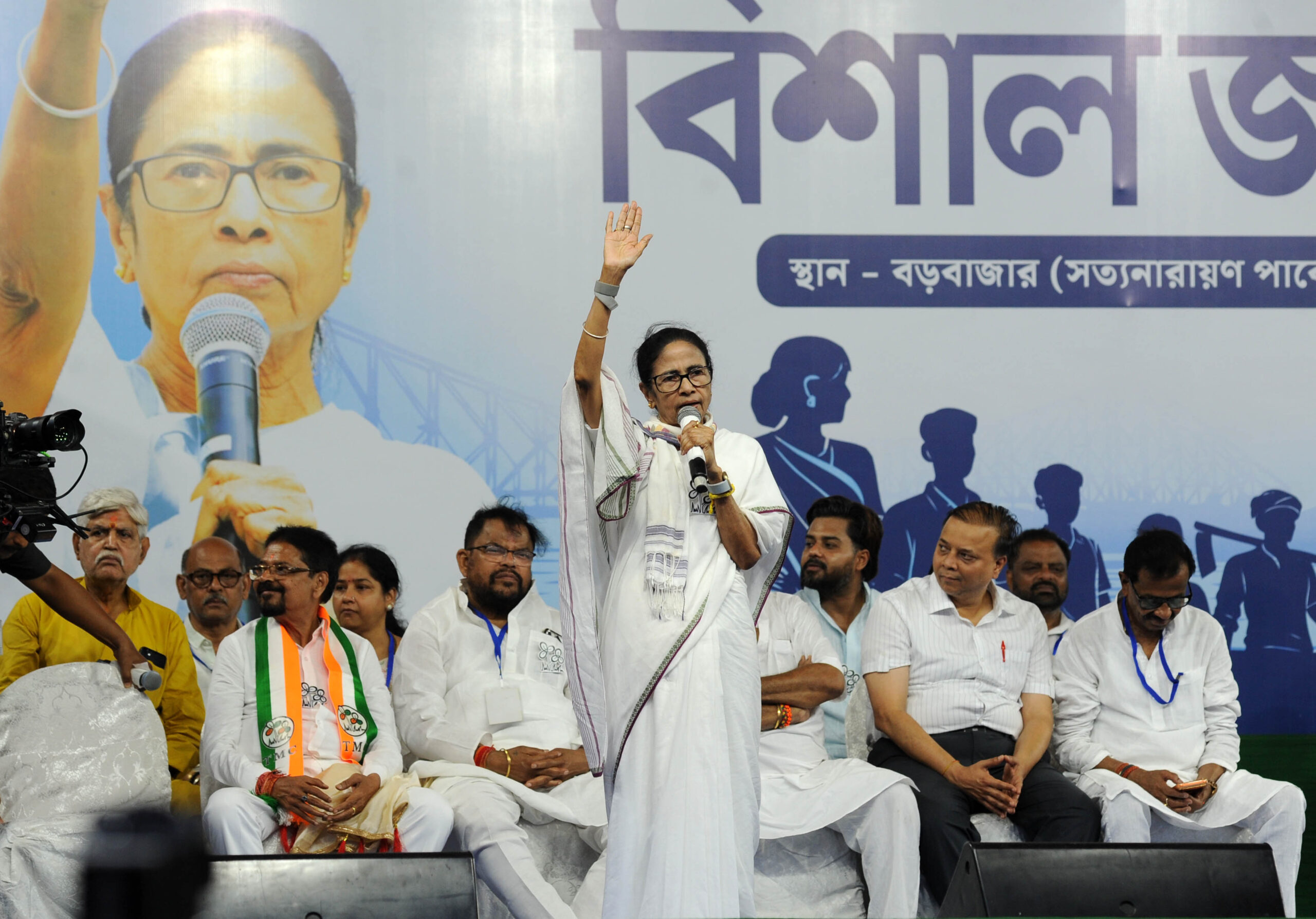
India does not hold one election — it holds a hundred simultaneously, each a separate argument about power, identity, and who the state belongs to. The two contests concluding this week in Tamil Nadu and West Bengal illustrate that complexity more sharply than most.
April 21: 5:00 PM. Tamil Nadu campaign silence begins. Voting is April 23 across all 234 constituencies.
April 21: BENGAL 1ST PHASE: Phase 1 campaign wraps. Phase 2 campaign begins simultaneously. Phase 2 vote: April 29.
The total electorate of TN 6.3Cr for electing 234 MLAs. And Bengal has 6.9 crore electorate for electing 294 MLAs. The Voting has generally been 75 to 82% in both states.
TAMIL NADU
After the Gods: Can Stalin Govern Without a Legend?
Tamil Nadu has not had a genuine mass messiah since Jayalalitha’s death in 2016, and before her, M. G. Ramachandran — whose mystique was cinematic, literally. Even Karunanidhi, the last of the grand Dravidian architects, ruled through a mix of familial loyalty and welfare machinery more than personal charisma. The question in 2026 is whether M. K. Stalin has converted competency into consent.
“The era of the godlike leader is over in Tamil Nadu. What remains is the question of whether governance prose can replace political poetry.”
Stalin’s DMK swept 2021 on accumulated anti-incumbency against AIADMK. He enters 2026 defending his own record: a welfare-heavy government, federal friction with New Delhi, and a calculated positioning as the last standing major opposition voice to BJP’s national dominance. No other regional chief minister governs with quite his level of confrontational federalism.
SEAT MAP — TAMIL NADU: 2021 VS LIKELY 2026
CURRENT ASSEMBLY (234 SEATS) · PROJECTED SHIFT
DMK could go down to ▼ ~115–120.
AIADMK could raise the strength to 75–85 due to its alignment with ruling BJP led NDA at the center.
The newly launched TVK by actor turned politician Vijay could win 8 to 15 seats maximum on his debut in the 2026 assembly elections.
The Indian National Congress could gain 10 to 15 seats due its alignment with the ruling DMK.
Projections reflect scenario analysis; not poll aggregation. Majority needed: 118 seats.
The structural reality is telling: national parties cannot win Tamil Nadu alone. The BJP contests under the AIADMK umbrella; Congress remains a junior partner of the DMK. Both play piggyback politics; their fates determined by how many seats the regional host deigns to concede. The actor-politician Vijay — whose party TVK is entirely untested — is the wildcard that narrows DMK margins without replacing them.
WEST BENGAL
From Left Hegemony to Binary War: The Bengal Story
West Bengal’s political evolution is one of the most dramatic in Indian democracy. For three decades, the CPM ran the state with a near-unbreakable rural machine — a cadre-based dominance that collapsed in 2011 when Mamata Banerjee’s Trinamool Congress swept it from power. The Left, which once held 230 of 294 seats, has since fallen to near-irrelevance. The Congress, which allied with it, followed.
Into that vacuum stepped on the BJP. From 3 seats in 2016 to 77 in 2021, it has become the sole opposition force — converting Bengal into one of India’s sharpest bipolar contests. This cycle, the question is how much further the BJP can advance, and whether Mamata’s TMC, battered by defections, central agency pressure, and anti-incumbency in some corridors, can hold its extraordinary 2021 majority.
SEAT MAP — WEST BENGAL: 2021 VS LIKELY 2026
CURRENT ASSEMBLY (294 SEATS) · PROJECTED SHIFT
TMC, which has 213 seats, could go down to 175 to 195 seats per psephologists projections
BJP, which now has 77 seats, could increase its strength to 90 to 110 seats, making it. Veritable opposition making legislations tough to pass for the TMC.
CPM / Left, which ruled the state with an iron hand under the veteran communist leader Joyti Basu, for 17 years, has been reduced to absolute irrelevance. It will not win more than 2 to six seats.
The Congress, which once ruled the state before the CPI-M can win hardly one to four seats on its own. Projections reflect scenario analysis. Majority need to form the government is: 148 seats.
Voter roll controversy (reports of ~90L deletions) adds significant uncertainty.
THE STRUCTURAL CONTRAST – TAMIL NADU
National parties survive only as junior partners. Congress piggybacked on DMK; BJP rides AIADMK. Regional identity politics is the grammar. The charisma era — MGR, Karunanidhi, Jayalalitha — is gone. What replaces it is still contested.
WEST BENGAL
CPM → TMC → BJP: a 30-year sweep of hegemonies. National parties fight directly, without regional proxies. Staggered polling, voter roll disputes, and muscular central machinery make this a high-conflict zone.
THE NATIONAL SUBTEXT
Both contests carry weight beyond their borders. The BJP’s failure to crack Tamil Nadu’s Assembly despite Lok Sabha gains reveals the ceiling of national Hindu nationalist politics in Dravidian territory. West Bengal’s outcome, meanwhile, will test whether the BJP’s aggressive voter roll revision strategy — removing what it calls illegal alien-linked registrations, which the TMC calls mass disenfranchisement — translates to seats or backlash.
“Stalin is the only serving regional chief minister who has made opposing the BJP his organizing principle. That positioning is national capital — if he can hold his majority to prove it works.”
THE BOTTOM LINE
Tamil Nadu is likely to deliver a reduced but functioning DMK majority — the charisma era is over, but anti-BJP federalism is now a governing philosophy in itself. West Bengal will almost certainly see the TMC survive as the largest party, but the BJP’s inroads will determine whether Mamata exits 2026 as a dominant force or a diminished one. In both states, the real verdict is on whether cultural autonomy can hold its ground against national power — an argument that will define Indian democracy long past April 23.
Disclaimer: The opinions and views expressed in this article/column are those of the author(s) and do not necessarily reflect the views or positions of South Asian Herald.