Uttarakhand has never been a state that dominates headlines. It does not feature daily in political shouting matches or cultural flashpoints. For long stretches, it has remained largely absent from controversy, not because nothing happens there, but because its public life has traditionally moved at a different register. Quieter. Less performative. More inward.
That is why the recent developments at Har Ki Pauri have drawn attention in a way that feels unusual.
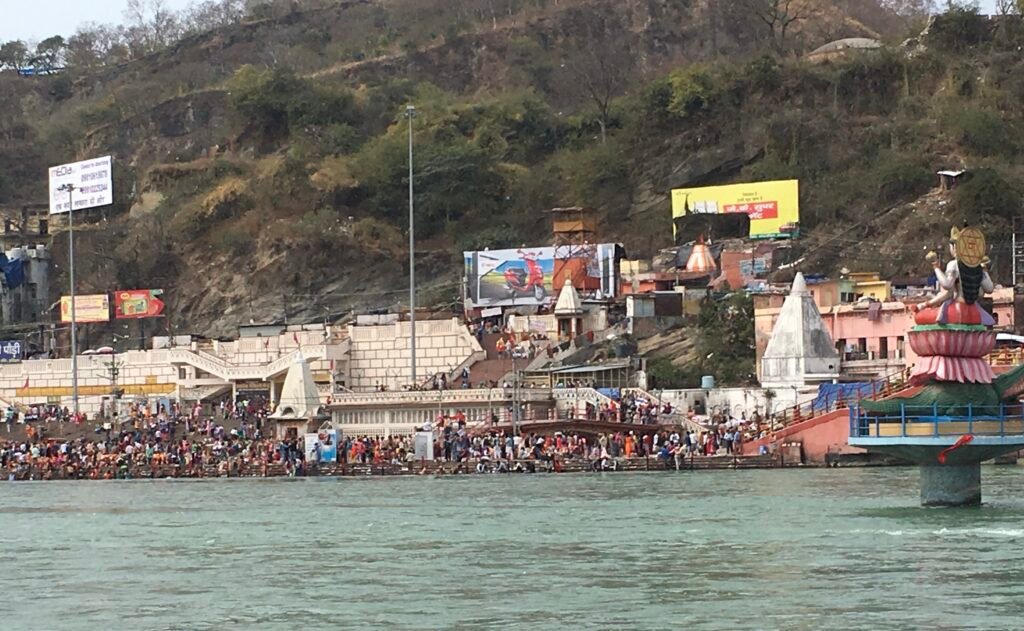
The installation of “Non-Hindu Prohibited Area” boards at the ghat, citing provisions of the Haridwar Municipal Act of 1916, has reopened an old rule that had largely faded from public consciousness. While the provision itself is not new, its visible and assertive invocation is. So too is the suggestion that such restrictions should extend beyond devotees to include media personnel and government officials, particularly in the run-up to the Ardh Kumbh scheduled for 2027.
In another state, this might have blended into the constant churn of controversy. In Uttarakhand, it stands out.
Advertisement
Har Ki Pauri occupies a unique position in the life of Haridwar. It is not merely one ghat among many; it is the city’s symbolic center. It is where religious ritual, administration, pilgrimage and everyday movement intersect most visibly. For decades, this space has functioned in full public view, managed by religious bodies, overseen by civic authorities, visited by millions, and covered extensively during major events, without its character being fundamentally questioned.
What has historically sustained that balance is not strict regulation, but shared understanding.
Visitors learned how to behave not through signs, but through observation. The atmosphere itself set expectations. Reverence was communicated quietly, through tone rather than instruction. This was not accidental; it was the product of long familiarity and a certain confidence that the space did not need constant reinforcement to remain meaningful.
The anxiety driving the current moment is not hard to understand. Sacred spaces today are under unprecedented pressure. Cameras are always present. Social media rewards spectacle. Moments meant to be quiet are routinely amplified, flattened, and argued over. The discomfort many feel watching this happen is real, and the instinct to protect something that feels fragile comes from care, not hostility.
But protection can take different forms.
I say this as someone who comes from the hills myself, and carries that association quietly rather than as a badge. Uttarakhand’s identity has never been built around exclusion. Its spaces have historically welcomed people regardless of what they believed, who they worshipped, or whether they worshipped at all. What bound people here was not uniform belief, but a shared regard for the land, for rivers, forests, mountains, and the discipline they quietly demand. Faith coexisted with nature, and nature softened faith. It is difficult, then, to understand when and how a place shaped by openness and collective reverence began to be framed through restriction.
Reviving an old rule changes not only who may enter, but how the space understands itself. When sanctity begins to rely on visible prohibition, the emphasis shifts from conduct to identity, from shared responsibility to supervision. The space no longer assumes reverence; it demands compliance. That is a significant shift in temperament.
There is also a practical dimension to consider. Events at Har Ki Pauri require coordination between religious authorities, civil administration, police, health services and the media. Public visibility, however uncomfortable, has long been part of how such gatherings are managed, documented and scrutinized. Restricting access based on identity complicates that ecosystem and risks turning a question of behavior into one of belonging.
More broadly, the moment feels significant because it cuts against Uttarakhand’s historical self-image. The state has rarely defined itself through exclusion or assertion. Its religious life has coexisted with civic life without demanding constant attention. Faith here has traditionally been held with a certain assurance, present, firm, but not anxious.
That assurance is what feels under strain.
The question, then, is not whether sacred spaces deserve care. They do. The harder question is whether care is best expressed through narrowing access, or through reaffirming the informal codes that once guided behavior effectively. Whether responding to a noisy world requires drawing sharper lines, or strengthening quieter norms.
Uttarakhand’s distance from controversy has never meant disengagement. It has meant restraint. A reluctance to turn every tension into a declaration. A preference for balance over confrontation.
Har Ki Pauri has endured for centuries not because it was sealed off, but because it remained open while commanding respect. Preserving that balance in a changing public sphere is not easy. But altering the character of the space in the name of protection carries its own risks.
Some places survive by being guarded aggressively.
Others survive because they are confident enough to remain shared.
What happens next at Har Ki Pauri will signal which path Uttarakhand believes in, and whether a state long known for staying out of controversy can continue to do so without losing the quiet strengths that defined it in the first place.
Disclaimer: The opinions and views expressed in this article/column are those of the author(s) and do not necessarily reflect the views or positions of South Asian Herald.