Join WhatsApp Channel

When you go overboard, you overshoot and miss the intended target. Come bullets or cinema. We all saw that recently in Assi.
Many a well-intentioned film goes off-kilter when things are expanded or stretched out of proportion. When a message film is made, it should (a) have an apt title and (b) be logical to have an impact. Most importantly, in this case where the evils of the fringe elements of the community and a potential national danger is to be enumerated, a strict balance should be maintained.
And above all, a sharp focus. Especially when such stories are cinematic narrations of true happenings.
As is superfluous to mention, fringe elements exist in every religion. But conversions and an unholy intention to convert all is something we should all be guarded about. When that is combined with Ghazwa-e-Hind (a terrorist concept that literally means Battle of Hindustan or Conquest of India), one must be more than a shade alarmed. These men even talk about how they have progressed in some Western countries—which is a hard fact!
In the climax, the police are shown to take action. That action, at least partly, is like animal justice or akin to vindictive mob fury. A Hindu devotional song plays in the background.
Totally unnecessary, both. Now if this film’s intention as it claims is that it does not want to attack any religion, why show these?
With this one long sequence itself, the film gives fodder to all those who think such films are ‘propaganda’, ‘divisive’ or ‘promoting hatred’ when the idea is to expose hidden evils. The slides in the end depict real news about those who perpetrated forced conversions across the country in the last few years, so these facts should have been backed by compelling storytelling with truth as anchor and logic as oars!
And why show that everyone in the film is ‘bad’ among them and ‘good’ among the rest? Is it enough to show that the only ‘good’ Muslim is an innocent, waif-like Fatima who is actually also forcefully converted from ‘Sneha’? What is the use of a Hindu father and mother repenting for their puritanical attitude? What price a girl’s mother seeing the light when told by her daughter that girls like their victimized neighbor should not be judged just by their abbreviated clothing or bold reels?
Yes, some pertinent points are raised: Hindus are basically disunited and that has been their undoing for centuries. A man posing as a liberal and agnostic Muslim later tells his girl, “We are never atheists. You people are!” Another comment is on Hindu gullibility and timidity.
Now for the cinematic flaws: to begin with, the greed for latching on to a successful (beyond expectations too!) title, The Kerala Story, is seen in The Kerala Story 2 Goes Beyond. Why was this title needed when this is the story of three girls (as was that film) but only one is from that state?
Two, the narrative defects: in this film, one of the girls is underage, and when she is cunningly married off to the Muslim boy, a fake birth certificate is produced by the other party when the parents complain to the law. It is told that these two documents must be investigated. But nothing more is heard on the subject and the girl is ordered to stay with the husband until then! Now should not a possibly underage girl be told to remain with her parents until she is proved to be old enough to marry?!
The flaws and blunders are manifold. Two of the three girls marry their ‘boyfriends’ (one even runs away from her home for that!) and the third, who refuses to convert, is advised by her beau to have a trail ‘live-in’ (to which her parents apprehensively agree)! But when their spouse / boyfriend’s realities unfold, two of them have access to mobile phones but never bother to contact either their parents or the police! Friends or relatives? Nah! We are led to presume the girls do not have any, in this day and age!
Instead of going no-holds-barred in a strident tirade, the writers (Amarnath Jha and producer Vipul Amrutlal Shah) and director Kamakhya Narayan Singh (who has a good record of making documentaries, short films and a feature named Bhor on social issues) should have exercised self-restraint and focus! A lot of hosh was required in place of the undoubted—and unwarranted—emotional josh.
If not for anything else, at least for audience acceptance!
The story is basic: three girls from diverse states are inveigled by their Muslim paramours into marriages and a live-in. One of them even poses as a devout Hindu to the extent that they have a temple marriage without their families! The boys ‘expose’ themselves as soon as the girls are trapped, emotionally, psychologically and finally physically.
Unlimited mental and physical harassments follow, with females from the boys’ community participating in every atrocity: admittedly, such sequences are brilliantly depicted and include incarceration in rooms, multiple rapes, destruction of their personal and professional ambitions by the destruction of their books and the necessary equipment and, of course, forced conversions and even impregnation.
These scenes are chilling and if the writer has said depict only 20 percent of the reality, then it is cause for impartial legal investigation! But to create that level of impact, a film overall has to be sincere and cold-bloodedly factual and not come across as flawed as this one!
That said, if one can distinguish between fact and exaggeration and absorb the good as well as bad truths presented, this film still needs to be watched for its original noble intentions.
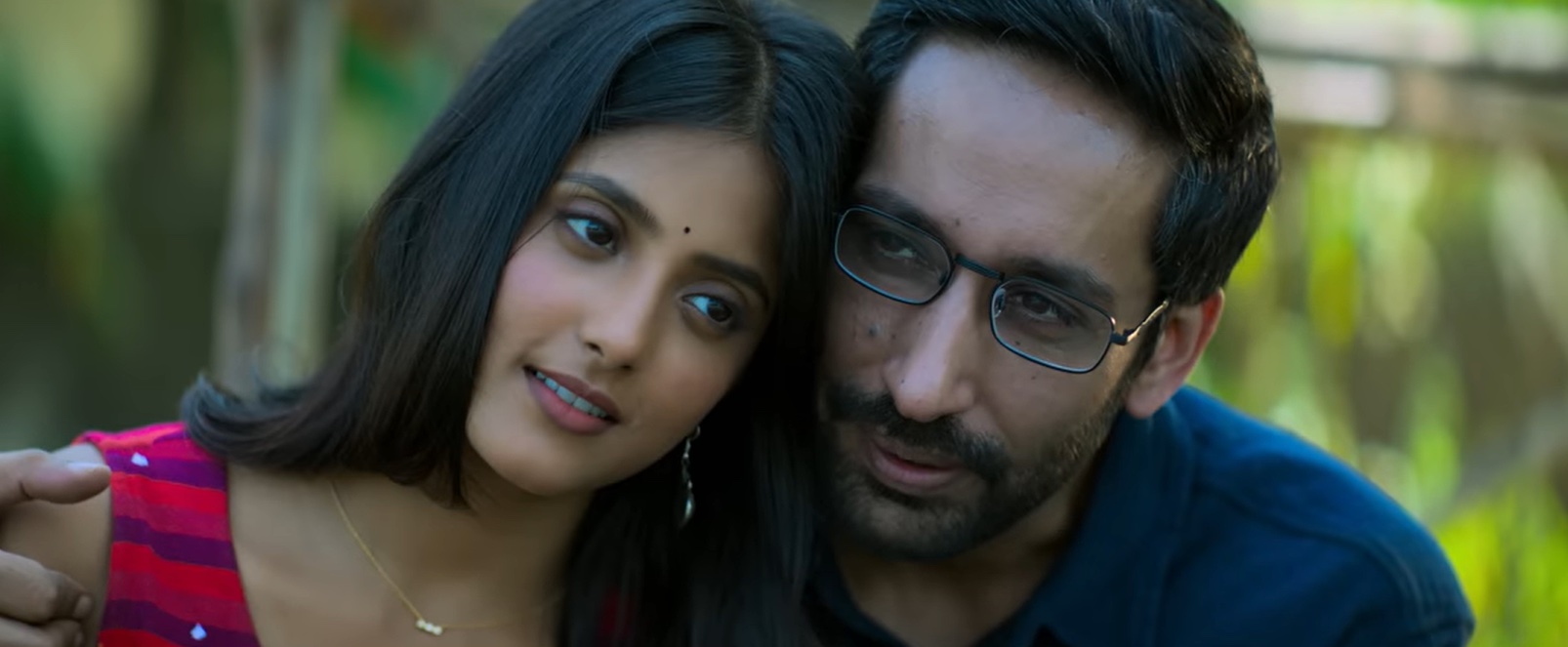
The technical side (including the background music that is uber-loud and the forgettable songs and clumsily-overt lyrics) is alright, but the performances are of high order. The three girls are superbly gifted actors, Ulka Gupta and Aishwarya Ojha are talents to look out for. Aditi Singh is a good dancer and acts well too.
The three boyfriends also score, especially Sumit Gahlawat as the manic member of Ghazwa-e-Hind. Yuktam Khossla as Rasheed and Arjan Singh Aujla play smooth blackguards. The three sets of parents acquit themselves well and so do Bhakti Vasani as Sneha-turned-Fatima, Alka Amin as the ruthless old woman with the key to the room where one girl is to be raped by multiple men, and Sanjay Mehta, who plays the old and lusty debauch.
If only this movie had the focus to match reality like The Kerala Story did. And The Kashmir Files and Dhurandhar. After all, a blockbuster must be potent enough to be seen by everyone. Only then will any message reach where it must. At best, TKS2 Goes Beyond does not go beyond average.
Rating: **1/2
Sunshine Pictures’ The Kerala Story 2 Goes Beyond. Produced by: Vipul Amrutlal Shah Directed by: Kamakhya Narayan Singh Written by: Amarnath Jha & Vipul Amrutlal Shah Music: Mannan Shaah, Santosh R. Nair & Rahul Suhas Starring: Ulka Gupta, Aishwarya Ojha, Aditi Bhatia, Sumit Gahlawat, Yuktam Khossla, Arjan Singh Aujla, Alka Amin, Abhishek Shankar, Lakshmi, Ramji Bali, Purva Parag, Rajiv Kumar, Shvveta Munsshi, Madhur Mittal, Saadhika Syal, Aadhya, Bhakti Vasani & others