There comes a moment when the life you have built no longer feels entirely like your own.
Nothing may be visibly wrong. You may have fulfilled your responsibilities, achieved stability and become the person others can depend upon. From the outside, your life may appear complete. Yet beneath the competence, gratitude and familiar roles, a quieter question begins to surface:
Is this who I truly am, or simply who I learned to become?
This question sits at the heart of my forthcoming book, Journey from Karma to Dharma®: The Bridge from Inherited Patterns to Conscious Purpose.
Advertisement
The book is for people who look fine on the outside but feel stuck inside. It explores the patterns that shape identity, relationships, choices and purpose, often long before we are old enough to recognise them.
For many of us within the South Asian diaspora, identity is rarely individual. It carries the weight of family, culture, migration, sacrifice, spirituality and expectation. We inherit extraordinary strengths: devotion, resilience, adaptability, ambition and respect for those who came before us. We may also inherit unspoken rules about success, belonging, duty and the version of ourselves that will be most accepted.
The challenge is not to reject our inheritance. It is to understand which parts remain true and which parts we continue to carry simply because they are familiar.
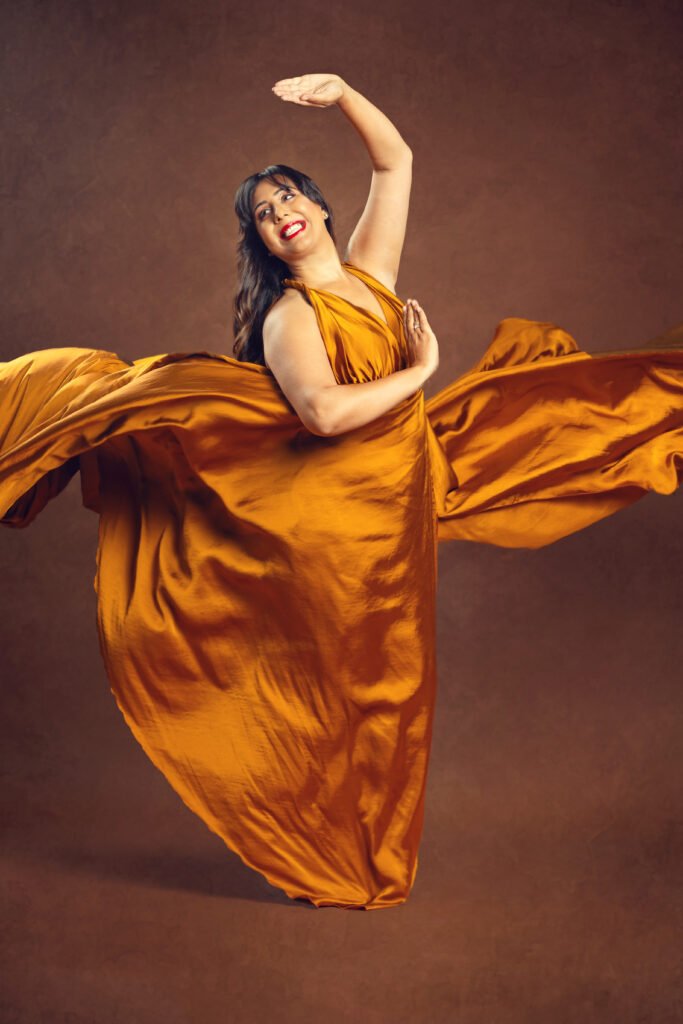
I was born in Britain into an Indian family, but from an early age I felt a gap between the identity I had inherited and the person I sensed beneath it. At sixteen, I legally changed my name because my birth name did not feel as though it belonged to me. At eighteen, I travelled alone to India, searching for belonging and a deeper connection to my heritage.
I remained there for a decade, studying Kathak dance, yoga and philosophy. India gave me extraordinary teachers and a language for understanding the relationship between body, identity and spirit. It also taught me that belonging cannot be handed to us by a name, homeland, tradition or family. These things can shape us deeply, but they cannot complete the inner work of discovering who we are.
I later founded and led a dance school for twenty years. The school became a significant part of my life and identity. When that chapter ended, I was not only closing a business. I was facing the loss of the person I had been while building it.
That threshold became one of the most difficult and revealing periods of my life. It forced me to ask what remains when a role, achievement or identity that once defined us can no longer lead the next chapter.
This is Where the Movement from Karma to Dharma Begins.
Karma is often understood as fate, punishment or a cosmic system of reward and consequence. In my work, I use it more practically. Karma is the pattern that keeps repeating until it is seen clearly enough for a different choice to become possible.
A karmic pattern may show up as people-pleasing, perfectionism, overworking, abandoning our own needs, delaying joy or remaining loyal to identities we have already outgrown. These patterns are not evidence that something is wrong with us. Many began as intelligent ways of finding safety, love, approval or belonging.
The problem arises when an old strategy continues to organise a new stage of life.
Dharma is often translated as purpose, but I do not believe purpose is limited to a career, title or public achievement. Dharma is the deeper nature we are here to embody. It is the experience of living in a way that feels truthful, internally coherent and alive.
The journey from karma to dharma is therefore not about becoming somebody new. It is about remembering who we are beneath conditioning and expectation and allowing that truth to shape our choices.
The book moves through three stages: remembering, reclaiming and embodying.
Remembering asks what remains true beneath responsibility, performance and the identities we have learned to present.
Reclaiming involves recognising the patterns and inherited roles that no longer belong to us, while retaining the wisdom and strength within our history.
Embodying is where insight becomes a lived reality. It is not enough to understand a pattern intellectually. We must practise choosing differently through our boundaries, relationships, creativity, work and use of time.
This is why creativity and the body are central to the book. Some truths cannot be reached through analysis alone. Dance, writing, movement, stillness and creative expression can reveal parts of the self that have been silenced by years of adapting to what was expected.
Creativity became my bridge from chaos to clarity. It helped me hear what my mind could not yet explain and reconnect with a sense of aliveness beyond productivity and achievement.
Journey from Karma to Dharma® does not ask readers to abandon their families, traditions or responsibilities. Nor does it suggest that every inherited pattern is harmful. It invites discernment.
Which parts of your inheritance strengthen you?
Which patterns once protected you but now restrict you?
Which roles reflect your truth, and which have become performances you are afraid to stop?
What might change if you no longer had to earn rest, joy or the right to be yourself?
These questions are especially important at life’s thresholds: illness, grief, career change, relationship transition, burnout, parenthood, empty nesting or the quiet realisation that an old identity no longer fits.
Such moments can feel like disruption, but they can also become invitations.
The wreckage of an old life is not always evidence that we have failed. Sometimes it is the path through which we remember what matters.
We do not honour our ancestors by remaining trapped inside every limitation they inherited. We honour them by receiving the strength they carried, bringing consciousness to the patterns they could not resolve and allowing the next generation to inherit greater freedom.
The life you inherited has shaped you. It deserves understanding and compassion. But it is not the only life available to you.
Journey from Karma to Dharma® will be published in January 2027 by Karma to Dharma Publishing. The book guides readers through inherited patterns, identity transformation and the movement towards a life of conscious, embodied purpose.
Disclaimer: The opinions and views expressed in this article/column are those of the author(s) and do not necessarily reflect the views or positions of South Asian Herald.