
Discreet isn’t exactly the first word that comes to mind when you think of South Asians. We’re loud, lovable, and lavish. So maybe disruptive is a more suitable adjective for us lot! Perhaps that’s why the South Asian art market has been underestimated over the last few years. While the rest of the world focused on our exuberance at weddings, a part of the population was venturing towards something even more spectacular. I’m talking about the collectors who have been quietly shaping the art market behind the scenes, until their influence became impossible to ignore, making waves far beyond their home ground.
South Asian art had its first major moment between 2004 and 2007, only for the momentum to be wiped out by the global financial crisis. It has taken almost two decades for this segment of the art market to take centre stage once again. But this time, the rise in demand and growing appetite for South Asian art feels different and deliberate. This new confidence among collectors shows that they are the force shaping this shift. And now, we find ourselves at a pivotal moment: one in which South Asia is proving that it has every reason to occupy a permanent place in the global art ecosystem.
Behind the galleries, fairs, museums, biennales and record-breaking auctions are people doing what collectors have always done: buying art, talking about art, arguing about art, and occasionally pretending they understand art better than everyone else. While the rest of us continue to regard art as a “luxury hobby,” something vaguely intimidating, prohibitively expensive and perhaps a little too snobby for the common person, these collectors have been quietly building collections, supporting artists and, whether they intended to or not, helping shape the market.
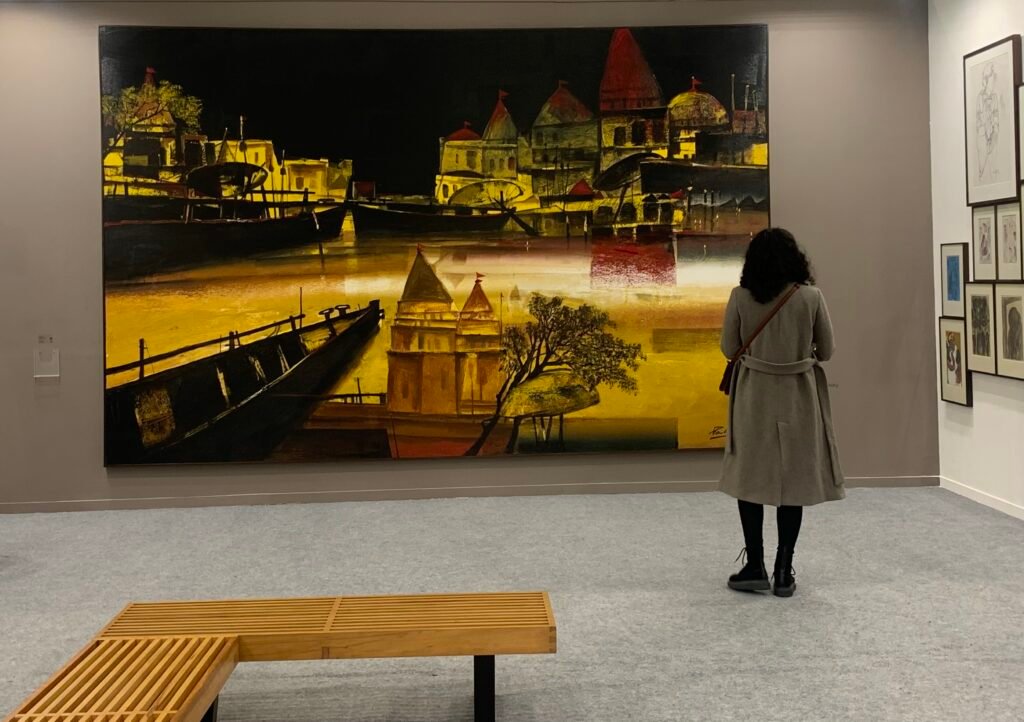
I entered the mesmerizing world of art in 2021 and like most things in life, I realized fairly quickly that it is not quite what it looks like from the outside. Having grown up in India, I was naturally drawn towards subject matter close to home, but what’s kept me intrigued is the collecting patterns and influence of the South Asian collectors – some of whom buy anonymously, while others are proudly smashing auction records or becoming legacy patrons, turning their collections into institutions that carry their family name forward. Which brings us to some important questions: Who exactly are these people? And where do we find them?
Advertisement
Do they really belong to some secret society of art lovers? Or are these stereotypes a slightly prejudiced way of making sense of people who have figured out how to combine culture, capital and a very good drinks cabinet? To an outsider, art collectors are simply people wealthy enough to indulge in expensive tastes and hobbies. But that picture is far too narrow. Beyond the ultra-high net worths (UHNW) and high net worths (HNW) collectors, there are two other categories that often get overlooked – the middle / upper-middle class diaspora and the new generation of collectors who are discovering artists amongst their own network and becoming young patrons to home-grown art.
THE DIASPORA OF GROWTH
Perhaps the most understated force behind South Asian art’s growing international presence. From London and New York to Dubai, Singapore and beyond, South Asian collectors, philanthropists, curators and cultural organizations have been building connections around the art of the region, often across borders and sometimes long before the mainstream market caught up. The diaspora is particularly interesting because its collectors don’t always collect from nostalgia. Increasingly, they participate as cultural stakeholders, with the financial capacity, enthusiasm and vast networks to operate across continents.
Another important aspect of the diaspora is that they are not just collectors, but collective appreciators of South Asian art. Citizens of a specific country may not always look beyond their own geographical boundaries, whether due to political tensions or trade regulations, but the diaspora has the freedom to collect without the restrictions that shape domestic collecting patterns. A collector in London might buy from a gallery in Mumbai.
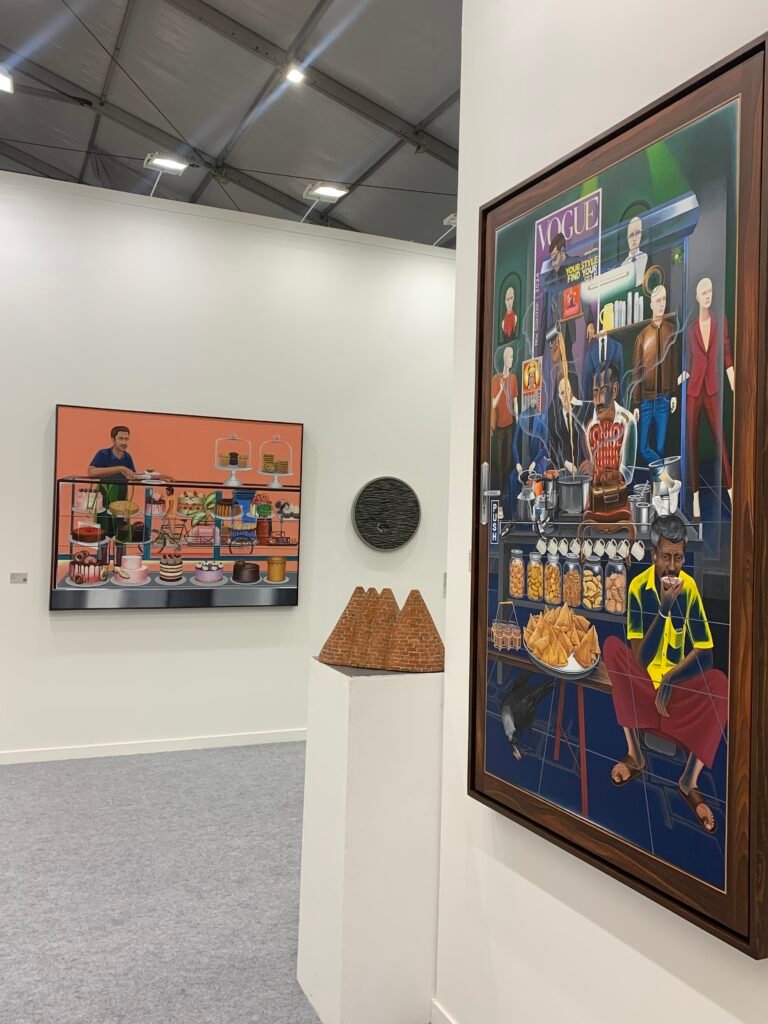
A foundation in Dhaka might work with an institution in New York. An artist from Pakistan might find an audience in Dubai, a Sri Lankan gallery might showcase works at fairs in London, while an Indian modernist enters a museum collection in Europe. Suddenly, the idea of a geographically contained “South Asian art market” becomes slightly absurd. Perhaps that is the real significance of the diaspora: it has not simply taken South Asian art abroad. It has helped create the conditions for the rest of the world to take notice.
COLLECTIONS CAN BECOME INSTITUTIONS
South Asia’s developing art infrastructure has given its art forms something it has long needed: institutional weight. The Kiran Nadar Museum of Art in India and Samdani Art Foundation in Bangladesh, are two of the clearest examples. While the list includes more, I pick these two because I had the chance to meet Mrs. Kiran Nadar and Mrs. Nadia Samdani at Christie’s Auction House in London this summer and that conversation is what set this article in motion. KNMA’s collection and programming focus primarily on art from India and South Asia, while its educational and cultural programmes aim to connect artists, audiences and ideas. With a collection of 16,000 works of art, its planned new museum in New Delhi is expected to span approximately one million square feet, positioning it as a major cultural institution in India.
Similarly, in Bangladesh there is the Samdani Art Foundation. Founded in 2011 by collectors Nadia and Rajeeb Samdani, it demonstrates what happens when collecting transforms into cultural infrastructure. Through the Dhaka Art Summit, artist support, residencies, international collaborations and institutional partnerships, the foundation has helped create opportunities for Bangladeshi artists to enter conversations far beyond Bangladesh. Its collaborations have included institutions and projects across Asia, Europe, Australia and the United States. For both, what started as a passion eventually evolved into patronage that is likely to leave a legacy behind. This is the part of collecting that tends to disappear when we reduce the conversation to wealth.
THE NEXT GENERATION
The current generation has not only been fortunate enough to explore careers beyond the traditional routes of medicine and engineering; they have gone a step further by becoming increasingly curious about culture and its implications. In today’s world, when almost every other area of life, be it political, environmental or economic, feels as uncertain as it does, it makes sense that young people are turning towards art. Not necessarily as an escape, but as something they can understand, resonate with, invest in and, most importantly, help shape.
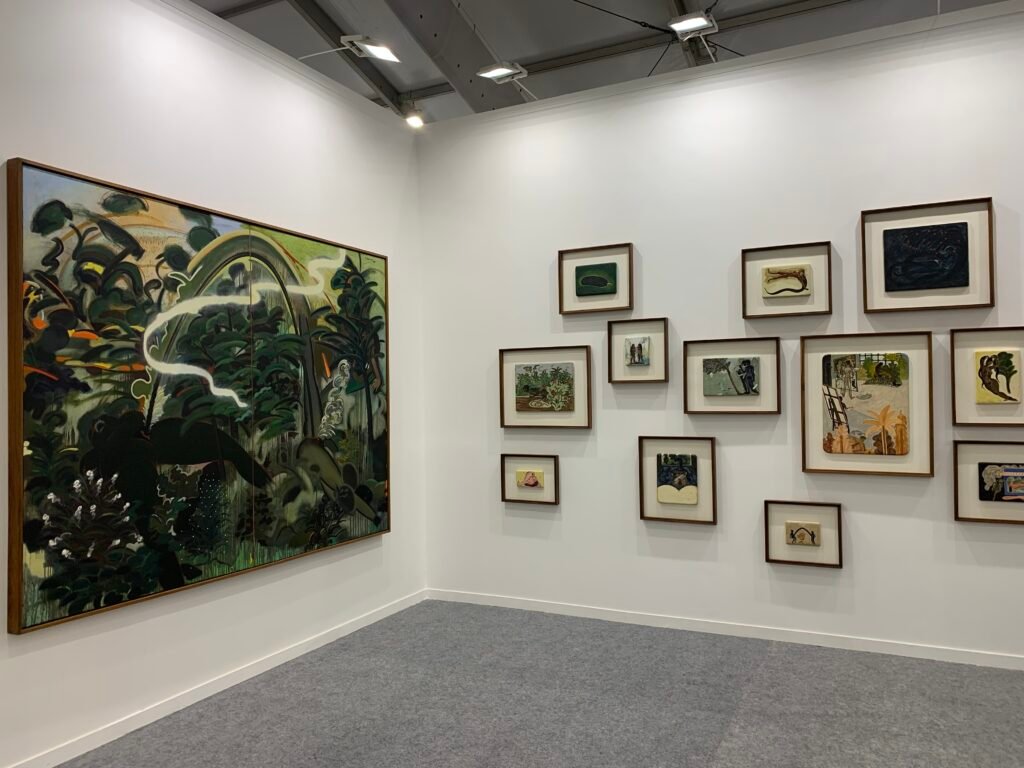
For older generations, the idea of art as an alternative asset class may still be up for debate. For the new generation of collectors, it is increasingly becoming the norm. But they’re not buying art simply for ROI; they’re building a cultural footprint and educating themselves along the way. The developing art infrastructure – galleries, museums, fairs, and sculpture parks, along with capital invested through sponsored residencies, grants, scholarships for art degrees by prominent collectors has given the younger generations options for newer career paths.
ART FAIRS ARE THE NEW PLAYGROUNDS
I have been attending the India Art Fair (IAF) for the past five years, and each year there has been a noticeable change in its scale, quality and international attendance. But the most interesting part of an art fair is not always what happens inside the booth. It is what happens around it. The dinners, collectors’ previews, studio visits, private events, panel discussions and after-hours conversations have become part of the ecosystem itself. The fair has progressively become a place where collectors don’t just buy art; they socialize, discover artists, brainstorm and, sometimes, accidentally or intentionally, start something much bigger. That social aspect matters.
The fairs create visibility and collectors create demand the same way galleries create careers, while institutions create longevity. Somewhere along the spectrum of collectors, over several gallons of wine, and endless conversations, a market begins to take shape. I haven’t lost the plot though! I still believe that the South Asian collectors operate discreetly but disruptively. The market may have seemed dormant between 2007 and 2021, but the collectors didn’t wait around for the second wave to hit. They manufactured it! The conversations never stopped. The collecting never paused. The ideas didn’t shrink. The scale at which the art, the institutions, and the infrastructure is being established across these nations requires decades of meticulous planning to create the right ecosystem for it to thrive over time. Perhaps that’s the beauty of art. You can’t truly understand it until you immerse yourself in it.
Disclaimer: The opinions and views expressed in this article/column are those of the author(s) and do not necessarily reflect the views or positions of South Asian Herald.