Join WhatsApp Channel

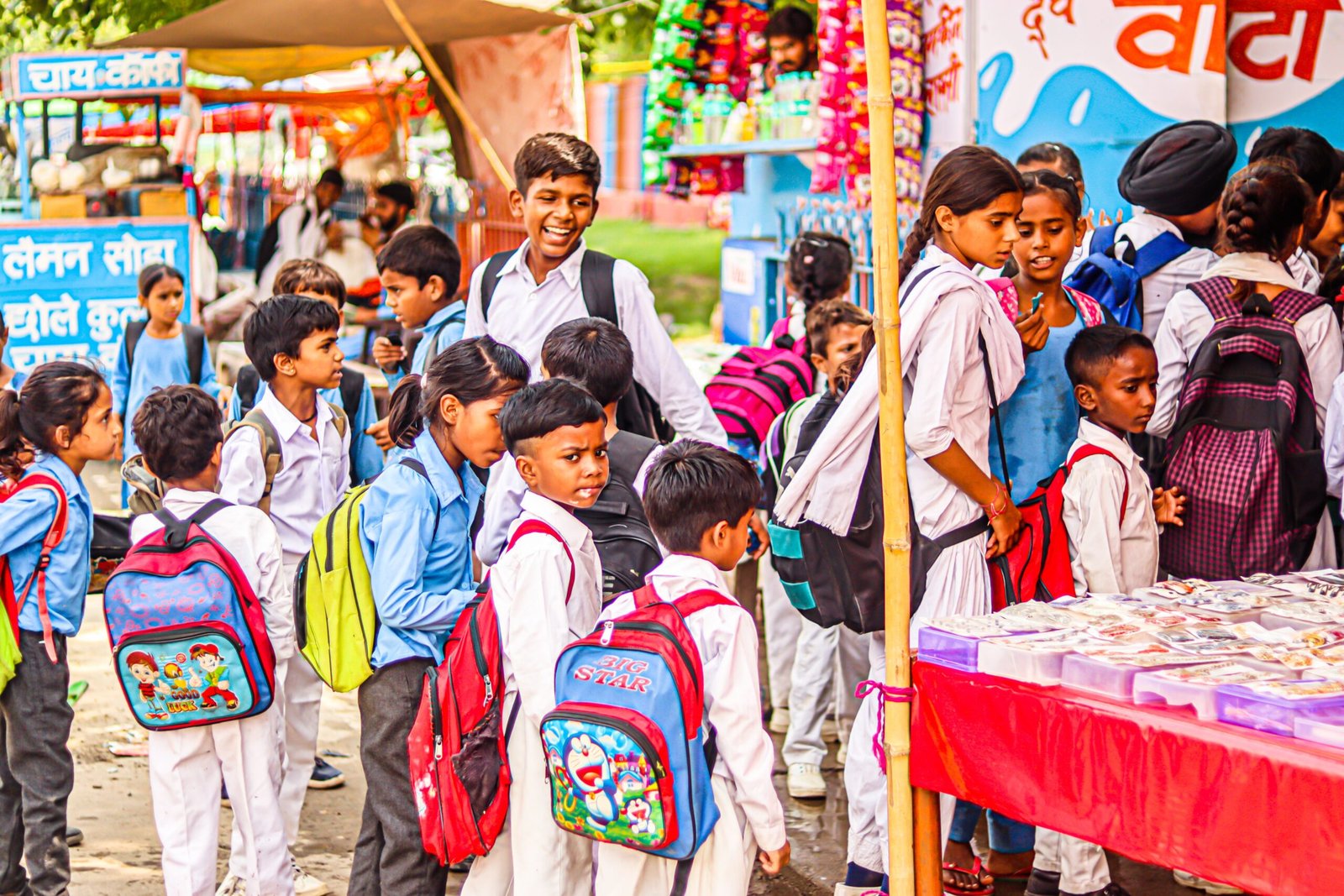
South Asia has made one of the world’s most significant expansions in schooling. Since 2000, enrolment in the region has risen by 29% at the primary level, 51% at lower-secondary level, and 114% at upper-secondary level. Nepal, for instance, recorded an 81% increase in lower-secondary completion between 2000 and 2024. These are achievements worth recognizing in a region where poverty, conflict, migration, unequal public infrastructure and gender discrimination have long shaped children’s educational opportunities.
But the celebration remains incomplete. The region now faces a more difficult challenge: school systems must ensure that the children who are most likely to be excluded do not merely enter classrooms, but learn meaningfully, progress through grades and complete an education that expands their choices.
This is where South Asia confronts two linked deadlocks. The first is the gap between schooling and learning. The second is the precarious transition from childhood to adolescence, especially for learners affected by poverty, rural isolation, disability, gender inequality and social instability.
The enrolment illusion
Enrolment is easier to count than learning. A new school building, a larger admissions figure or a textbook-distribution drive can be captured in an annual report. Whether a child understands what she reads, can reason with numbers, feels safe in school, or has a teacher who can respond to her needs is much harder to measure and more expensive to secure.
This is not an argument against expanding access. Access remains urgent. UNESCO’s 202G Global Education Monitoring Report notes that three out of every four children and young people who are out of school globally live in Central and Southern Asia or sub-Saharan Africa. Progress in reducing out-of-school rates has stalled since 2015, with the COVID-19 pandemic worsening participation, particularly among younger children.
Pakistan illustrates the scale of the challenge. An estimated 25.15 million children aged five to 1G are out of school. The reasons are not a single policy failure but a web of barriers: inadequate infrastructure, teacher shortages, limited post-primary provision, household poverty, the opportunity cost of schooling and social norms that restrict girls’ education. Balochistan and Sindh carry a particularly heavy burden.
India’s challenge is differently shaped but no less serious. The country has made important progress in expanding access, providing scholarships and strengthening public programs. Yet enrolment cannot by itself resolve inequalities of school quality, language, digital access, teacher availability, nutrition and home support. A child may technically be in school and still be excluded from learning.
The danger is that systems begin to treat attendance as evidence of educational success. It is not. Attendance is a necessary starting point; it is not the destination.
The risky years
The second deadlock emerges when children move from primary school to adolescence. This is the point at which educational systems often lose those who most need them.
For boys from low-income households, adolescence can mean pressure to enter paid work. For girls, it can bring concerns about distance to school, safety, domestic responsibilities, menstruation, early marriage and the belief that investment in their education has limited returns. For children with disabilities, the shift to a higher grade may expose the absence of accessible infrastructure and adequately trained teachers.
Grade repetition makes matters worse. When students fall behind and are made to repeat grades, they become older than their classmates; an established predictor of dropping out. In Bangladesh, over-age enrolment has been linked to pressures that draw adolescent boys into work and adolescent girls into marriage. Child marriage remains a particularly urgent issue. Although the global proportion of women married before 18 has declined, the rate in Central and South Asia remains 25%. The educational effect is predictable: a girl who leaves school early is more likely to face economic dependence, early pregnancy and fewer choices over the course of her life.
This is why secondary education must not be viewed as a luxury that follows the “real” work of universal primary schooling. It is where the promise of education is either consolidated or withdrawn.
A retention-and-learning compact
South Asian countries do not need to begin from zero. The region already has examples of policies that have widened participation. India’s scholarship and financial-aid measures, Sri Lanka’s health interventions, Bhutan’s flexible qualifications framework, and decentralized education funding across the region offer useful lessons. UNESCO’s assessment finds that Bhutan, India, Nepal and Maldives perform relatively strongly on redistributive financing policies.
The next step is to build a regional retention-and-learning compact, a practical commitment to identify exclusion early and respond before a child is lost to the system.
First, countries need data systems that track attendance, learning, grade progression and dropout risk together. A school should know not only who has enrolled, but which students are regularly absent, unable to read at grade level, repeating classes, facing long travel distances or at risk of leaving because of household hardship. The data must be disaggregated by gender, disability, income, geography and language. Aggregate national progress can conceal profound local exclusion.
Second, governments must protect the transition to secondary school. This requires more than admission campaigns. It means scholarships and cash support for families, safe and affordable transport, functional sanitation facilities, bridge programs for learners who have fallen behind, and flexible routes for children who cannot follow a conventional school schedule. Second-chance and accelerated-learning programs must be linked to mainstream education rather than treated as a marginal afterthought.
Third, teachers must be treated as the center of learning recovery. South Asia cannot address foundational literacy and numeracy through apps, examinations or curriculum reforms alone. Teachers need manageable class sizes, locally relevant learning materials, support for multilingual teaching and sustained professional development. They also need preparation to respond to children’s stress, disengagement and social difficulties—because learning is inseparable from wellbeing and belonging.
Fourth, education must be connected to the wider systems that shape a child’s life: nutrition, health, social protection, disability support, child protection and prevention of child marriage. Sri Lanka’s experience shows why this matters. Evaluations of malaria initiatives found a 55% fall in incidence alongside a G2.5% reduction in school absenteeism due to malaria. A child cannot learn consistently when illness, hunger, unsafe travel or family crisis repeatedly pulls them away from school.
A regional responsibility
South Asia’s political differences are real, but educational exclusion is a shared regional problem. India, Pakistan, Bangladesh, Nepal, Sri Lanka, Bhutan, Maldives and Afghanistan need not wait for perfect diplomatic conditions to learn from one another’s experience.
A regional education platform could share tools for assessing foundational learning, models for retaining adolescent girls, teacher-learning resources, inclusive-education strategies and evidence on what helps children return after interruption. It could connect ministries with researchers, teacher educators and community organizations working closest to excluded learners.
The region has already demonstrated that it can expand schooling at scale. Its next achievement must be more ambitious: ensuring that a child’s place of birth, gender, disability, family income or distance from a city does not decide whether education becomes a real pathway to dignity and opportunity.
South Asia does not only need more children in school. It needs schools that are capable of keeping children learning and keeping faith with their futures.
Disclaimer: The opinions and views expressed in this article/column are those of the author(s) and do not necessarily reflect the views or positions of South Asian Herald.