 Join WhatsApp Channel

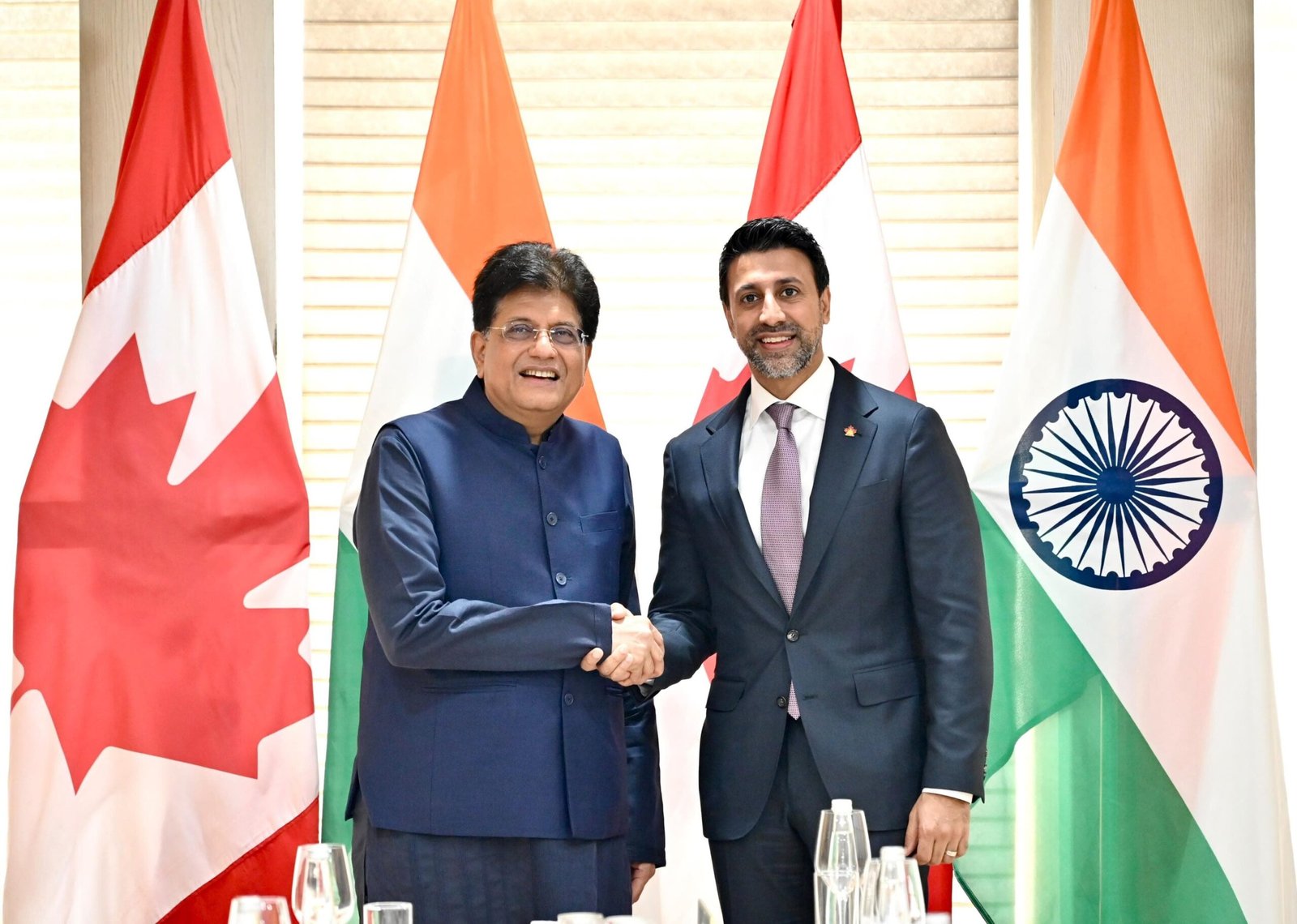
India and Canada are seeking to give their economic relationship fresh momentum, with Commerce and Industry Minister Piyush Goyal holding discussions with Canadian Minister of International Trade Maninder Sidhu to advance negotiations for a proposed Comprehensive Economic Partnership Agreement (CEPA).
In a post on X, Goyal said the discussions focused on advancing negotiations for a “balanced, mutually beneficial agreement” that would enhance market access and unlock new trade and investment opportunities.
“Confident that the CEPA will provide fresh momentum to bilateral trade and strengthen our economic partnership for shared prosperity,” Goyal said, signaling New Delhi’s interest in moving the negotiations forward.
The ministerial engagement comes as both countries seek to expand commercial cooperation despite diplomatic tensions that have complicated bilateral ties. Whether the renewed contact translates into substantive negotiating progress will depend on the willingness of both sides to resolve differences over market access, sensitive sectors and the terms governing cross-border business.
For India, a trade agreement with Canada could improve access for pharmaceuticals, textiles, chemicals, engineering goods and information technology services, while creating a more predictable framework for investment and the movement of skilled professionals. Canadian businesses, meanwhile, are looking for greater access to India’s large consumer market for agricultural commodities, fertilizers, energy products, critical minerals and education-related services.
The potential gains extend beyond merchandise trade. Canadian pension funds and other institutional investors have substantial interests in India’s infrastructure and financial sectors. A comprehensive agreement could strengthen investor confidence by clarifying commercial rules and improving market access, although it would not eliminate regulatory and project-specific risks.
Market access remains the central test
The challenge for negotiators will be to turn broad commitments into specific concessions that businesses can use. Tariff reductions alone may not be sufficient to produce a substantial expansion in trade if regulatory barriers, services restrictions and other obstacles remain unresolved.
Agriculture is likely to be among the sensitive areas. Canada has an interest in expanding exports of pulses, including lentils, and potash, a key fertilizer input. India, however, will seek to protect sensitive domestic agricultural interests while securing commercially meaningful concessions for its own exporters.
Services and professional mobility are also important to India. Better access for Indian technology companies and skilled workers could broaden the benefits of a deal beyond traditional goods trade, while Canadian firms would seek clearer and more predictable conditions for operating in India.
The proposed CEPA has previously been considered alongside the possibility of an interim Early Progress Trade Agreement, which could allow the two sides to secure selected benefits before concluding a comprehensive pact. The latest discussions, however, do not by themselves establish a timetable for concluding either arrangement.
The scale of existing trade underscores the room for expansion, although estimates vary depending on the reporting period and whether goods alone or goods and services are included. For two economies with complementary resource, technology and market needs, the opportunity lies in converting that potential into sustained commercial flows.
Diplomatic reset meets economic pragmatism
The broader significance of the engagement is that both governments are keeping economic cooperation on the agenda despite strains in their political relationship. A trade agreement could provide businesses with greater certainty and create incentives for deeper commercial links, but negotiations will require sustained official engagement and compromises on difficult issues.
The next indicators to watch are whether the two sides establish a clearer negotiating schedule, identify priority areas for early agreement and begin resolving sector-specific differences.
Goyal’s statement conveys India’s intent to move the process forward. The more consequential measure of progress, however, will be whether that intent produces concrete commitments on tariffs, services, investment and regulatory access.
For India and Canada, the test is not simply whether they can revive negotiations, but whether they can build a trade framework resilient enough to deliver economic gains even when diplomatic relations face renewed pressure.
Related posts:
 OFIC Urges Canada to Fast-Track CEPA Talks as British Columbia Trade Mission Arrives in India
 India, Canada Move to Fast-Track Trade Pact as New Delhi Pushes Strategic Collaboration in Critical Minerals, Clean Energy
 Canada Confronts Trade War and Domestic Strains
 Piyush Goyal’s Canada Visit Signals Renewed India-Canada Trade Push
