Join WhatsApp Channel


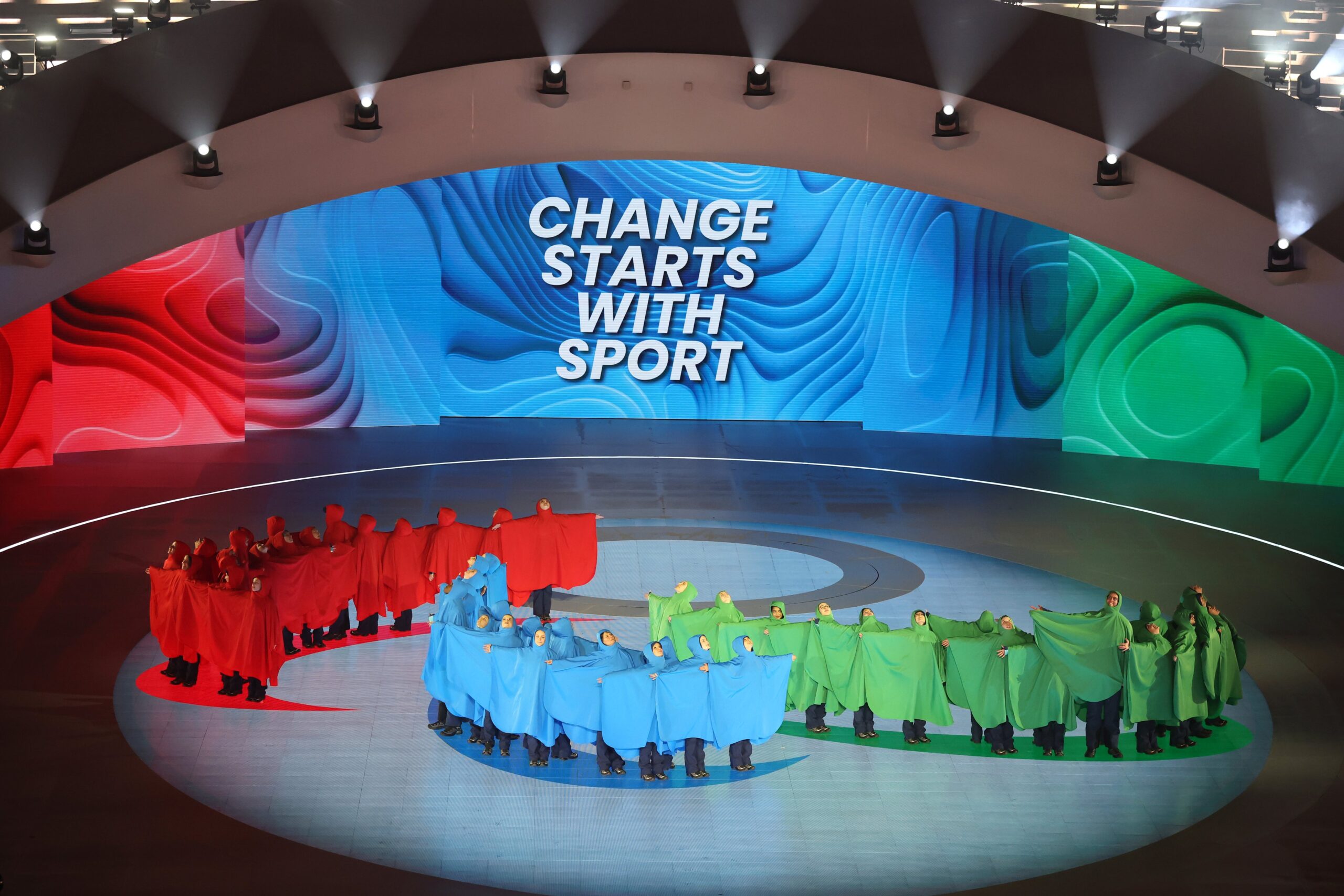
The Ukrainian-led boycott of the Athletes Parade cast a shadow over the opening of the Paralympic Games as International Paralympic Committee (IPC) President Andrew Parsons spoke about the transformative power of sport and Giovanni Malagò described the moment as a “dramatic turning point” for the Olympic movement amid growing political tensions.
The Paralympics opened shortly after the conclusion of the Winter Olympics in Italy, held at the same venues following a three-week Olympic program. The ceremony marked the start of the Paralympic Games as the movement celebrates its 50th anniversary, though the occasion unfolded against an intense international debate surrounding the participation of Russia and Belarus under their national symbols.
Italy, the host nation, found itself navigating a sensitive situation after the IPC permitted both Russia and Belarus to return to the Games with their flags and anthems. The decision prompted Ukraine and several other nations to boycott the opening ceremony parade.
The opening ceremony, titled “Life in Motion,” was designed as a tribute to the transformative nature of life. The production featured high-profile performances but unfolded in a more subdued atmosphere compared to the Winter Olympic ceremony, reflecting the smaller number of athletes and sports traditionally associated with the Paralympic Games.
Participation in the parade was further reduced by the boycott. Several countries chose to protest the IPC’s decision to allow Russian and Belarusian national symbols during the competition. The controversy dates back to Russia’s 2022 invasion of Ukraine, which Belarus supported, leading to sanctions and bans in international sport. While the International Olympic Committee maintained restrictions during the Milano Cortina 2026 Winter Olympics, the IPC decided to lift its ban ahead of the Paralympic Games.
As a result, the opening ceremony at the historic Colosseum unfolded under a political cloud that overshadowed the celebration.
Despite the tensions, the ceremony itself featured elaborate and visually striking elements. The program included electronic music performances, vibrant lighting displays, precision drumming, a theatrical interpretation of Romeo and Juliet, and a message transmitted from the International Space Station. Yet the broader geopolitical context remained difficult to ignore as casualties from the war in Ukraine continue to mount.
The boycott also affected institutional participation. Czechia, Estonia, Finland, Latvia, Lithuania, Poland, and Germany declined to take part in the parade of nations. The absence of several delegations left volunteers carrying their flags, with blank screens displayed behind them in place of athletes.
The IPC had allowed a maximum of two team members to attend in Verona, with the remainder participating virtually through streaming connections. However, none of the protesting delegations appeared in either format.
In contrast, Russia and Belarus marched in the parade for the first time in more than a decade. Their appearance drew a mixed response from the crowd, with audible jeers accompanying scattered applause.
Shortly afterward, Giovanni Malagò, president of the Milano Cortina 2026 Organizing Committee, acknowledged the broader context in his opening remarks.
“Of course, we cannot ignore that these Games are taking place in an increasingly and profoundly divided world, torn apart by wars, grief, and suffering, at one of the most dramatic turning points of our time. For this very reason, the message of peace, inclusion, and solidarity at the heart of the Paralympic Movement is more meaningful and important than ever,” the Italian official stated.
According to the official “The Paralympic Games represented an unusual opportunity to transform the world we live in and power inclusion. We ask that youth carry the torch of change and create more opportunities for disabled people. We can’t change the world in 10 days, but we can light a spark in this magnificent celebration of sport. We will be judged by the legacy we leave behind.”
Iran also did not display its flag during the ceremony. The country’s only qualified athlete, para cross-country skier Aboulfazl Khatibi, withdrew at the last minute citing travel complications linked to the ongoing conflict involving the United States in the region and restrictions affecting the Middle East.
Parsons, addressing the ceremony, largely avoided direct reference to the boycott but emphasized the broader values of the Paralympic movement.
“Tonight, I want to reflect on something profound: how the efforts of a few can shape the destiny of many. How small numbers, small actions, and small moments can change the course of history. Almost 80 years ago, Sir Ludwig Guttmann sparked a peaceful revolution. Today the Paralympic Games are the most transformational sports event on earth,” the Brazilian said.
Four years ago, he reflected, “I said I was horrified at what was happening in the world. Unfortunately, the situation has not improved. In a world where some countries are better known by the names of their leaders, I prefer to know countries by the names of their athletes. Sport offers the world another way forward, another perspective.”
Here at Milano Cortina 2026, “differences” are not “reasons” for separation but “sources” of “strength.” Here, nations gather as neighbors, and athletes compete with ferocity and fairness, united in respect for one another and the rules of sport, he stressed. “The Paralympic Village is a living model of what society can and should be: free from politics, it is a place where everyone is welcome, everyone belongs, and everyone is valued. A barrier-free community where potential is realized and opportunity is open to all. And, tonight in this ancient arena—where gladiators once stood—we welcome a new generation of heroes,” he noted.
The Games officially began with the lighting of simultaneous Paralympic cauldrons in Milan and Cortina d’Ampezzo. Italian President Sergio Mattarella formally declared the Paralympic Games open.
The ceremony also highlighted Italy’s cultural heritage. Held at the Verona Arena, a UNESCO World Heritage site, the opening marked the first Paralympic ceremony staged at such a historic venue, providing a picturesque backdrop as the Games were introduced to the world.
Related posts:
 Politics Resurface at Milano Cortina 2026 Paralympics as Russia and Belarus Readmitted Under National Flags
 Milano-Cortina 2026 Opens with Dual Cauldrons, Historic Venues, and a Global Call for Respect
 Indian Hockey’s Road to LA 2028: Tejinder Singh Aujla on Qualification Challenges, Transition, and Governance
 Veteran Sports Journalists Honored at AIPS Ceremony Ahead of Milano Cortina 2026 Opening