Join WhatsApp Channel

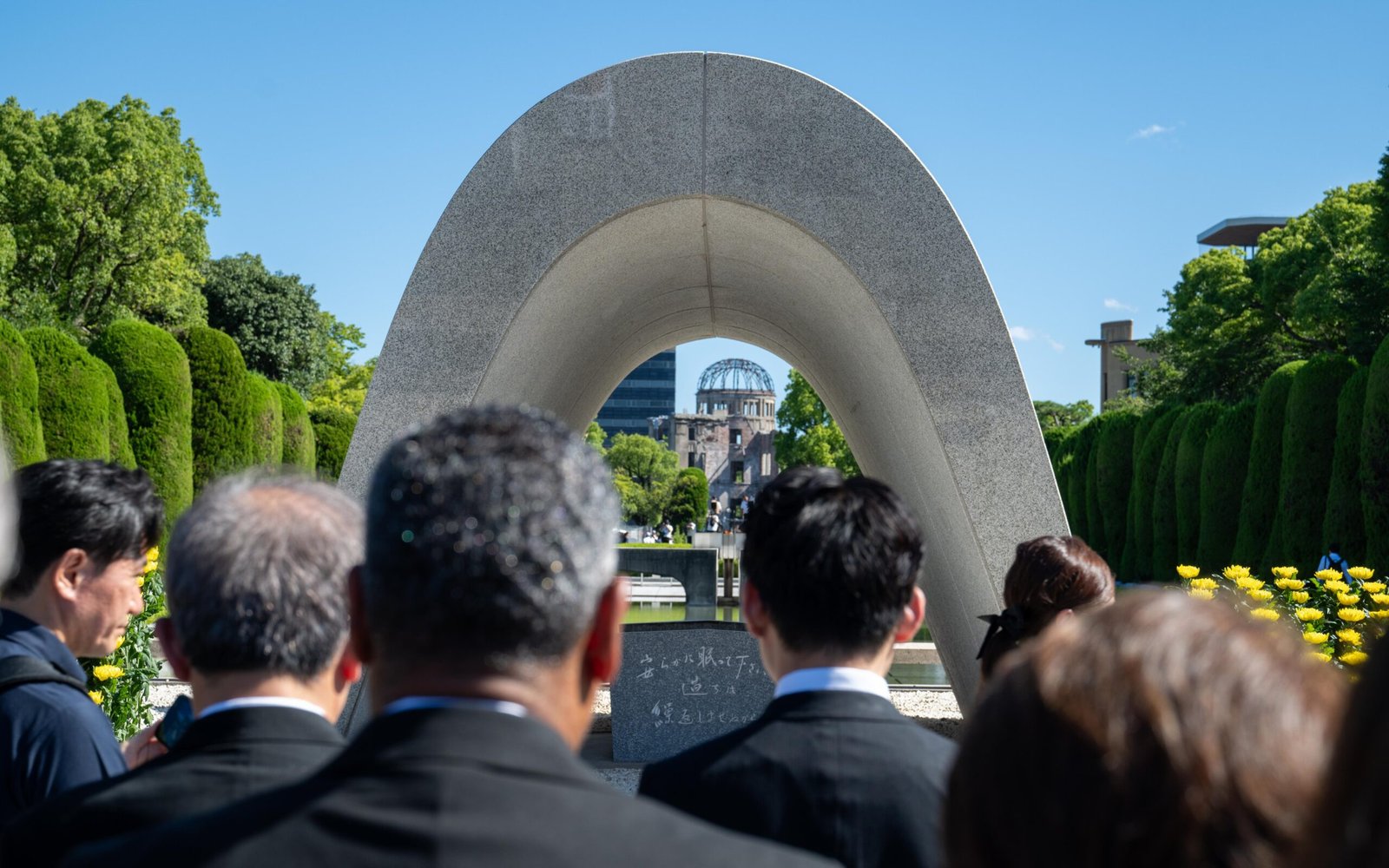
Japan and the world observe the 81st anniversary of the horrific atomic bombings of Hiroshima and Nagasaki. In a span of three days, between August 6 and 9, some 200,000 souls perished but the Little Boy and the Fat Man continue to haunt and remind the global community of the dangers of nuclear weapons, whether they are of uranium or plutonium base of hardly any significance or relevance. One of the rationales for the use of atomic weapons was to destroy military garrisons but most of the casualties were civilians.
History offers powerful lessons, reminders and questions to the victors and the vanquished. In the case of the closing stages of the Pacific War, there are still heavily debated issues: was the use of the first atomic weapon really necessary given that weeks of the fire bombings of Tokyo had already a telling effect on the Japanese military machine? More important, was the bombing of Nagasaki justifiable given that all indications were that Emperor Hirohito was getting ready to surrender and that the United States had already broken the secret code.
Till this day there is a compelling view that the bombing of Nagasaki was more of a message to the Soviet Union that was entering the Pacific War. Ironic indeed of conveying a message to Moscow by unleashing death and destruction on Japan. Those justifying the use of atomic bombs have argued that Japan’s surrender had indeed saved thousands of allied and Japanese lives from a land invasion. But academics have maintained that the Soviet Union’s intentions was a bigger catalyst for surrender than the a-bombs. Also, that if allies had not insisted on the unconditional surrender and allowing the Emperor to stay on could have ended the war sooner.
Eight decades later, the tragedies that played out on August 6 and 9 go much beyond portrayals in textbooks or ceremonies of observance. It is also much beyond an annual ritual to talk of the cruelties of the battlefield or war crimes. And there have been legal luminaries like Telford Taylor who have pointed out the glaring double standards of justice in Nuremberg and Vietnam: An American Tragedy: German and Japanese Generals sent to the gallows for what their foot soldiers did miles away; and still turning a blind eye to willful acts of mass killing and genocide in Vietnam. “Somehow we failed ourselves to learn the lessons we undertook to teach at Nuremberg, and that failure is today’s American tragedy,” the U.S. Chief Counsel at Nuremberg concludes in his masterpiece.
But Hiroshima and Nagasaki have another legacy as well: what started off as an arsenal of just two is now pegged at anywhere between 12,000 and 16,000 warheads, principally in the hands of the United States and Russia but also scattered around other “official” nuclear states that would include North Korea, India and Pakistan. At one time policy makers shuddered even talking about nuclear weapons, much less using them. But that is not the case in contemporary international relations where civilian policy makers and military brass hats freely go around talking not just of possessing but use in tactical and theatrical scenarios. The so-called rational actors are mincing no words in their threats to use, leaving the field open to amateurs.
There is yet another kind of global competition in the making—the race for a nuclear program which starts off on a pious civilian note before taking on the dangerous weaponization through the enrichment process. Today, the United States is hell bent on seeing that Iran’s nuclear program does not turn into a bomb for which only Israel is the intended destination. At the same time there is the talk of Washington getting involved in a civilian nuclear program with Saudi Arabia that has worried the non-proliferation community for lack of tough safeguards and the involvement of the International Atomic Energy Agency (IAEA). Saudi Arabia has been candid enough to say that its civilian nuclear program will maintain its status only as long as Iran stays away from a n-weapon; if Tehran gets its hand on one, Riyadh will not be too far behind. But for all the noise on Iran, there is hardly a murmur about Israel, seen generally as an undeclared nuclear weapons state.
Hiroshima and Nagasaki are today booming cities of Japan, but where generations have carried the pain of 1945 as also the burden of sharing experiences down the line. Eighty-odd years later and at a time when even the thought of nuclear weapons was even unthinkable, that seems to be no longer the case. Post war Japan has built itself to one of the powerhouses not just in Asia but in the international system; but in the process policy makers have also realized that foreign policy realities are such that there is a need to get beyond a “cheque book” diplomacy.
The international environment surrounding Japan is seen to be hostile with nuclear powers posing a threat to national security. A new Japan appears ready to face challenges and even if it means to take on that difficult path of changing its pacifist Constitution to meet the emerging challenges. Domestic discussions on nuclear weapons, and whether the country should pursue that path, are no longer considered taboo, however painful the memories may be.
Disclaimer: The opinions and views expressed in this article/column are those of the author(s) and do not necessarily reflect the views or positions of South Asian Herald.