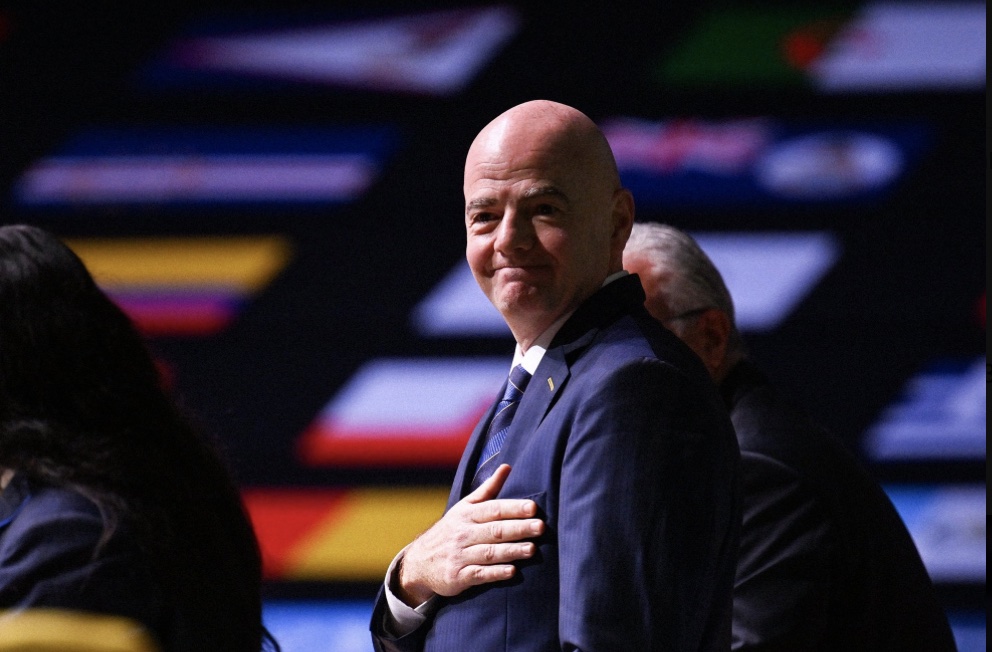
As opposition mounted to FIFA President Gianni Infantino’s proposal to establish the FIFA Forward Enterprise to oversee the organization’s major competitions, including the FIFA World Cup, Infantino announced that the “proposal will not proceed.”
The proposal, unveiled shortly after the conclusion of the FIFA World Cup 2026, faced growing resistance from continental confederations and national football associations. Critics raised concerns about the plan’s structure and its potential long-term implications for FIFA’s governance.
The Union of European Football Associations (UEFA), which has frequently disagreed with Infantino on governance issues, was among the first to publicly oppose the proposal. Reports indicated that UEFA had considered boycotting FIFA competitions, including future World Cups, if the plan moved forward.
The Confederation of North, Central America and Caribbean Association Football (Concacaf) also opposed the proposal, while the Asian Football Confederation (AFC) reportedly expressed reservations.
Advertisement
FIFA had proposed financial incentives for member associations in an effort to secure support for the initiative. However, the proposal failed to gain broad backing, with many continental and national federations reportedly questioning its purpose and expressing concerns that it could pave the way for Infantino to assume a leadership role in the new entity after his current term ends in 2031.
The proposal emerged against the backdrop of several controversies surrounding the FIFA World Cup 2026.
One of the most widely discussed incidents involved President Donald Trump’s public comments on the Folarin Balogun red card controversy. The tournament also saw protests and appeals over several officiating decisions, particularly those involving the Video Assistant Referee (VAR) system.
Some participating nations, including Iran, also raised concerns about what they described as discriminatory treatment during the tournament. In addition, several national football associations expressed dissatisfaction over visa denials affecting officials, players, and spectators by two of the tournament’s co-hosts, the United States and Canada.
Following the tournament, Infantino announced plans to create the FIFA Forward Enterprise, a corporate entity that would oversee FIFA’s major competitions, including the World Cup.
The proposal drew strong opposition from both continental confederations and national football associations. Although it was scheduled to be presented to the FIFA Council in September, Infantino ultimately withdrew the initiative.
In a statement Infantino said the FIFA Forward Enterprise project was conceived to strengthen FIFA’s member associations and support the growth of football worldwide, particularly in countries where additional assistance is needed. He emphasized that the initiative was always intended to move forward only with the backing of a majority of FIFA’s member associations and following consultations with the FIFA Council, confederations, and other stakeholders.
After considering the feedback received, Infantino acknowledged that the proposal had created divisions that outweighed its intended benefits. “Having listened carefully to all the views, it has become clear that the project has created divisions… that… are no longer in the interest of the objective set out in the first place,” he said.
He reiterated that FIFA’s priority remains unity within the global football community. “Our purpose has always been, and will always be, to unite and improve,” Infantino said.
Announcing the decision to withdraw the initiative, he stated, “As a result, this proposal will not proceed.”
Looking ahead, Infantino said he plans to engage with stakeholders to rebuild consensus and continue advancing the sport globally. “I intend to bring all interested parties back together in the coming days and weeks… and to continue growing football everywhere, particularly in those countries that mostly need our support,” he said.