Join WhatsApp Channel


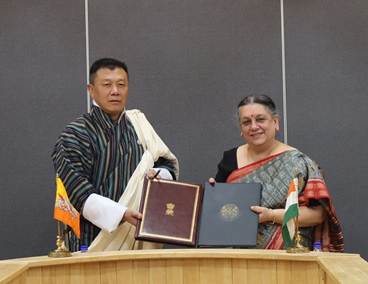
India and Bhutan are moving to establish a new cross-border remittance corridor anchored in their postal networks, with a planned integration of the Universal Postal Union (UPU) PosTransfer platform and India’s Unified Payments Interface (UPI), in what officials describe as a significant step towards low-cost, real-time international money transfers.
The initiative, emerging as the centerpiece of a broader postal cooperation pact signed during a high-level Indian delegation’s visit to Bhutan from March 19 to 22, is expected to reshape how individuals and small businesses move money across the India–Bhutan border—particularly in areas where formal banking infrastructure remains thin.
At its core, the system seeks to bridge two very different but complementary networks: the UPU’s global postal remittance backbone and India’s rapidly scaled UPI ecosystem, which processes billions of transactions monthly. By linking the two, authorities aim to create a hybrid channel where users can initiate cross-border transfers through familiar domestic interfaces—whether a mobile-based UPI app or a local post office counter—and have funds delivered seamlessly on the other side.
Lower costs, wider reach
Officials involved in the discussions said the UPU-UPI linkage could sharply reduce transaction costs and settlement times compared to conventional remittance channels such as bank wires or money transfer operators, which often involve multiple intermediaries and higher fees.
For countries like Bhutan, where financial inclusion has improved but access gaps persist in remote regions, the postal network offers a ready-made last-mile delivery system. India, with its expansive digital payments infrastructure layered over a vast postal system, brings scale and technological maturity to the partnership.

The result, policymakers argue, is a model that combines “physical reach with digital speed”—a blend particularly relevant for migrant workers, cross-border traders, students and families who rely on small-value, frequent transfers.
From informal flows to formal rails
The new corridor is also expected to formalize a segment of cross-border financial flows that often operate through informal or cash-based channels. By providing a regulated, trackable and affordable alternative, the system could improve transparency while reducing risks associated with unregulated transfers.
Officials noted that small traders operating along the India–Bhutan border stand to benefit significantly, as quicker settlement cycles can ease working capital pressures and support smoother trade flows.
Postal networks reimagined as financial rails
Beyond the immediate remittance use case, the initiative signals a broader shift in how postal systems are being repositioned—from traditional mail carriers to multi-service digital and financial platforms.
Under the cooperation framework, India has offered to share its experience in postal financial services, including savings instruments, payment services and last-mile banking delivery. This aligns with a wider policy push to leverage public infrastructure for financial inclusion, especially in rural and underserved geographies.
The agreement also includes provisions for capacity building, with Bhutanese postal officials set to undergo training at Indian institutions such as the Rafi Ahmed Kidwai National Postal Academy, focusing on digital systems, operations and emerging technologies.
Technology backbone and future scalability
In parallel, both countries will collaborate on technology integration, drawing on India Post’s evolving digital ecosystem, including initiatives such as digital addressing systems and logistics optimization tools. These are expected to support the smooth rollout and scalability of the remittance platform.
While initially bilateral, the model could have wider implications. If successful, the UPU-UPI integration may serve as a template for similar cross-border payment corridors involving other countries connected through the UPU network, potentially expanding India’s digital public infrastructure footprint beyond its immediate neighborhood.
Deepening economic integration
For India and Bhutan, the remittance corridor represents more than a technical upgrade—it reflects a deeper alignment of financial systems and a shared effort to modernize public service delivery.
Once operational, officials said, the platform is expected to strengthen economic linkages, enhance financial resilience at the household level and reinforce the role of interoperable digital infrastructure in regional integration.
In a landscape where cross-border payments are often slow and expensive, the India–Bhutan postal remittance initiative signals a shift towards more inclusive, accessible and technology-driven financial connectivity.