 Join WhatsApp Channel


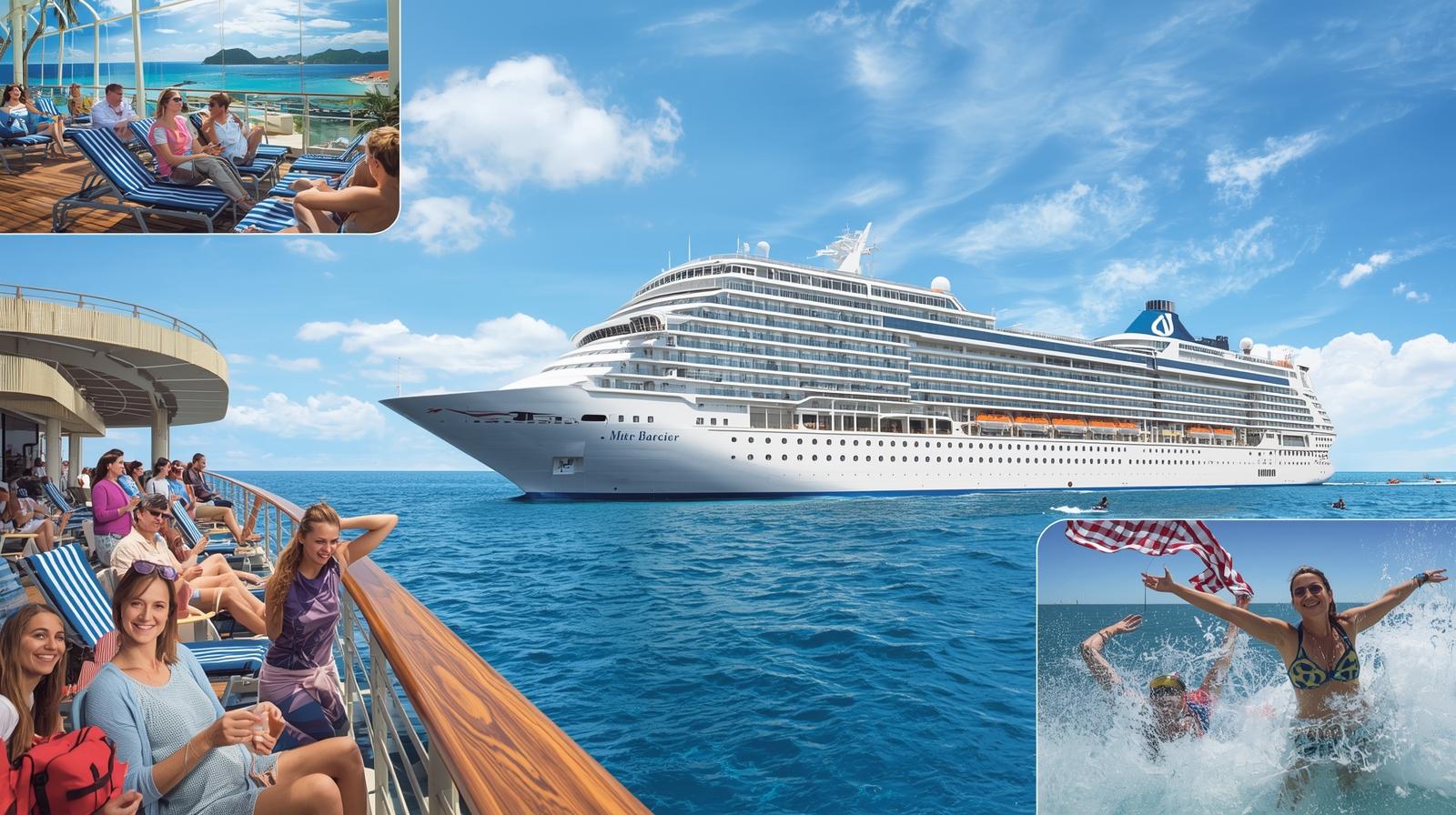
India is steering into deep waters with a calculated bet: turning its vast 7,500-km coastline into a $5.4 billion cruise tourism hub by 2047. The goal, set under the government’s Maritime Amrit Kaal Vision (MAKV 2047), positions cruise tourism not as a niche luxury, but as a strategic lever for economic diversification, foreign investment, and blue economy expansion.
The India Maritime Report 2025–26, released by the Centre for Maritime Economy and Connectivity (CMEC) under the Research and Information System for Developing Countries (RIS), identifies the cruise sector as a “high-growth maritime frontier” alongside port modernization and green shipping. It projects over ₹45,000 crore ($5.4 billion) in cumulative investments by 2047—an ambitious sum that, if realized, could reshape India’s coastal economies and global maritime standing.
Cruise Tourism: From Margins to Mainstream
Passenger traffic in India’s cruise sector climbed to 471,000 in FY2023–24, marking a strong post-pandemic rebound. By 2029, the number is expected to double to over a million under the government’s Cruise Bharat Mission. Revenue projections are equally buoyant: ₹35,500 crore ($4.2 billion) annually by 2030, supporting roughly 250,000 direct and indirect jobs across ports, hotels, and coastal supply chains.
The numbers signal a shift in India’s maritime calculus—from moving cargo to moving people. Cruise tourism, the report argues, is not just about leisure. It’s a multiplier: feeding ancillary sectors like hospitality, handicrafts, and transport, while also catalyzing urban renewal in coastal towns.
“Cruise tourism blends India’s maritime potential with its tourism advantage. It’s about building coastal economies and livelihoods,” said Prof. Sachin Kumar Sharma, Director General of RIS.
Ports as Gateways: The Coastal Reboot
Five major ports—Mumbai, Kochi, Chennai, Goa, and Visakhapatnam—are being developed into full-fledged cruise hubs. The ₹10,000 crore ($1.2 billion) port infrastructure plan under the Ministry of Ports, Shipping and Waterways (MoPSW) includes new terminals, berths, and passenger amenities.
The Mumbai International Cruise Terminal, nearing completion, will anchor the west coast circuit, while Kochi and Chennai are being redesigned to connect India with Sri Lanka, the Maldives, and Southeast Asia. Another ₹35,000 crore ($4.2 billion) is earmarked for expanding India’s domestic fleet and attracting private cruise operators—underscoring a public-private pivot.
This dual investment strategy—hardware (ports, vessels) and software (policy, connectivity)—is modeled after Singapore and Dubai, both of which transformed into cruise homeporting giants within a decade.
Cruise Bharat: The Domestic Circuit Strategy
Launched in 2024, Cruise Bharat aims to create interconnected ocean and river cruise circuits that link heritage, religious, and eco-tourism hubs. Coastal routes will span Mumbai, Goa, Mangalore, Kochi, and Lakshadweep, while river routes will flow along the Ganga, Brahmaputra, and Mahanadi under the Jal Marg Vikas and Sagarmala projects.
Already, ₹6,434 crore ($754 million) has been invested in the 111 National Waterways, expanding navigable routes to nearly 4,900 km. The goal is to make Indian ports both origin and destination—homeporting foreign liners and hosting a robust domestic fleet.
This approach also addresses India’s chronic tourism imbalance: while millions of Indians travel abroad for cruises, few international travelers see India as a cruise destination. Domestic circuits, if marketed well, could bridge that perception gap.
Private Capital and Global Partnerships
Despite the optimism, India’s cruise footprint remains modest—accounting for less than 0.5% of the global market. The report calls for aggressive private and foreign investment through Public–Private Partnerships (PPPs) to fund vessels, terminals, and training facilities.
Commodore Shishir Shrotriya, Head of CMEC at RIS, said: “India needs targeted incentives—tax breaks, land leasing, and a simplified clearance regime through the Maritime Single Window—to make the cruise sector commercially viable.”
Global operators such as Royal Caribbean, MSC, and Costa Cruises have expressed early interest, but scaling up will depend on regulatory predictability and domestic shipbuilding capacity. Indigenous passenger vessel construction, the report notes, could become a new industrial segment—combining Make in India with maritime services export.
Sustainability and the Blue Economy Lens
The report situates cruise tourism squarely within India’s blue economy strategy, emphasizing sustainability and community integration. Cruise expansion, it argues, must coexist with green shipping mandates—using hydrogen or LNG-powered vessels, enforcing Harit Sagar environmental guidelines, and equipping ports with renewable-powered systems and smart digital infrastructure.
In essence, India’s cruise push is being packaged as a “green growth” story—one that reduces emissions while empowering local communities. Yet, experts warn of ecological risks: overtourism, waste management challenges, and habitat degradation. Balancing growth with governance will be critical to sustain public and investor confidence.
The ASEAN Connection: Expanding India’s Maritime Reach
India’s cruise ambitions extend beyond its shores. The ASEAN–India Comprehensive Strategic Partnership designates 2026 as the ASEAN–India Maritime Year, and a joint action plan is being prepared to link Indian cruise circuits with Southeast Asian routes.
“Integrating India’s cruise destinations with ASEAN circuits will expand passenger mobility and attract cross-border investment in tourism infrastructure,” said Prof. Prabir De, the report’s lead editor.
This fits into India’s broader Indo-Pacific strategy—where sea lanes, not just trade routes, define regional influence. Cruise connectivity could serve as soft maritime diplomacy, blending economics with culture and geopolitics.
Charting the Course Ahead
The momentum is unmistakable. With rising disposable incomes, post-pandemic travel revival, and a coordinated government push, India’s cruise tourism is no longer an afterthought in maritime policy. Yet, execution remains the test. Infrastructure delays, fragmented regulation, and environmental scrutiny could slow the voyage.
Still, the signal is clear: as India hosts Maritime Week 2025, the cruise sector has become the most visible face of its “One Ocean, One Maritime Vision”—a bid to align global tourism flows with sustainable coastal prosperity.
If India can navigate between ambition and accountability, its cruise story could mark not just a tourism milestone—but the emergence of a new maritime economy anchored in the blue horizon.
Related posts:
 Bangladesh’s $67 B Budget Focuses on Inflation Control and Renewable Energy, Faces IMF and Transparency Hurdles
 India Stresses Maritime Security and Anti-Terrorism as Pillars of National Strategy
 From a 100 to a 600! 20 Interesting Facts About the 100-Crore Club
 India’s Travel Sector to Hit $500 Billion by 2035: WTTC
