 Join WhatsApp Channel


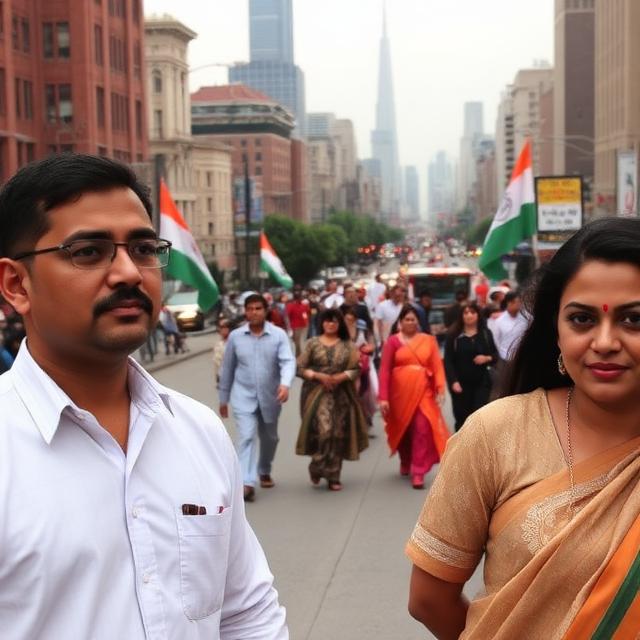
India is attempting to run a 21st-century foreign policy on what remains, by global standards, a modest diplomatic budget—lean in size but increasingly stretched in ambition—leaning heavily on its 32-million-strong diaspora and a widening arc of development assistance to project influence far beyond its borders.
A parliamentary panel’s latest assessment of the Ministry of External Affairs (MEA) outlay for 2026–27—pegged at ₹22,118.97 crore (roughly $2.65 billion)—lays bare this tension: an expanding geopolitical footprint underwritten by limited fiscal muscle, even as New Delhi sharpens both diaspora engagement and aid diplomacy as twin instruments of statecraft.
The numbers, when placed in perspective, are stark. The MEA’s allocation amounts to just 0.41% of the Union Budget and about 0.06% of GDP, a fraction of what major powers typically spend—often between 0.15% and 0.30% of GDP—to sustain global diplomatic networks, development partnerships and strategic outreach.
Yet, within these constraints, the architecture of India’s external engagement is quietly being re-engineered.
Diaspora: from sentiment to strategy
At the heart of this recalibration lies the Indian diaspora—over 32 million people across more than 190 countries—whose role has evolved from cultural linkage to something far more strategic, and arguably, indispensable.
Budget allocations, though relatively small in absolute terms, signal intent. Diaspora engagement programs are allocated about ₹74 crore (≈$8.9 million), while funding for the welfare of overseas Indians has risen sharply to ₹32.5 crore (≈$3.9 million) from ₹22.5 crore (≈$2.7 million) in the revised estimates of the current fiscal.
On paper, these are modest sums. In practice, they underpin a network of interventions—legal aid for distressed workers in the Gulf, emergency evacuations from conflict zones, repatriation support, and scholarships designed to anchor second- and third-generation Indians to their ancestral homeland.
The committee notes that schemes such as the Know India Programme and the Scholarship Programme for Diaspora Children are not merely cultural exercises; they are long-horizon investments in influence. A student who spends a few weeks in India today could well become a policymaker, investor or opinion-shaper abroad tomorrow.
There is, increasingly, a recognition that remittances—already exceeding $100 billion annually—are only one dimension of diaspora capital. Political access, business networks, technology transfer and narrative-building in host societies are becoming equally critical.
Still, a paradox persists: while the diaspora is central to India’s soft power projection, the financial outlay dedicated to engaging it remains disproportionately small, raising questions about scalability in an era of intensifying global competition for influence.
Aid diplomacy: widening reach, shifting priorities
If the diaspora represents India’s distributed strength, development assistance is its structured outreach—and here, too, the numbers tell a story of expansion, recalibration and selective restraint.
Under the broad head of “Technical and Economic Cooperation with Other Countries,” India continues to fund projects across South Asia, Africa, Latin America, Central Asia and the Indo-Pacific, with allocations covering infrastructure, capacity building, digital systems and climate-linked initiatives.
Neighborhood countries—Bangladesh, Bhutan, Nepal, Sri Lanka, Maldives and Myanmar—remain central to this effort, though allocations have shifted in response to evolving political and economic conditions.
For instance, the report flags a reduction in allocations to Bangladesh and Myanmar in 2026–27, a move attributed to “internal conditions”—a phrase that, while bureaucratically understated, reflects the reality that aid flows are now tightly calibrated to geopolitical risk, governance stability and project viability.
At the same time, new priorities are emerging. A dedicated outlay for Pacific Island countries signals India’s intent to expand its Indo-Pacific presence, while a newly introduced category—“Aid to Tech Infrastructure”—points to a shift toward exporting digital public goods, green technologies and small-scale enterprise models.
This is aid with a strategic edge: less about cheque-book diplomacy, more about embedding India into the development trajectories of partner countries.
In recent years, assistance to countries such as Maldives, Mauritius and Nepal has supported infrastructure, energy and connectivity projects, while multilateral contributions have also risen, reinforcing India’s positioning as a voice of the Global South.
A global footprint on a constrained budget
The breadth of India’s external commitments is striking. The MEA now operates 231 missions and posts worldwide, manages complex evacuation operations, supports diaspora welfare across continents, and finances development partnerships in dozens of countries.
And yet, the fiscal envelope remains tight.
The committee notes that while the ministry’s budget utilization has been consistently high—often exceeding 95%—this efficiency masks structural strain. Projects span multiple jurisdictions, currencies fluctuate, and timelines are frequently disrupted by local political or logistical challenges.
Even more telling is the persistent gap between the ministry’s projected requirements and actual allocations, though the difference has narrowed in recent years.
In effect, India is being forced to priorities—choosing where to deepen engagement, where to hold steady, and, occasionally, where to pull back.
The emerging doctrine: influence without excess
Taken together, the report sketches an emerging doctrine of Indian foreign policy—one that seeks to maximize influence without commensurate increases in spending.
Diaspora engagement offers scale without heavy capital outlay. Development assistance, increasingly targeted and thematic, delivers strategic returns without the burden of large, unconditional aid packages. Digital infrastructure exports promise visibility at relatively low cost.
But this model has limits.
As India’s global ambitions expand—whether in the Indo-Pacific, Africa or multilateral forums—the mismatch between aspiration and allocation could become harder to manage. Diplomacy, after all, is not costless; nor is influence infinitely elastic.
For now, New Delhi appears to be betting that networks—of people, partnerships and projects—can compensate for narrower fiscal bandwidth.
It is a bet that has worked, to an extent. The diaspora remains deeply engaged, aid partnerships continue to expand, and India’s global profile has risen.
The question, increasingly, is whether this approach can be sustained as the demands on Indian diplomacy grow sharper, more contested, and significantly more expensive.
Related posts:
 Bangladesh’s $67 B Budget Focuses on Inflation Control and Renewable Energy, Faces IMF and Transparency Hurdles
 Balancing the Ballot and the Budget: States Face Fiscal Strain as Welfare Spend Soars
 India’s Budget 2026: Fiscal Discipline for the Boardroom, Austerity for the Bazaar
 India’s October Trade Slump Deepens as U.S. Tariffs Bite, Imports Surge on Gold Frenzy
