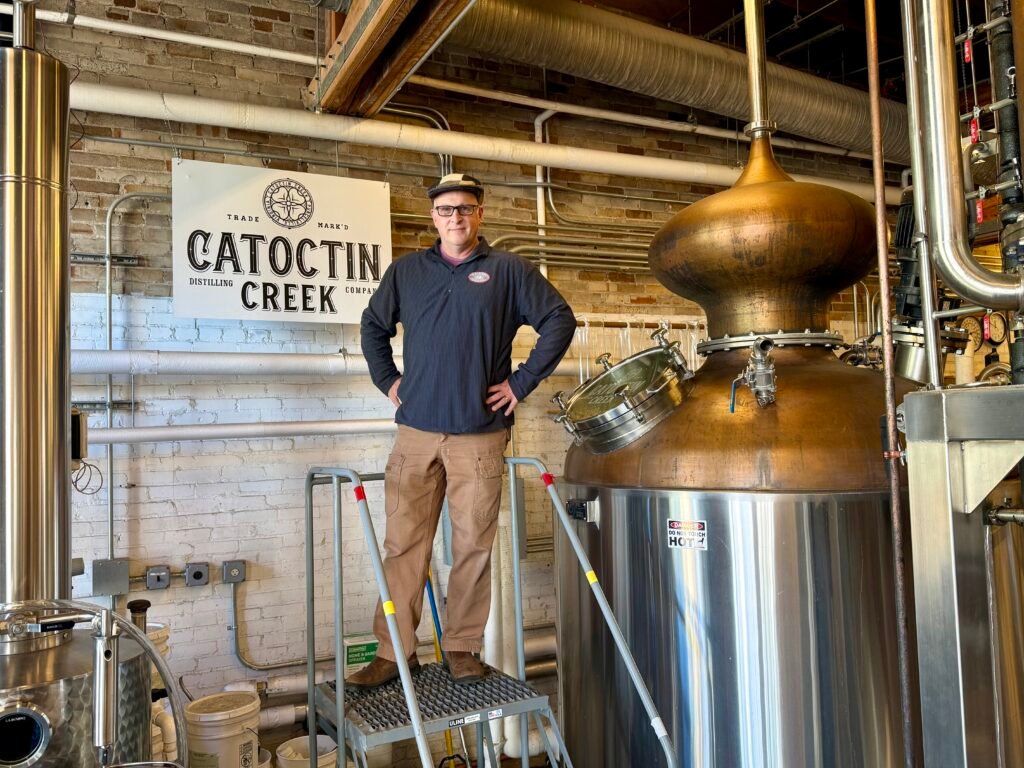
Before Scott Harris co-founded Catoctin Creek Distillery in Purcellville in Virginia with his wife, Becky, in 2009, he spent two decades working in technology and government contracting. His work on U.S. Navy aircraft projects offered a sense of purpose, particularly after the September 11 attacks. But approaching 40, he began considering a different future.
In an exclusive interview with South Asian Herald, Harris discussed the couple’s transition from engineering to distilling, the challenges of building a Virginia spirits business, and the combination of science and artistry behind their whiskey.
“Government contracting taught me a great love of whiskey,” Harris said.
That interest became a recurring feature of family vacations. Trips with Becky and their two sons often included visits to distilleries in Germany, Scotland, and Ireland.
Advertisement
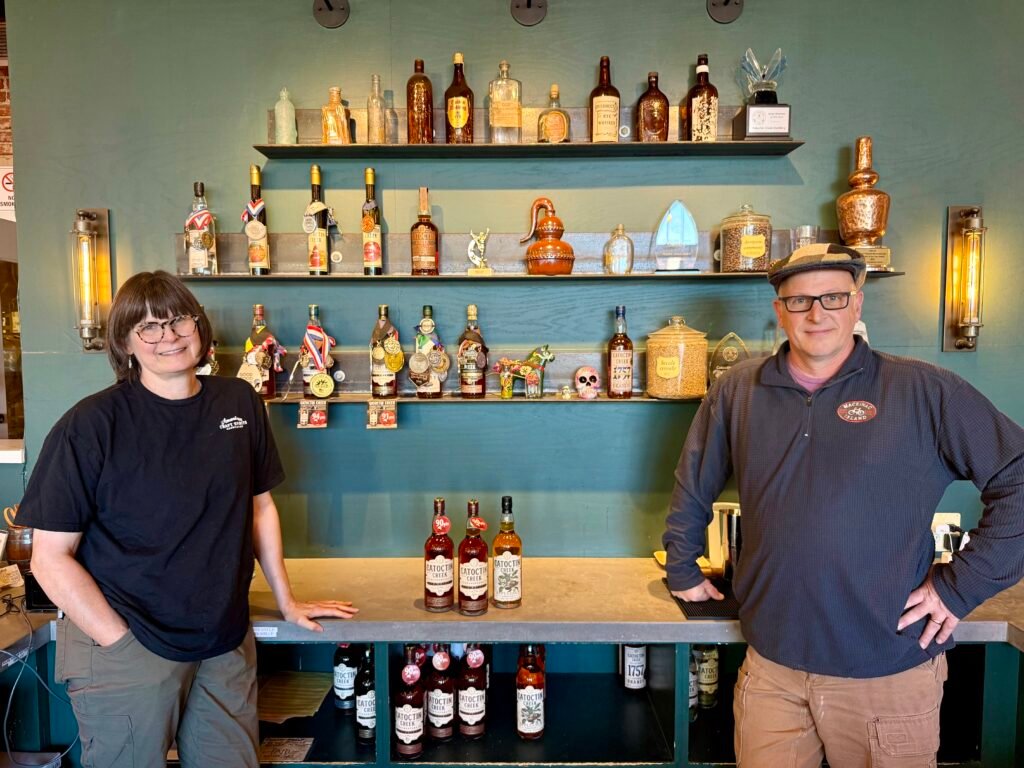
“We had gone to Germany, Scotland, Ireland, and visited distilleries, so I was kind of obsessed,” he said.
Harris earned bachelor’s and master’s degrees in computer science from Georgia Tech in Atlanta and worked in telecommunications systems before entering the spirits industry. He and Becky moved to Virginia in 1997 after marrying in Atlanta.
Becky, a chemical engineer, had worked in industries ranging from petroleum products to contact lenses, including positions with Amoco and CIBA. As she considered returning to school and changing careers, Harris proposed starting a distillery.
His reasoning was straightforward: With her chemical engineering background, she could make the whiskey.
Her response surprised him. “It wasn’t no. It was, ‘I know I could make your whiskey,’” Harris recalled.
The more difficult question was whether they could build a viable business around it. “Then she said, ‘Can you make money making whiskey?’” he said.
Becky challenged him to write a business plan. It was 2008, during the financial crisis, and the couple planned to invest savings accumulated during their engineering careers.
Looking back, Harris said his experience preparing government proposals helped him develop the plan and make the case for financing.
“I realize now, in retrospect, that my job as a government contractor really prepared me well for that,” he said.
After reviewing the proposal, Becky encouraged him to approach a bank. By the end of September 2009, they had secured approval for a $250,000 Small Business Administration loan.
The financing also brought unexpected publicity. Harris posted the news on Twitter, attracting the attention of Wall Street Journal reporter Emily Maltby, who was working on an article about SBA lending.
The couple appeared in the newspaper that October, before they had produced any whiskey.
“We got into The Wall Street Journal in October and hadn’t made a single drop of whiskey yet,” Harris said.
A friend interpreted the coverage as encouragement to proceed. “God wants you to make whiskey,” Harris recalled his friend saying.
The couple began ordering equipment, securing a commercial lease, and completing the licensing process. In January 2010, Harris said, they received federal and state approval and began production.
Their first operation was modest. A single room housed the still, mash tank, and large plastic containers used for fermentation. A small office contained a desk and a bar for storing bottles.
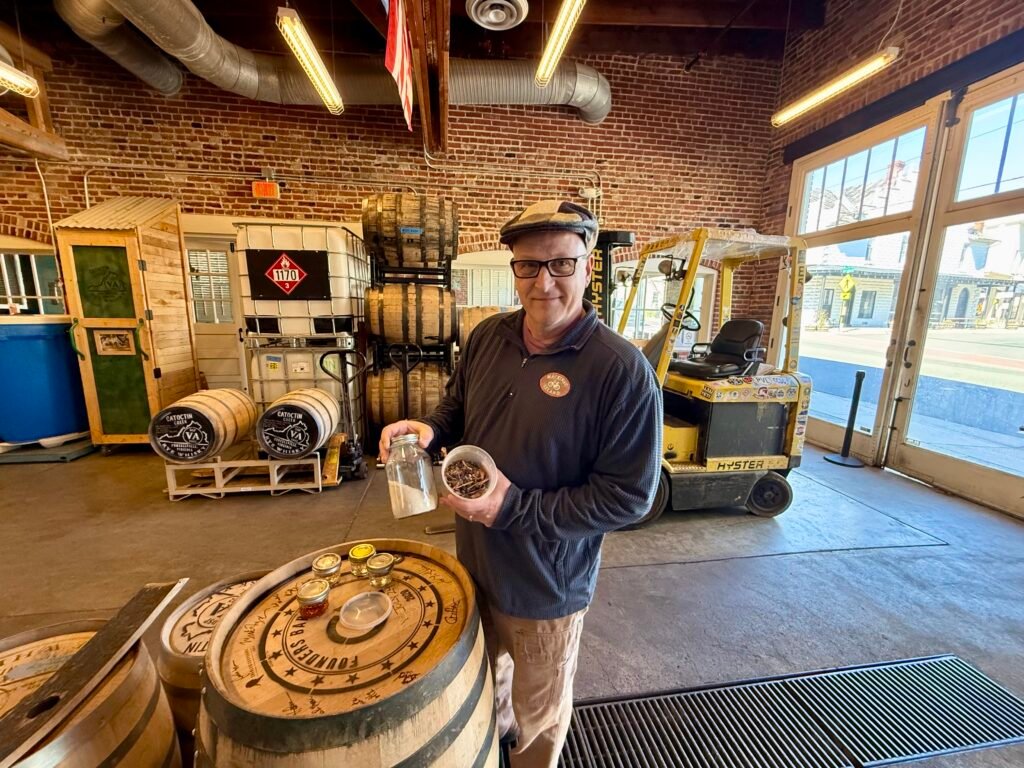
There were no barrels at first because there was nothing yet to age.
Their initial business model was equally limited. According to Harris, Virginia law at the time prevented them from selling bottles directly to visitors or offering tastings at the distillery. Instead, they produced spirits for wholesale distribution through the Virginia Alcoholic Beverage Control system.
“Our entire business plan was just that my wife and I would come and make 50 cases of whiskey a month and send it to the Virginia ABC, and that’s it,” he said. “But then it quickly grew from there.”
Wholesale customers followed in Maryland, Washington, D.C., Tennessee, and New York.
Becky handled production, much of which involved physically demanding work. Without pumps, the couple relied on lifting and pouring buckets.
Harris kept his government contracting job while managing bookkeeping, distribution relationships, sales, marketing, and invoicing at night.
“That’s how we operated for the first three or four years,” he said.
Loudoun County’s established wine tourism soon introduced another opportunity. Visitors planning winery trips began discovering the distillery online and arriving for tours.
Initially, Harris said, the couple took visitors to a local restaurant for tastings and had to purchase their own bottles through the state system to serve them. The arrangement meant losing money on those tastings.
He said subsequent changes in Virginia law allowed the business to charge for tastings and eventually offer cocktails, expanding the experience for visitors who preferred something other than straight whiskey.
Those changes helped the business develop beyond its original wholesale model.
Becky’s engineering experience proved particularly useful as production expanded. Harris said the distillery began as an organic operation, requiring detailed records to track ingredients and products through the supply chain.
The couple established formal procedures even when they were the only employees, anticipating the need to maintain consistency as they hired more people.
“One day, when we have to hire four or five, six more people, we want the process to continue to be the same and the product to continue to be the same,” Harris said.
Becky also gained practical experience working alongside other distillers. While engineering provided a foundation, Harris said making whiskey demanded more than technical knowledge.
“It’s not just a scientific process. There’s also some artistry to it,” he said.
That approach, he said, has helped the distillery reach a varied audience.
Harris described the tasting room’s visitors as diverse in race, ethnicity, and gender, including Indian Americans and other members of Loudoun County’s South Asian communities.
He views whiskey as a discretionary purchase, with the distillery’s appeal resting on flavor, craftsmanship, and a connection to its surroundings.
“Whiskey is not a necessity. It’s a luxury to have it,” he said. “Our appeal across all demographics has always been producing a craft beverage that is unique and rich and flavorful and speaks to the history of the region or the geography of the region that we’re in.”
Harris estimated that the tasting room’s clientele is evenly divided between men and women. He believes Becky’s role as a producer contributes to that balance, both through the products she develops and through customers interested in supporting women in the industry.
Her growing prominence has also changed the company’s marketing.
“When we first started the company, all of our company brochures had us standing together as Scott and Becky, the founders of the company,” he said. “About 10 years ago, they kicked me off the brochure, so now it’s just her on there.”
Rye whiskey remains the focus of Catoctin Creek’s production. Harris said the choice reflects the spirit’s historical connection to Virginia and the couple’s interest in creating products rooted in the region.
“People always ask us why we don’t make a bourbon,” he said.
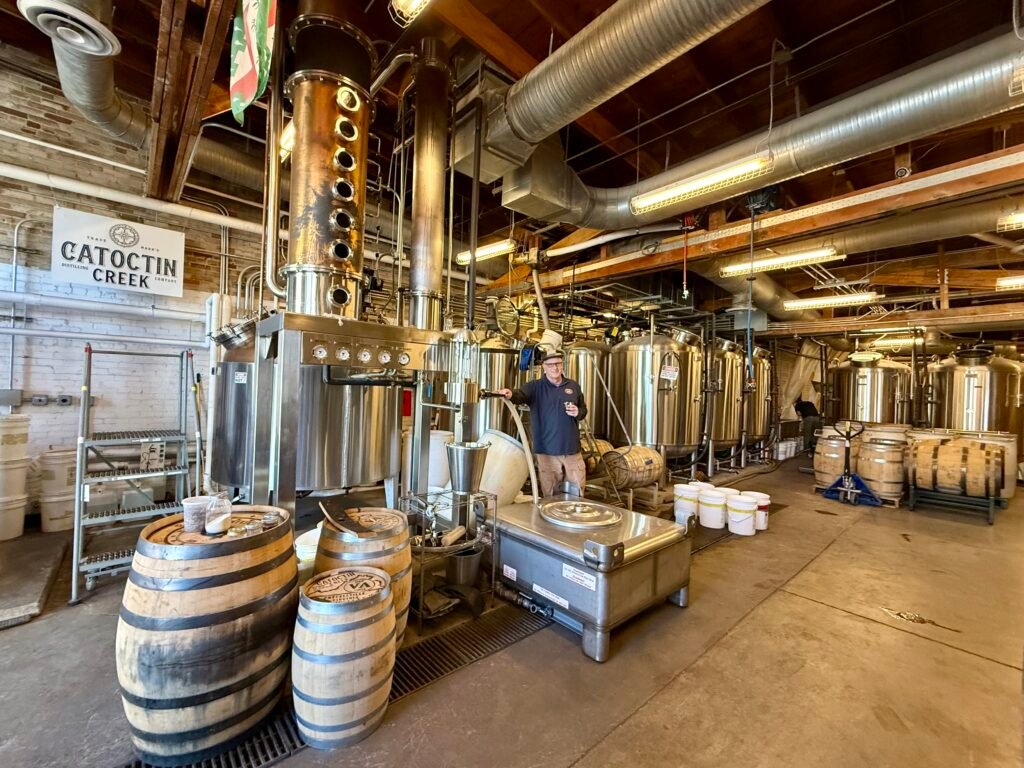
For Harris, rye provides a way to connect the business with Virginia’s agricultural and distilling traditions.
The distillery’s offerings include Roundstone Rye at 80 proof, the 92-proof Distiller’s Edition, and cask-proof expressions, along with Rabble Rouser Bottled-in-Bond Rye Whisky, Applejack, Hot Honey Rye, and gin.
Harris identified the 80-proof Roundstone Rye as its most popular product.
“That’s just a really smooth, easy-drinking rye,” he said.
He described the 92-proof version as offering more spice and flavor, while the cask-proof whiskey appeals to drinkers seeking a stronger, richer expression.
Seasonal and specialty releases allow the distillery to experiment with different finishes. These include a rye finished in a barrel that previously held maple syrup and Ragnarök Rye, a collaboration with the heavy metal band GWAR that uses a rum-cask finish.
The company also produces gin and brandy.
Discussing whiskey in India, Harris noted the popularity of Scotch and single malts and expressed his appreciation for Amrut’s Indian single malt.
“I think it’s very delicious,” he said. “It’s definitely a bottle I go to when I can find it.”
Virginia ingredients remain central to Catoctin Creek’s production. Harris said a farmer near Warsaw, close to the Rappahannock River, grows rye for the distillery, mills it into flour, and delivers it.
The company also uses Virginia water and sources barrels from Virginia and Minnesota, he said.
Its gin requires a broader range of ingredients, including cinnamon sourced from India and Sri Lanka, coriander, star anise, juniper berries, and orange peel from Florida.
Harris said the search for certified organic ingredients can limit sourcing options, requiring the company to work with both individual producers and wholesale brokers.
Beyond the distillery, Harris said he has been reappointed chairman of the Virginia governor’s spirits board. He described the board’s work as supporting marketing and research initiatives for Virginia craft distilleries through a fund financed by a portion of producers’ excise taxes.
The fund’s annual budget is approximately $1 million, he said.
Reflecting on Catoctin Creek’s growth, Harris credited Becky’s production work and the recognition its spirits received along the way.
He said the company’s products have earned ratings of 90 to 94 points from Wine Enthusiast, along with medals in spirits competitions and recognition from the Loudoun Chamber of Commerce.
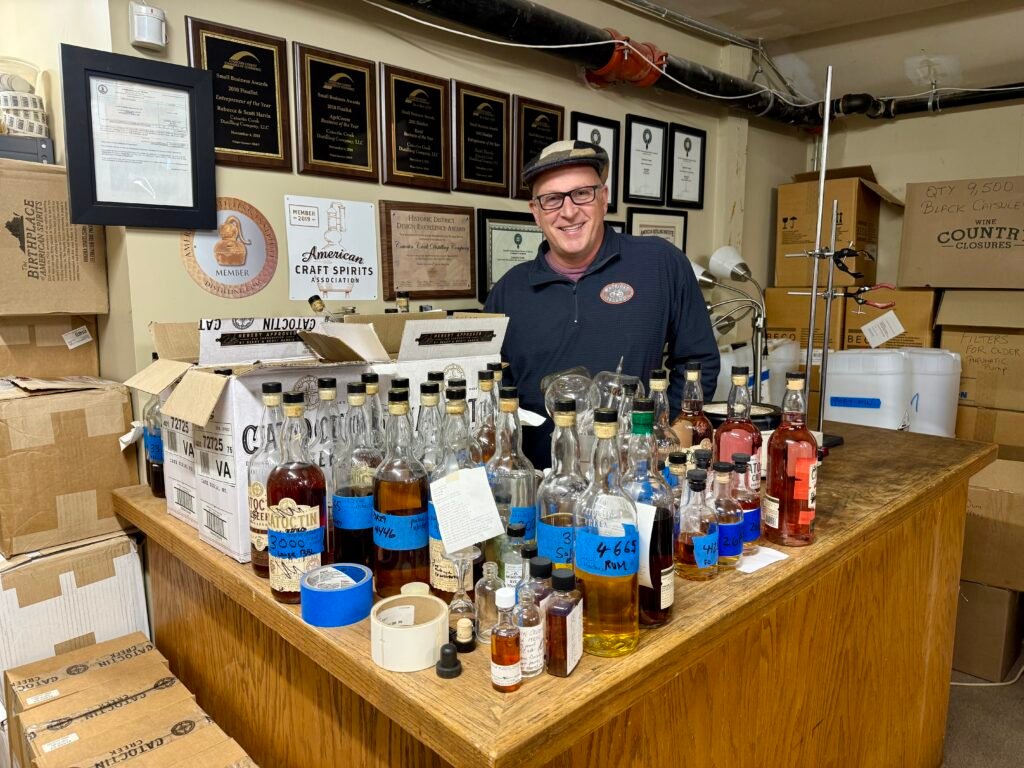
In the early years, those awards helped establish credibility with distributors assessing whether to carry an unfamiliar brand.
“Those awards were really important for proving to distributors that we have a very high-quality product ready for their marketplace,” he said.
The company now enters fewer competitions, he added.
From 2010 until the COVID-19 pandemic, Harris said, the business recorded annual double-digit growth. The pandemic disrupted that trajectory and forced the couple to find another source of revenue.
They shifted to producing hand sanitizer, securing contracts with public agencies and local governments, including the Virginia Department of Health and law enforcement organizations.
“For about nine months or so during COVID, we were making no whiskey; we were only making hand sanitizer,” Harris said.
The work sustained the business during a period of uncertainty.
Harris also highlighted Becky’s service as president of the American Craft Spirits Association during the crisis. He credited her with helping advocate for an expedited federal process that allowed small distilleries to register to produce sanitizer.
According to Harris, the effort helped distilleries respond to local shortages when conventional supply chains were disrupted.
As pandemic restrictions eased, customers returned, bringing what Harris described as the strongest year in the company’s history at that point.
For a business conceived during the financial crisis and later sustained through a public health emergency, adapting became part of the work. Its foundation, Harris said, remained the combination of Becky’s production expertise and the business skills he brought from his earlier career.