Join WhatsApp Channel

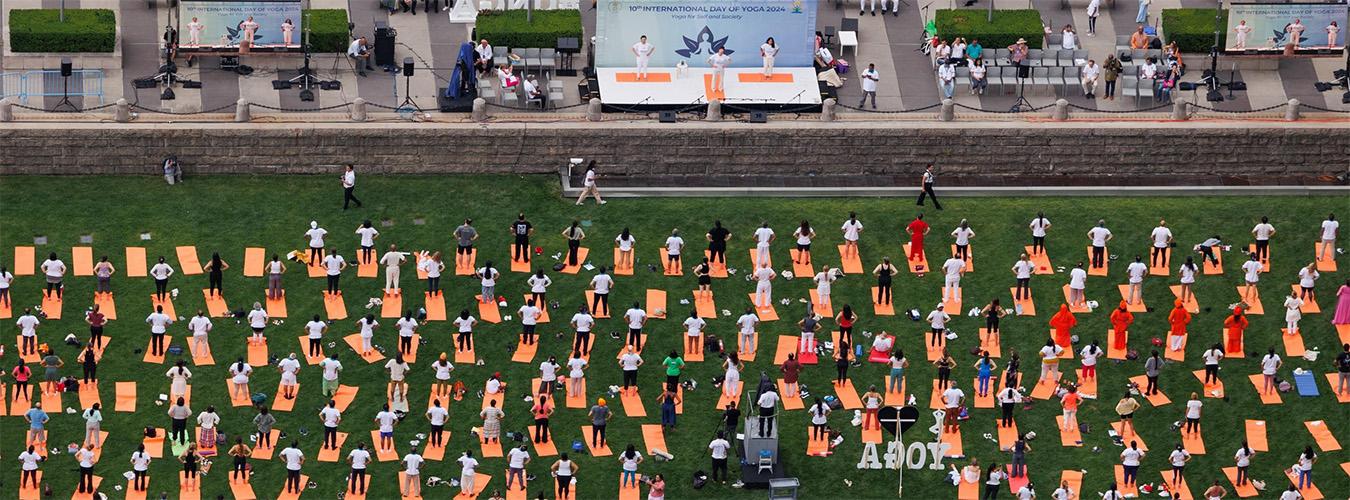
Let’s be honest, yoga on social media often looks like a circus – handstands on cliffs, backbends that seem to defy everyday physics.
I understand the intention: inspire people, spread wellness. But most of us are too busy wondering if our bodies can withstand those poses and quietly file yoga under “nice to watch, not for me.”
Here’s the truth from someone who works a regular 9 to 5 for a living and teaches yoga for passion – nobody truly begins yoga because they saw a glamorous pose. People start because something in their life feels off. Stress. Sleep. Focus. Health. They want to feel steadier and clearer, not become a poster image.
That’s why this idea of yoga beyond the mat matters. It’s not about flexibility. It’s about functionality. It’s about how ancient yogic principles quietly shape the way you think, respond and recover. And yes, I’ll use my own life as proof, because nothing tests your “inner peace” like a full workday, peak hour traffic and an inbox that multiplies overnight.
Most people know yoga through two things: Asana and Pranayama. Movement and breath. Useful, yes, but only one slice of a much larger system. Patanjali outlined eight limbs of yoga and only one of them involves bending your body. The rest have nothing to do with touching your toes. They are about how you live, how you think and how you show up in the world.
Yama and Niyama shape how you deal with people, pressure and your own habits. Pratyahara teaches you to unplug from the noise. Dharana and Dhyana train your attention so your mind stops sprinting ahead of you. Samadhi reminds you that clarity is not a luxury reserved for monks. It is a skill.
Over the next few weeks, we’ll explore these limbs in ways that fit real life. No cliffs. No contortions. Just yoga you can actually use.
Disclaimer: The opinions and views expressed in this article/column are those of the author(s) and do not necessarily reflect the views or positions of South Asian Herald.
Related posts:
 A Decade of the International Day of Yoga (IDY): Yoga for One Earth, One Health
 Australia Celebrates 11th International Day of Yoga with Over 55 Events Nationwide
 India’s Yoga Diplomacy Gets a Visa Boost as Global Wellness Market Grows
Indian Ambassador Leads International Day of Yoga Celebrations at Lincoln Memorial in Washington DC
India’s Yoga Diplomacy Gets a Visa Boost as Global Wellness Market Grows
Indian Ambassador Leads International Day of Yoga Celebrations at Lincoln Memorial in Washington DC