 Join WhatsApp Channel

With Giving Tuesday and the end of the tax year now behind us, and India Giving Day approaching on March 13, there are many reasons for people – especially Indian Americans – to reflect on the meaning and methods of philanthropy.
Traditionally, it was thought that donating was a rather static civic ritual meant to signal a desire to improve society and prove that one was not entirely self-centered. However, growing numbers of people are discovering is that philanthropy is a dynamic and evolving field, and that giving away one’s time and money effectively are learned skills that can be improved with practice and study.

Indeed, there are some exciting new trends that are improving the impact that people have with their donations and also the joy they derive from making them. This is happening at a time when Indian American financial contributions to nonprofits are growing dramatically.
An important study released by Dalberg last fall, “From Closing the Gap to Setting the Standard,” found that Indian American donations to all causes grew from $1 billion annually in 2018 to $3-4 billion in 2024. A significant amount of those gifts are being channeled to leading nonprofits operating in India, which are some of the most efficient and effective charitable organizations in the world. It is no exaggeration to say that India is the Silicon Valley of social entrepreneurship.
The most noteworthy trends in philanthropy are:
- Multi-year and unrestricted giving. In the past, donors, especially ones who gave large sums, desired a significant degree of control on how their money was spent. As a result, they only provided funds one year at a time, and insisted that they be used only for particular purposes approved by them. While this may have prevented some cases of abuse by unscrupulous charities, it unnecessarily burdened many others. Cutting edge philanthropists such as MacKenzie Scott have realized that choosing high-quality nonprofits and then giving them the ability to make long-term plans (by providing funds for several years all at once) and adjust their tactics based on new insights would allow her partners to have the biggest impact. In the case of Aarti for Girls, donations like this enable the organization to continually rebalance resources between its four pillars of work to empower young females: protect, educate, empower, and advocate. Thus, multi-year, unrestricted grants are becoming increasingly common among those who practice what we call “Philanthropy 3.0.”
- Collaborative giving. In the words of a mentor of one of the authors of this article, people tend to be erratic when working alone, but more consistent and effective when working with others. Indeed, we all have blind spots and biases that peers can help uncover, in philanthropy as well as in other parts of life. As a result, giving circles such as Social Venture Partners and campaigns involving multiple organizations such as India Giving Day have augmented the philanthropic ecosystem, and are likely to do so even more in the future.
- Giving to those most in need. Traditionally, many people focused their giving on their own neighborhoods, their home villages, and areas they frequently visited. However, these tendencies led to places with lesser needs absorbing the bulk of wealthy people’s contributions. Increasingly, donors are realizing that directing their donations of time, treasure, talent, ties, and testimony to populations and geographies that are most in need leads to the most satisfying outcomes. The resulting difficulty in seeing the impact of one’s gifts and ensuring they are well spent can be overcome by choosing high-quality nonprofits and using technology in creative ways.
- Recognition that giving benefits the giver. Many people have operated from the assumption that philanthropy is a zero-sum game. In other words, the donor loses exactly the amount that the receiver (normally a nonprofit) receives. But new research shows that those who give their time and money to charities benefit in myriad ways. A new article titled “Giving Is Good For You” cites overwhelming evidence that those who give more are, on average, healthier, wealthier, happier, and more successful in their careers than those who give less, or not at all.
- Skills-based volunteering. The days of asking lawyers, engineers, and marketing wizards to paint classrooms or perform other acts of unskilled labor are coming to an end. Increasingly, nonprofits are taking the time to match highly skilled and motivated volunteers with work that takes full advantage of their capabilities. This approach prompted one of its most effective practitioners, Grameen Foundation, to coin the term “skillanthropy.”
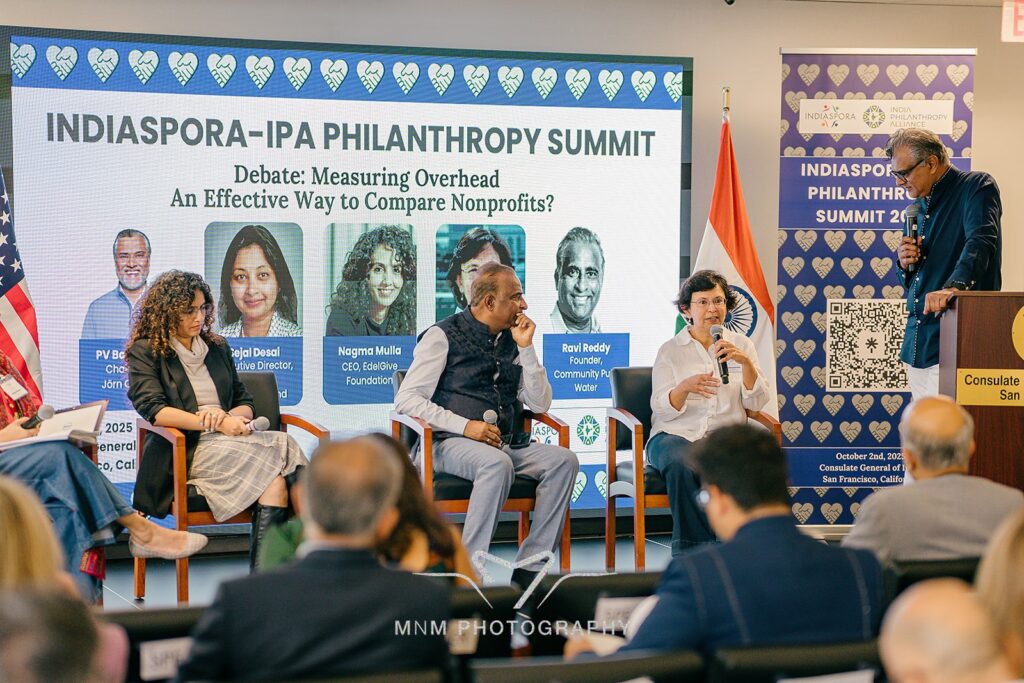
- Measuring what matters most. In the past, many donors assessed charities by how low their reported overhead rates were. Increasingly, however, savvy grant-makers are realizing that these figures are easily manipulated and even more important, often uncorrelated with how much good a nonprofit is doing. In other words, efficiency does not always translate into effectiveness. The philanthropic community has come to the realization that doing something that makes an impact with moderate levels of efficiency is better than doing something that makes no impact on the cheap.
- Legalized generosity—India’s CSR Mandate: India remains the only country with mandatory corporate social responsibility. This has transformed corporate philanthropy from voluntary charity into a strategic business imperative that drives systemic impact across education, healthcare, environmental sustainability, and rural development. CSR spending has more than tripled since 2014, growing from $1.2 billion to $4.2 billion, with projections indicating it could reach $12 billion annually by 2029. This growth presents a significant opportunity for nonprofits to mobilize corporate resources for social development while enabling employees and organizations to direct funds toward causes aligned with their values. However, critical challenges persist: geographic inequality concentrates funding in developed regions, annual spending cycles prevent sustained long-term impact, and capacity constraints limit effective partnerships between corporations and smaller NGOs. Notably, while regulatory pushback against ESG and DEI programs in the United States has led to declining corporate philanthropy, India’s CSR framework remains resilient due to its legal mandate, positioning it as a robust model for other countries.
- AI Integration in Philanthropy: The philanthropic sector, like all others, has been profoundly shaped by the emergence of artificial intelligence. While AI is steadily moving from experimental novelty to operational necessity, adoption among nonprofits remains predominantly informal and exploratory. Organizations are beginning to leverage AI across multiple functions—analyzing donor behavior patterns, predicting giving trends, personalizing engagement strategies, and automating labor-intensive processes such as grant writing. Its role and influence is destined to grow.
In a world that has recently veered towards isolationism, militarism, pollution, and communal tension, nonprofits have an essential role in getting society back in balance. Improved philanthropic practices such as those cited in this article could have a massive positive impact on their ability to do so.
Disclaimer: The opinions and views expressed in this article/column are those of the author(s) and do not necessarily reflect the views or positions of South Asian Herald.
Related posts:
 India Giving Day 2026 Raises $5.6 Million Through the #PowerOfUs, Mobilizes Indian Diaspora Through Global Campaign
India Philanthropy Alliance to Host 4th Annual India Giving Day, Bringing Together 51 Nonprofits Supporting Social Impact in India
India Giving Day 2026 Raises $5.6 Million Through the #PowerOfUs, Mobilizes Indian Diaspora Through Global Campaign
India Philanthropy Alliance to Host 4th Annual India Giving Day, Bringing Together 51 Nonprofits Supporting Social Impact in India
 Indian Americans Donate $3 Billion to U.S. Universities, Indiaspora’s Report Finds
 A Force More Powerful: A New Book on The Rise of the Global Women’s Funding Movement
