Join WhatsApp Channel

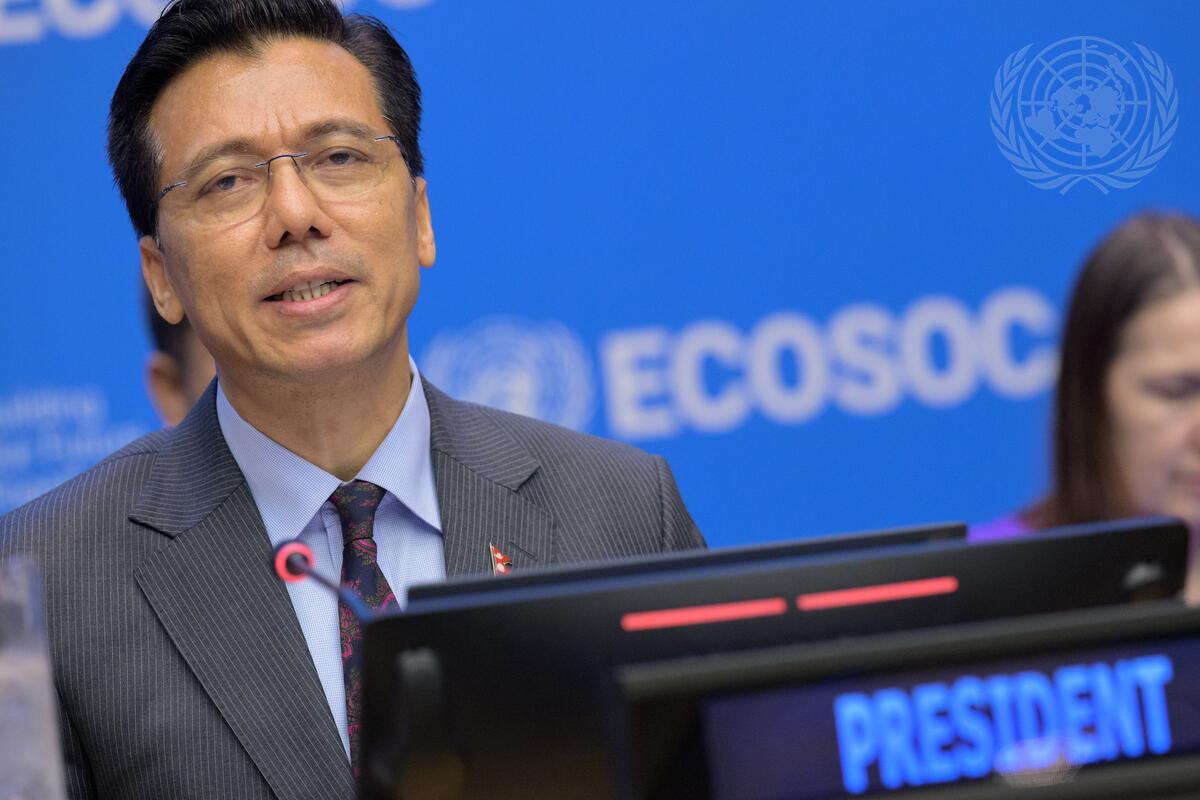
President of the Economic and Social Council, Ambassador Lok Bahadur Thapa, emphasized that countries around the world, particularly those in special situations including Least Developed Countries, Landlocked Developing Countries, and Small Island Developing States, are “counting” on the United Nations and the Economic and Social Council to “deliver better.”
“As President of the ECOSOC, I am committed to making the Council more responsive, inclusive and forward-looking. I deeply count on each of you to make a stronger and more effective ECOSOC so that we can deliver better,” Ambassador Thapa said while delivering his opening statement at the event “ECOSOC@80: A Turning Point for Multilateralism” on January 23 at the ECOSOC Chamber, United Nations.
Ambassador Thapa, who is also Nepal’s Permanent Representative to the United Nations, stressed that a “stronger” and more “effective” Economic and Social Council is especially critical at what he described as an extremely perilous moment for multilateralism. He said this would require “leadership, vision, and commitment” from Member States to enhance the Council’s relevance and impact.
He noted that the UN80 Initiatives and the General Assembly’s review of ECOSOC and the High-level Political Forum offer a timely opportunity to reaffirm and strengthen the Council’s role as the UN’s central development pillar, including its convening and coordinating functions.
Welcoming Member States to the commemoration of the Council’s 80th anniversary, Ambassador Thapa said, “Today is a historic day for our Council. Eighty years ago, on this very day, the ECOSOC convened its first meeting in London.”
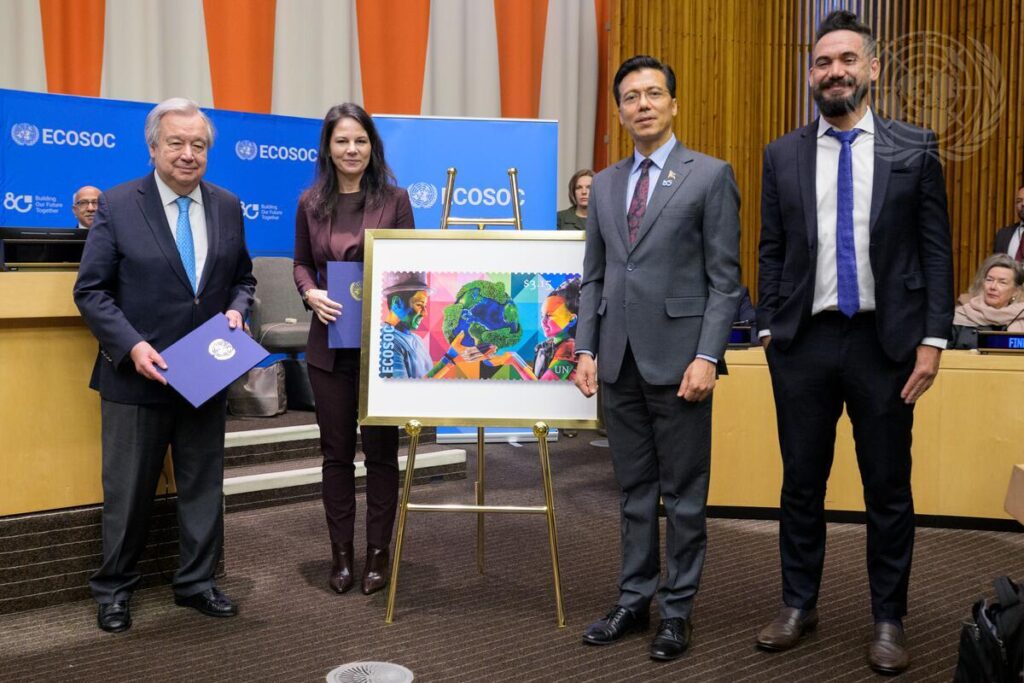
He recalled that the UN Charter entrusted ECOSOC with advancing “higher standards of living, full employment, social progress, universal respect for human rights,” and with promoting international cooperation across “economic, social, cultural, health,” and related fields.
Describing this as a bold and ambitious mandate, he said it was not an afterthought but a declaration that development is a foundation of peace. He underscored that peace cannot endure where poverty and hunger persist, where inequality and marginalization deepen, or where people are denied opportunities to live with dignity.
For eight decades, he said, ECOSOC has served as the custodian of that Charter promise and, as a principal organ of the United Nations, stands as the “UN’s foremost platform for addressing the world’s most urgent economic, social, and environmental challenges.”
He highlighted that the Council shapes policies, norms, and institutions, fosters dialogue and partnerships, drives innovation, and accelerates collective action toward a fairer, more inclusive, and more sustainable future. ECOSOC also provides strategic policy leadership, strengthens coherence across the UN system, and ensures analytical oversight across economic, social, environmental, and interrelated domains that affect the well-being of nations and peoples.
Over the years, Ambassador Thapa noted, ECOSOC has strengthened multilateral cooperation by bringing together Member States, the broader UN system, experts, civil society, youth, academia, and the private sector through inclusive dialogue aimed at developing shared and sustainable solutions.
He reminded Member States that these efforts have been focused on making the Council more relevant and effective in delivering on its Charter mandates and improving lives.
“As we commemorate the eight decades of ECOSOC, we must not only take stock of the Council’s achievements and impact but also look forward,” he said. “We need to do so with renewed commitment and strong partnership. Our mandate has never been more urgent, and our responsibility has never been greater, in view of the multiple challenges we face.”
He cautioned that despite progress, “poverty, inequality, and hunger” continue to undermine sustainable development globally. He pointed to rising food insecurity driven by conflict, climate shocks, and market volatility; a global debt crisis limiting countries’ ability to invest in people; intensifying climate impacts affecting the poorest and most vulnerable; widening digital divides; and gaps in social protection that expose societies to recurring shocks.
“These intersecting and complex challenges we have been facing and the eroding trust in multilateralism,” he said, demand a stronger Economic and Social Council that can address sustainable development challenges and “deliver better” for people and the planet.
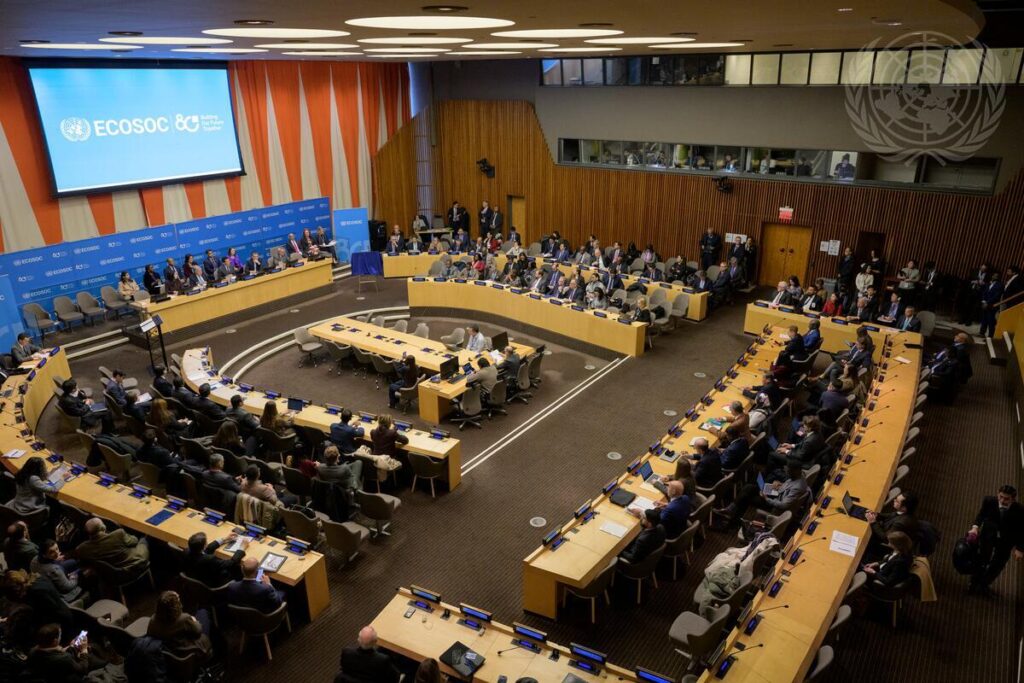
Reflecting on the Council’s legacy at 80, Ambassador Thapa described it as “simple and urgent,” stating that “multilateralism must deliver, development must be inclusive, and progress must reach everyone.” He added that this vision, set forth in the Charter, should continue to guide collective action.
Looking ahead, he urged Member States to consider how they can empower the Council to fully realize its Charter mandates, function as a dynamic platform for multilateral solutions, and serve as a beacon of hope, resolve, and solidarity. He called on them to bring conviction, courage, and commitment to navigate present and future challenges.
Describing ECOSOC@80 as a potential turning point for “rebuilding trust, strengthening multilateralism, and advancing international cooperation,” he said, “Let us shape together a stronger, more resilient and more effective ECOSOC that can deliver better in the interests of all nations, all communities and all peoples across the world.”
In his closing remarks, Ambassador Thapa thanked participants for their “invaluable participation and contributions,” adding, “Your unwavering commitment to the ECOSOC is truly inspiring, and I am honored to be the President of the Council at such a pivotal moment for multilateralism.”
He noted that ECOSOC has long served as a bridge between “ideas and action” and between “aspiration and implementation.” From early debates on human rights and decolonization to the adoption of the Millennium Development Goals and the 2030 Agenda, he said the Council has been a forum where global aspirations are translated into action.
“This legacy reminds us of the transformative power of collaboration,” he said, while noting that Member States are meeting at a time when the multilateral system, including the United Nations, faces profound challenges. Stronger multilateral cooperation, he emphasized, is not just “desirable” but “indispensable” to addressing global issues that transcend borders and to ensuring that no country and no individual is left behind.
With the deadline for achieving the 2030 Agenda for Sustainable Development approaching, Ambassador Thapa underlined the importance of using this anniversary as a “turning point” for multilateralism and urged Member States to recommit to working together with “urgency, ambition, and shared responsibility.”
Related posts:
 Nepal’s Ambassador to United Nations Lok Thapa Elected ECOSOC President for 2026
 Nepal’s Envoy to UN Highlights Democratic Transition, Gen Z Protests, and Global Crises at UNGA 80
 At UN Security Council, India Defends Operation Sindoor, Rejects Pakistan’s Claims, Calls for Stronger Rule of Law and UN Reforms
 India’s Permanent Mission to UN Marks World Hindi Day in New York, Highlights Global Reach of Hindi